
HTST Pasteurization vs UHT Sterilization: Which Is Better for Your Plant?
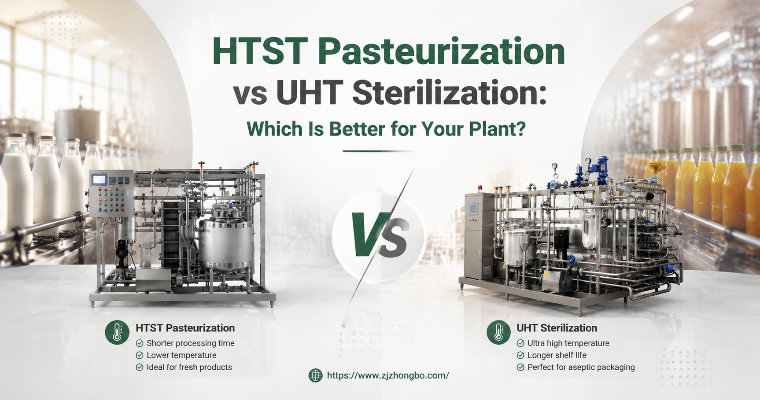
If you are setting up a new dairy, juice, or sauce production line, one of the first questions your engineering team will face is: should we go with HTST pasteurization or UHT sterilization? Both are proven, both are safe, and both are used in factories worldwide. But “which is better” has no single answer — […]
HTST vs UHT: What Is the Difference for Your Production Line?
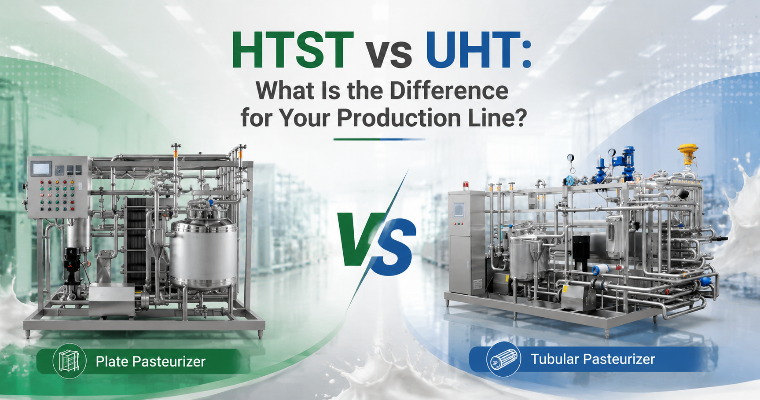
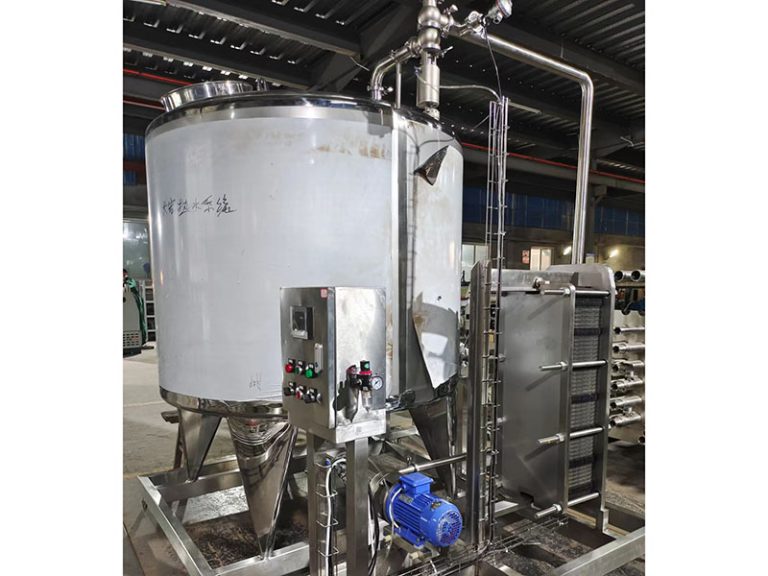
HTST (High Temperature Short Time) pasteurizes at 72–75°C for 15–20 seconds, requires refrigeration, and lasts 7–30 days. UHT (Ultra High Temperature) sterilizes at 135–150°C for 2–5 seconds, is shelf-stable for 6–12 months, and requires aseptic packaging. HTST is best for fresh, local distribution; UHT is best for ambient, long-distance distribution. Zhongbo designs both HTST and UHT pasteurization systems for dairy and beverage plants
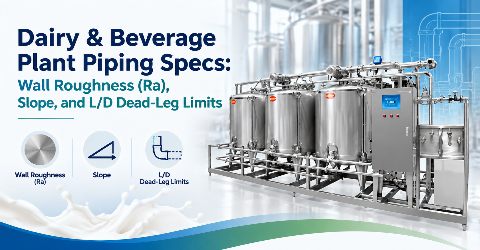
How CIP (Clean-in-Place) Systems Protect Food Safety in Dairy & Beverage Production
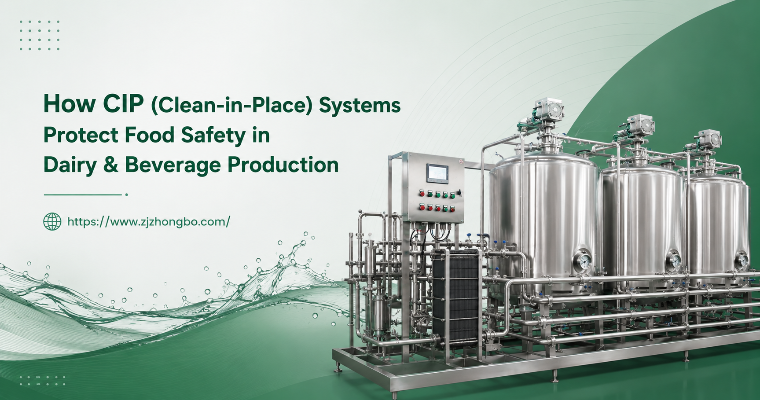
CIP systems protect food safety in dairy and beverage production by automating three critical defenses: (1) elimination of microbial biofilms that harbor pathogens like Listeria and Bacillus cereus in pipe walls and heat exchanger crevices; (2) prevention of allergen cross-contact when shared equipment switches between milk, soy, and nut-based products; and (3) validated chemical-mechanical cleaning cycles documented to FSMA 21 CFR Part 117, BRC, and SQF audit standards. Without CIP, no dairy or beverage plant can reliably pass a third-party food safety audit — because manual cleaning cannot consistently achieve the turbulent flow (Re > 10,000) and precise temperature-concentration-time control required to remove denatured whey protein films, mineral milkstone, and invisible pathogen-harboring residues.
Evaluating Thermal Efficiency: Plate vs. Tubular Heat Exchangers in Low-Acid Beverage Processing
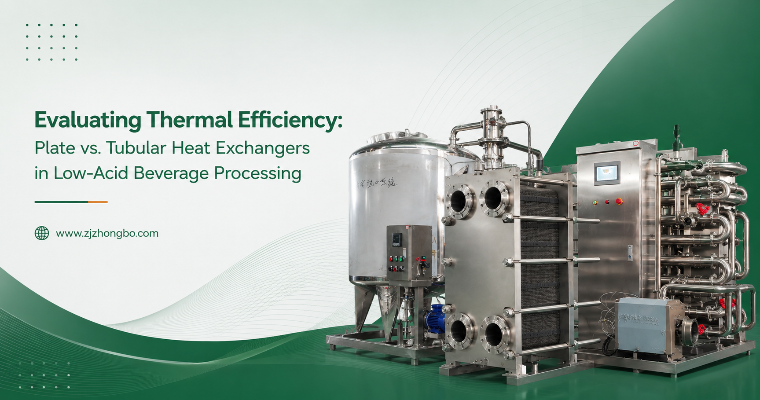
Evaluating thermal efficiency between plate and tubular heat exchangers for low-acid beverage pasteurization comes down to three metrics: overall heat transfer coefficient (U-value), regeneration efficiency (%), and approach temperature ( C). Plate heat exchangers deliver U-values of 3,000-7,000 W/m²K with up to 95% regeneration — but only for clean, low-viscosity fluids. Tubular exchangers operate at 1,000-3,000 W/m²K but handle viscosities to 10,000 cP and particulates without clogging, making them the preferred choice for fiber-rich plant-based milks and pulp-containing juices.
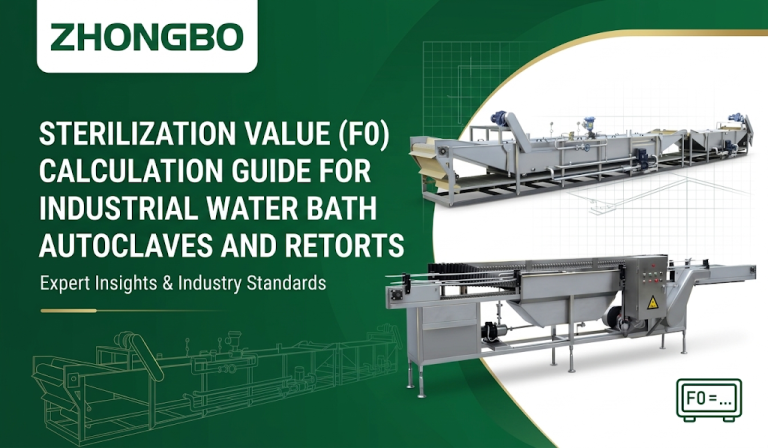
Calculating Overpressure Parameters in Continuous Beverage Retorts and Spray Tunnels
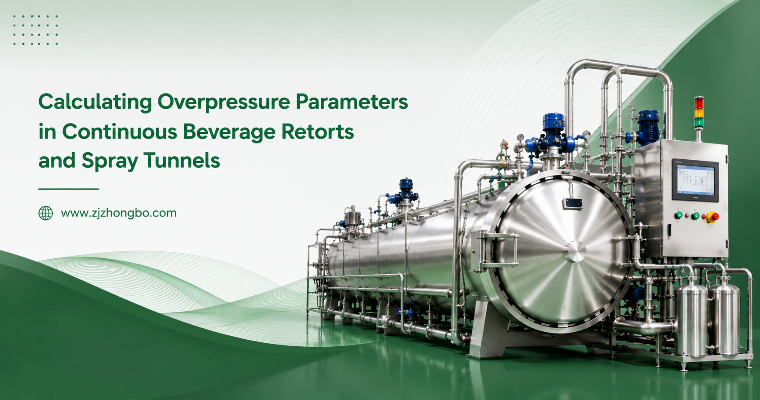
Overpressure in continuous retorts and spray tunnels isn’t optional — it’s the difference between safe packaging and a recall. This guide walks through the formulas, the recommended pressure windows for glass, tin, and pouches, and the engineering controls Zhongbo uses to keep ΔP locked in.
Integrating Falling Film Multi-Effect Evaporators in Industrial Condensed Milk Plants
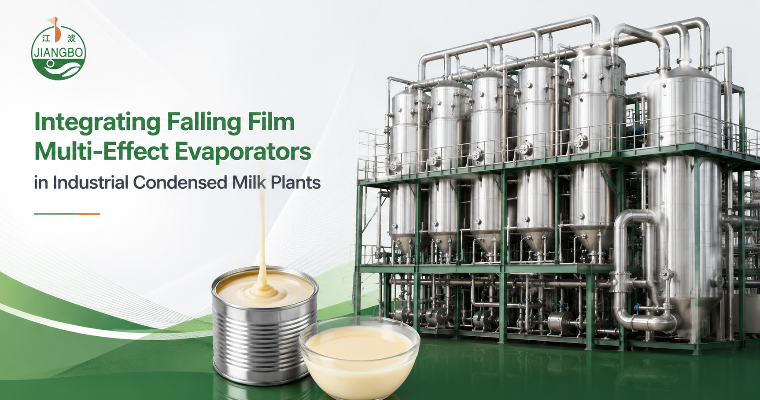
Integrating a falling film multi-effect evaporator into an industrial condensed milk plant combines gentle thin-film heat transfer with staged energy reuse to remove water at 40–70 °C while preserving protein structure and flavor. Key integration steps include matching the evaporator configuration (2–6 effects, with optional MVR/TVR) to feed rate and solids target, sizing the liquid distributor and wetting rate to avoid dry spots, and tying the unit into upstream pasteurization and downstream homogenization, cooling, and CIP systems. Zhongbo designs sanitary stainless-steel evaporation systems for sweetened and unsweetened condensed milk plants.
Aseptic UHT vs. In-Container Sterilization: Selecting the Right Thermal Process Line for Low-Acid Beverages
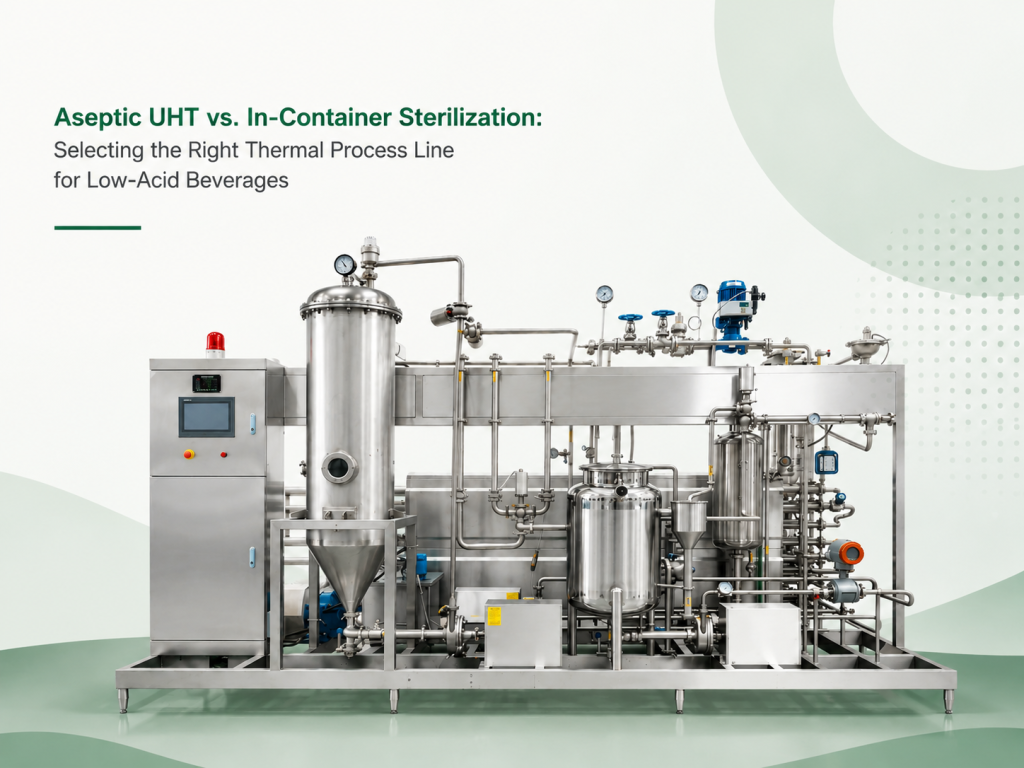
Choosing between continuous aseptic UHT systems and in-container post-packaging sterilization is a critical capital investment decision for beverage manufacturers. This technical guide evaluates how your final packaging format (cartons, glass bottles, or tin cans) dictates fluid thermodynamics and line architecture. Discover how Zhongbo Machinery integrates balancing, blending, multi-effect evaporation, and downstream tunnel treatment into a cohesive, preservative-free production matrix.
How HTST & UHT Treatment Eliminates Chemical Preservatives in Commercial Milk Processing
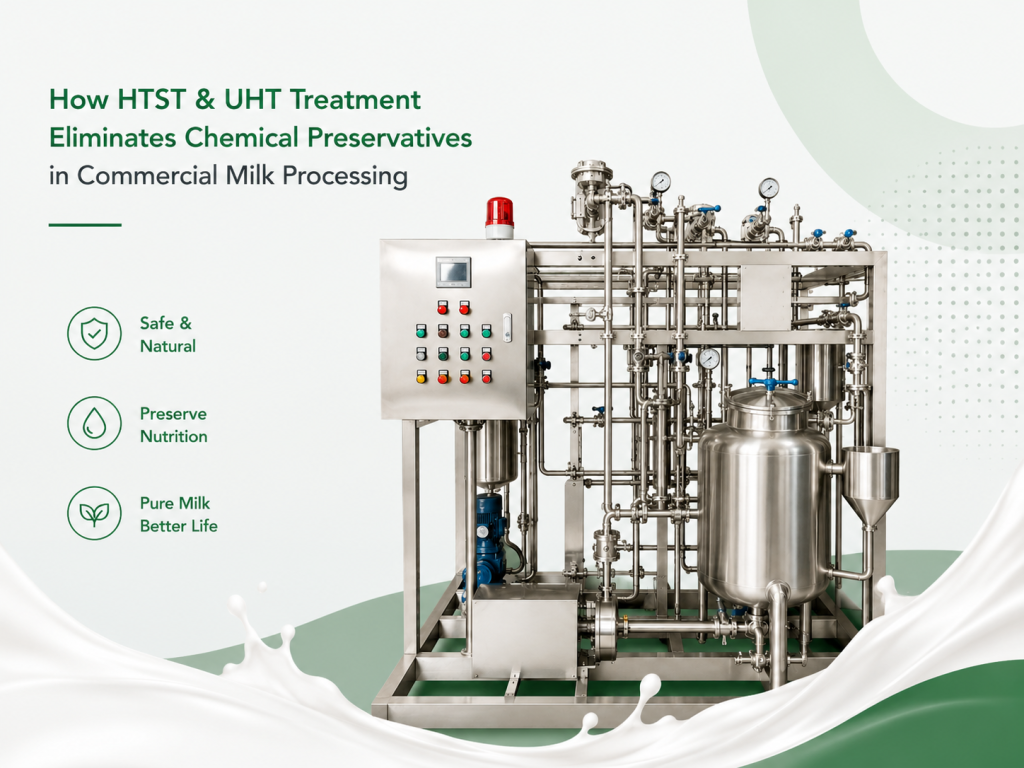
In modern dairy engineering, the “Clean Label” movement pushes brands to eliminate synthetic shelf-life extenders. This technical guide breaks down the fluid thermodynamics behind High-Temperature Short-Time (HTST) pasteurization and Ultra-High Temperature (UHT) sterilization. Learn how precise heat load, regulated lethality cycles, and advanced aseptic integration by Zhongbo Machinery preserve raw milk stability and sensory attributes—delivering long shelf life entirely through thermal engineering.
HTST vs. UHT Pasteurization for Dairy Lines: How to Select the Right Thermal Process and Design a Matching CIP Cleaning Cycle
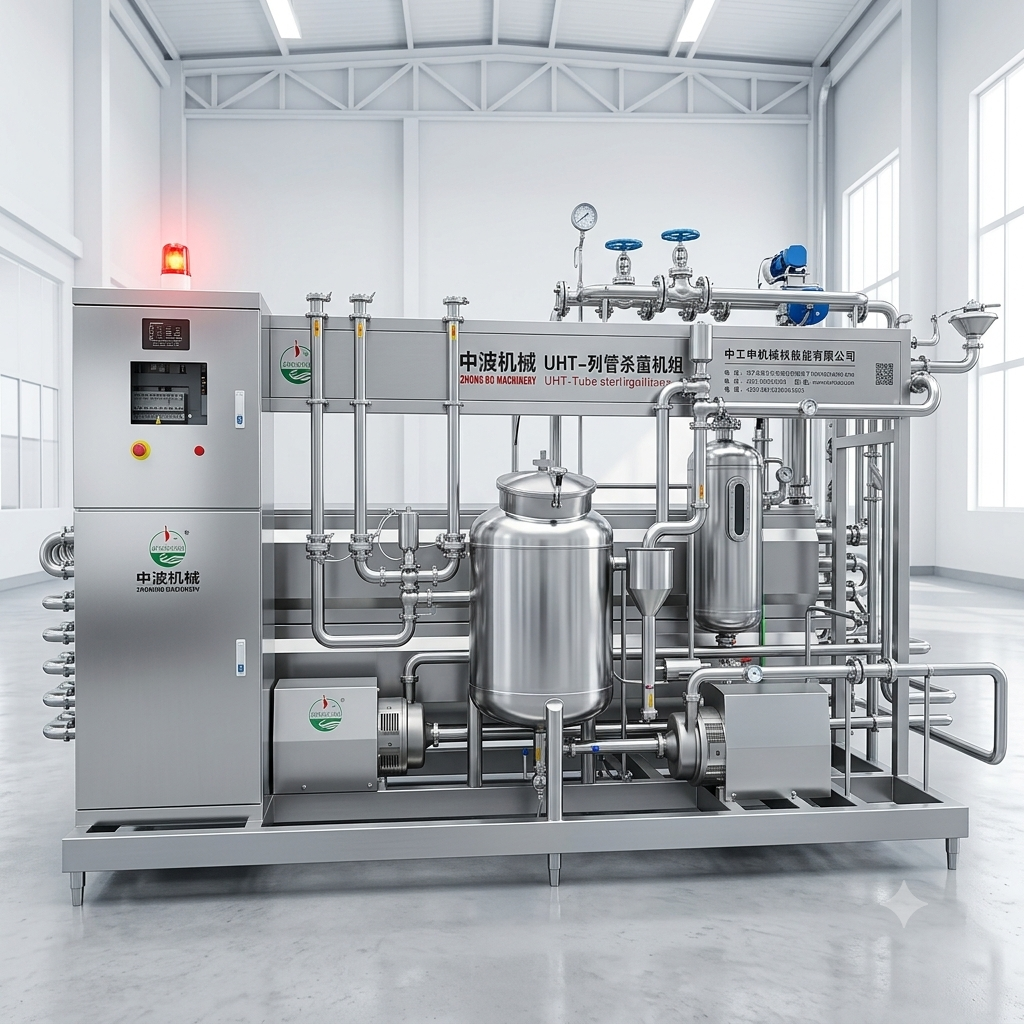
Choosing between HTST and UHT pasteurization affects every downstream decision on your dairy line — shelf life, cold chain, packaging, and CIP cleaning frequency. This guide breaks down the technical differences, provides a practical decision framework for plant managers, and delivers a step-by-step CIP programme for both system types, including the caustic/acid cycle parameters that protect heat exchanger surfaces from milkstone and denatured protein buildup.
Falling Film Evaporators for Heat-Sensitive Liquid Concentration: A Complete Sizing & Efficiency Guide
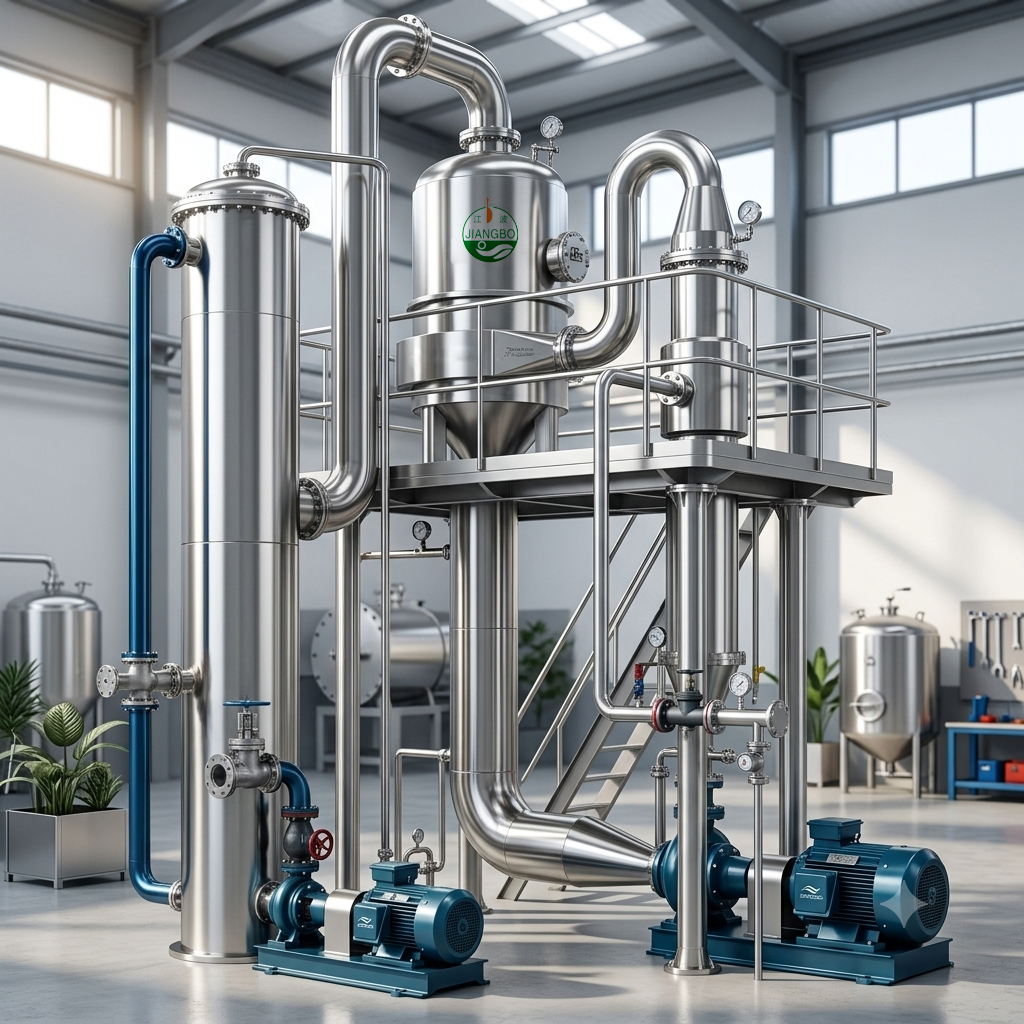
Falling film evaporators (FFEs) are the industry standard for concentrating heat-sensitive liquids — from dairy and juice to pharmaceutical extracts. This guide covers how FFEs work, critical sizing parameters (wetting rate, U-value, vacuum level), a head-to-head comparison with forced circulation and scrape film evaporators, real-world applications, and the most common sizing mistakes engineers make. Includes 10 FAQs and recommended resources.