
If you are setting up a new dairy, juice, or sauce production line, one of the first questions your engineering team will face is: should we go with HTST pasteurization or UHT sterilization? Both are proven, both are safe, and both are used in factories worldwide. But “which is better” has no single answer — it depends entirely on what you produce, where you sell it, and how your supply chain works. This guide gives you a structured, scenario-based decision framework so you can stop guessing and start planning.
Zhongbo Engineering Team
Zhejiang Zhongbo Mechanical Technology Co., Ltd. — 30+ years designing pasteurization and sterilization lines for dairy, beverage, and sauce manufacturers.
Stop Asking “Which Is Better” — Ask the Right Question
Walk into any dairy equipment trade show and you will hear the same question: “Which is better — HTST or UHT?”
The real answer is that this is the wrong question. HTST and UHT solve two fundamentally different business problems. Asking which is better is like asking whether a refrigerated truck is better than a dry van. It depends on what is inside.
A better set of questions looks like this:
- What is my product, and how sensitive is it to heat?
- How far does my product travel from the factory to the consumer?
- Does my distribution channel have a reliable cold chain?
- What packaging do I already use, or plan to use?
- What is my production volume, and what is my capital budget?
Answer those five questions, and the right process almost chooses itself. Let us walk through each one.
Need a refresher on the technical differences first? Read our HTST vs UHT comparison guide for full process parameters.
5 Decision Factors That Determine Your Best Choice
Factor 1: Product Type
The most important factor is what you are processing. Some products handle ultra-high heat well; others lose their selling point at extreme temperatures.
| Product Category | Tolerates UHT? | Recommended Method |
|---|---|---|
| Fresh drinking milk | Yes, but taste changes | HTST preferred |
| Flavored milk / nutritional drinks | Very well | UHT preferred |
| Plant-based milk (oat, soy, almond) | Very well | UHT preferred |
| Cold-pressed juice / fresh juice | Poorly — flavor loss | HTST preferred |
| Tea drinks, iced tea | Well | HTST or UHT |
| Soups, sauces, dressings | Very well | UHT preferred |
| Yogurt drinks | Well | HTST or UHT |
Factor 2: Distribution Radius
This is where the business case for UHT becomes strongest. The farther your product travels, the more a cold chain costs you.
| Distribution Model | Typical Radius | Recommended Method |
|---|---|---|
| Local dairy — farm to store | 50–200 km | HTST |
| Regional distribution | 200–1,000 km | HTST or UHT |
| National retail | 1,000–5,000 km | UHT |
| Export / international | 5,000+ km (sea freight) | UHT |
Factor 3: Shelf-Life Target
This is non-negotiable. If your retail partner requires a minimum of 6 months of shelf life, you have no choice — you need UHT. If your business model relies on daily or weekly in-store rotation, HTST is the better fit.
Factor 4: Cold-Chain Access
HTST products must stay at 0–4°C from the moment they leave the filler to the moment the consumer opens them. If your market lacks reliable refrigerated trucks, warehouses, and retail fridges, UHT eliminates that risk entirely.
Factor 5: Packaging Compatibility
HTST lines can use standard fillers and packaging — bottles, cups, cartons — in non-sterile environments. UHT requires aseptic filling and sterile packaging (Tetra Pak, aseptic PET, sterile pouches). If you are not willing to invest in an aseptic filler, HTST is your only path. Switching later means a major capital upgrade.
When HTST Pasteurization Is the Better Choice
HTST is the better choice when your competitive advantage is freshness and your business model operates within a cold-chain radius of a few hundred kilometers.
Choose HTST if any of these describe your operation:
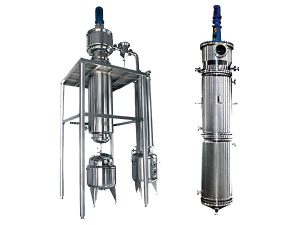
- You sell fresh milk, chilled juice, or dairy drinks. Your brand promise is “fresh from the farm” — and your customers expect to find your product in the refrigerated aisle. Recommended equipment: Zhongbo plate pasteurizer, engineered for 72–75°C flash pasteurization with capacities from 300 to 10,000 L/h.
- Your distribution radius is under 500 km. You do not need ambient shelf stability. Refrigerated trucks can cover your market in a day.
- Your budget is tight on the packaging side. You cannot or do not want to invest in aseptic filling and sterile packaging materials. HTST lets you use standard fillers.
- Cold chain is reliable in your region. Your warehouses, trucks, and retail partners all maintain consistent refrigeration.
- You are in a premium fresh segment. Consumers in your market will pay more for “fresh” and “minimally processed” on the label.
HTST product spotlight: The Zhongbo plate pasteurizer features full-auto or semi-auto control, electric or steam heating, and is rated for pasteurization up to 140°C with 5–30 second hold times — covering HTST and ESL applications in one compact heat exchanger.
When UHT Sterilization Is the Better Choice
UHT is the better choice when your competitive advantage is distribution reach and your product needs to survive on a non-refrigerated shelf for months.
Choose UHT if any of these describe your operation:
- You sell across a country or export. Your product needs to travel by truck, ship, or rail and still have months of usable shelf life when it arrives. Recommended equipment: Zhongbo tubular pasteurizer, rated to 140°C with a 5–300 second hold range — built for commercial sterility at scale.
- You produce plant-based milks, flavored milk, soups, or sauces. These products tolerate ultra-high heat well and benefit enormously from ambient distribution.
- Cold chain is unavailable or unreliable in your target market. UHT removes the single biggest operational risk in your logistics chain.
- Retailers demand 6+ months of shelf life. Supermarket chains and export distributors often refuse products with less than 6 months of remaining shelf life.
- You are willing to invest in aseptic filling. You understand that the UHT process demands a sterile downstream and you have budgeted for it.
UHT product spotlight: The Zhongbo tubular pasteurizer is a closed, continuous sterilization system built for 135–140°C UHT treatment. Available from 300 to 10,000 L/h with full-auto control, it integrates directly with your aseptic tank and filler for end-to-end sterility.
5-Question Decision Tool: HTST or UHT?
Go through these five questions. Mark which column — HTST or UHT — gets more checks. If you are tied, the last question about budget will usually break it.
| # | If this sounds like you… | Best Fit |
|---|---|---|
| 1 | My product is positioned as “fresh” and is heat-sensitive (fresh milk, cold-pressed juice, chilled yogurt drinks). | HTST |
| 2 | My product travels more than 500 km or crosses borders to reach consumers. | UHT |
| 3 | I need at least 6 months of shelf life for retail or export acceptance. | UHT |
| 4 | I have a reliable cold chain and my consumers shop refrigerated aisles regularly. | HTST |
| 5 | I am ready to invest in aseptic packaging and an aseptic filler for long shelf life. | UHT |
How to read your result:
- 3+ HTST: Go with a plate pasteurizer for fresh, chilled distribution.
- 3+ UHT: Go with a tubular pasteurizer for ambient, long-life distribution.
- Split 2-3, or neither side wins: You may need a hybrid line or ESL solution. Keep reading.
Special Cases: Hybrid Lines, ESL, and Small-Batch Processing
Hybrid Lines: Can One Plant Do Both?
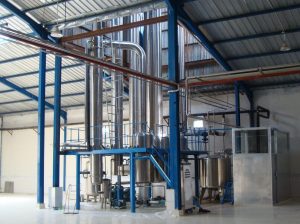
Yes. Many mid-size dairies run both an HTST line for fresh milk and a UHT line for flavored or long-life products. The equipment sits in separate zones because the downstream requirements are different, but the upstream — raw milk reception, standardization, homogenization — can be shared. Zhongbo designs complete dairy and beverage turnkey lines that combine both processes under one roof.
ESL: The Third Option
Extended Shelf Life (ESL) processing sits between HTST and UHT. It heats product to 125–130°C for about 2 seconds — enough to extend shelf life to 15–40 days under refrigeration, without the full sensory impact of UHT. ESL is a pragmatic compromise if your market needs longer shelf life than HTST can deliver, but full UHT feels like overkill. The Zhongbo tubular pasteurizer handles ESL parameters natively within its 5–300 second hold-time range.
Small-Batch and Pilot Plants
If you are a startup or running a pilot line with low daily volumes, a full UHT system may not make sense. In these cases, a coil pasteurizer rated to 130°C can handle both HTST-level pasteurization and high-temperature treatment for smaller batches. It is a cost-effective entry point before scaling.
Cost Comparison: 5-Year Total Cost of Ownership
Equipment price tags tell only half the story. Over a 5-year window, logistics and packaging costs often outweigh the initial capital difference.
| Cost Category (5-Year View) | HTST Line | UHT Line |
|---|---|---|
| Equipment (pasteurizer + filler) | $$ | $$$ |
| Packaging materials (annual) | $ | $$ |
| Energy consumption (annual) | $ | $$ |
| Cold-chain logistics (annual) | $$ | $ (none) |
| Product returns / spoilage risk | $$ | $ |
| Market reach (revenue upside) | Limited to cold-chain radius | National + export |
Takeaway: UHT costs more upfront but often delivers higher revenue over 5 years through expanded distribution. HTST costs less upfront but ties your growth to cold-chain geography. The “better” choice is the one that matches your growth plan, not just your current budget.
Frequently Asked Questions
1. Which is better for milk — HTST or UHT?
It depends on your market. If you sell fresh milk within a small radius and want a premium “fresh” label, HTST is better. If you sell shelf-stable milk nationwide or for export, UHT is better. For fresh dairy, our plate pasteurizer is the standard HTST workhorse used by hundreds of dairies.
2. Which pasteurization method is cheaper to run?
HTST has lower equipment and energy cost but requires ongoing cold-chain logistics. UHT has higher equipment and packaging cost but eliminates cold-chain expense. For a full 5-year cost analysis specific to your product and capacity, contact our team for an ROI calculation.
3. Is UHT sterilization too harsh for juice?
It depends on the juice. Orange and apple juice tolerate UHT well. Cold-pressed juices and delicate fruit blends can develop off-flavors at 135°C and are often better with HTST. Modern indirect UHT systems with rapid cooling significantly reduce heat damage. See our tubular pasteurizer options for juice applications.
4. Can I produce both fresh and shelf-stable products in one plant?
Yes. Many Zhongbo clients run parallel HTST and UHT lines sharing upstream equipment (milk reception, standardization, homogenization). The lines split before pasteurization and use separate fillers and packaging zones. This is the most flexible — and increasingly common — factory layout. Talk to us about a combined layout.
5. How do I know which equipment I need for my specific product?
Start with your product type, target capacity (L/h), shelf-life goal, and packaging plan. With those four data points, Zhongbo engineers can recommend the right pasteurizer model, heat exchanger type, and filler configuration — usually within one working day. Submit your specs for a custom recommendation.
Conclusion: Pick the Method That Fits Your Business Model
HTST and UHT are not competitors. They are answers to different questions. If your question is “How can I deliver the freshest possible product to a local market?” — the answer is HTST. If your question is “How can I sell my product nationwide or internationally without refrigeration?” — the answer is UHT.
The best decision is not the one that looks good on a spec sheet. It is the one that aligns your pasteurization method with your distribution model, packaging investment, and growth plan. Use the decision tool above, map your five factors, and the right choice will surface.
Related Resources
- HTST vs UHT: What Is the Difference? (Comparison Guide)
- The Ultimate Guide to Indirect UHT Sterilizers
- Zhongbo Plate Pasteurizer
- Zhongbo Tubular Pasteurizer
- HTST & UHT Treatment Equipment — Full Range
- Recommended next reads: How to Size a Plate Pasteurizer for Your Dairy Plant | Direct vs Indirect UHT: Which Method to Choose? | Aseptic Filling Explained: Why UHT Needs It
Still Deciding? Let Our Engineers Help.
Send us your product type, target capacity, and distribution plan. We will recommend the right HTST or UHT system and provide a detailed quote — usually within one business day.
Last updated: July 15, 2026. Product specifications are based on information published on zjzhongbo.com. Contact Zhongbo for current technical data and availability.