

Falling Film vs Forced Circulation Evaporator: Which Suits Your Plant?
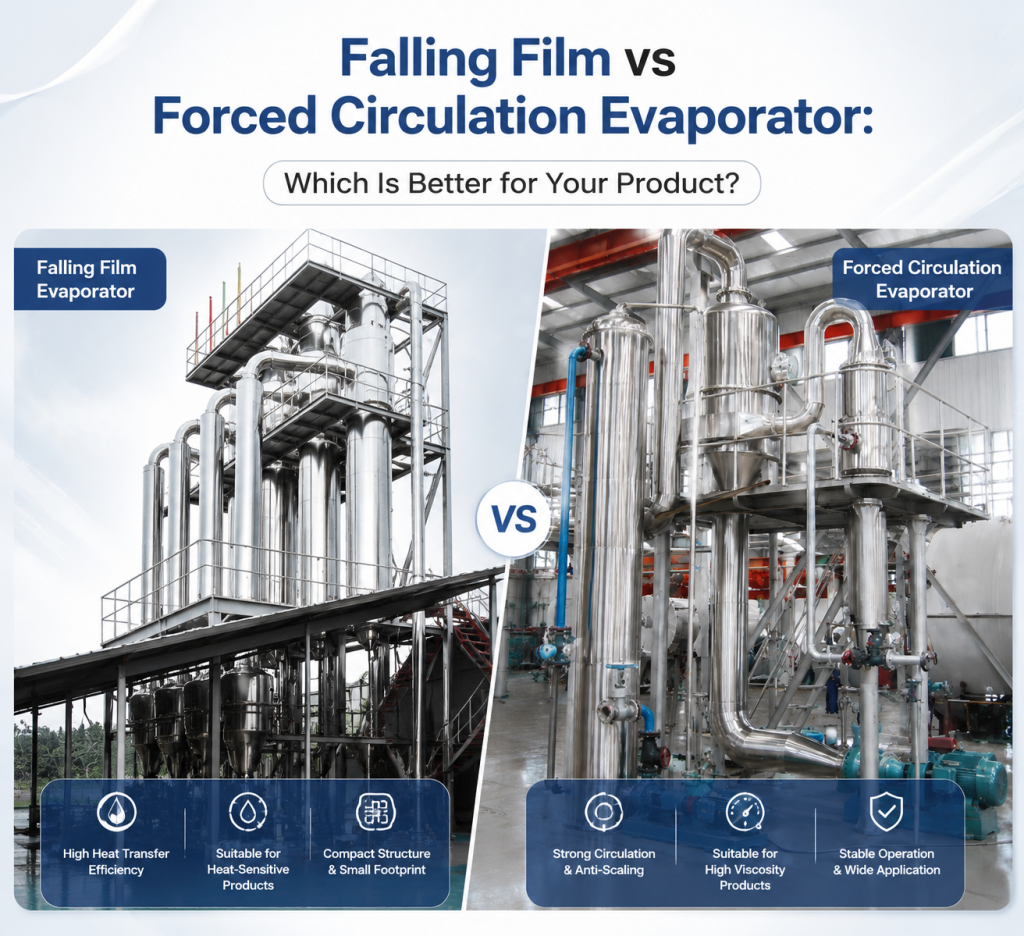
Key Takeaways Falling film evaporators are best for heat-sensitive, low-viscosity liquids (milk, juice, pharma) — residence time under 30 seconds preserves nutrients and flavor. Forced circulation evaporators handle high-viscosity, scaling, or crystallizing feeds (brines, wastewater, salt solutions) via pump-driven high-velocity flow. Falling film systems use ~0.3–0.5 kg steam per kg water evaporated; forced circulation adds […]
Plate Heat Exchanger vs Tubular Heat Exchanger: Which Is Better for Food Processing?
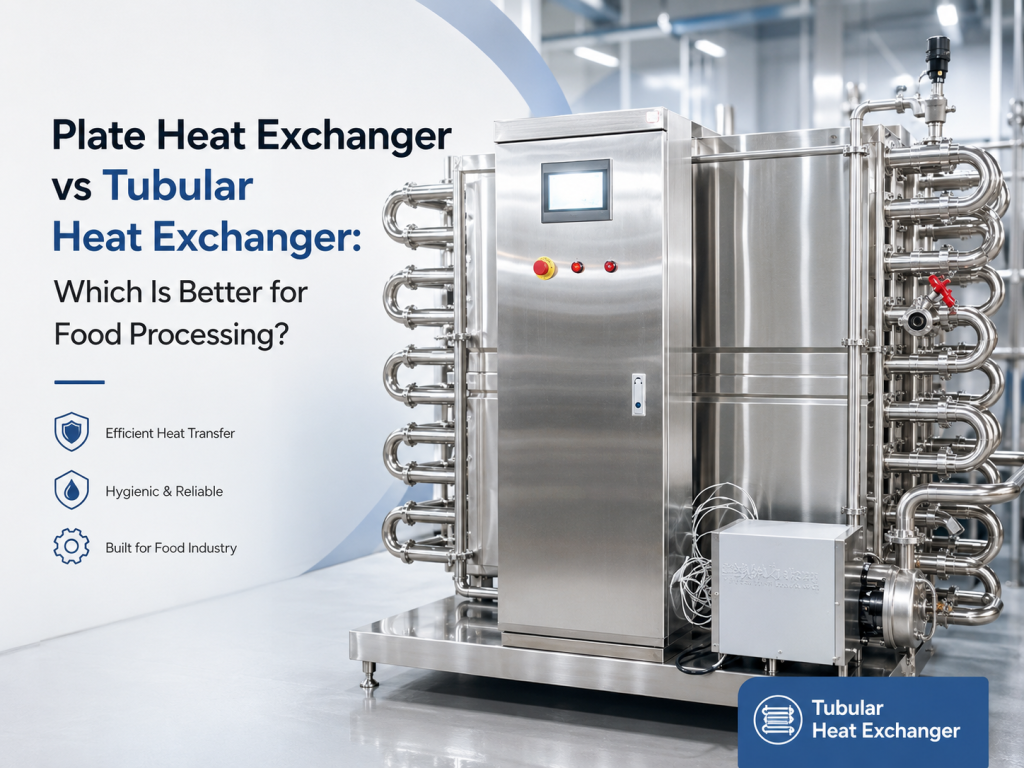
Neither plate nor tubular heat exchangers are universally better. Plate types win for low-viscosity, particle-free liquids like milk and clear juice thanks to high efficiency and easy cleaning. Tubular units handle viscous products, pulp, and particulates that would clog plates. Choose based on viscosity, solids content, pressure, footprint, and cleaning needs.
HTST vs UHT Pasteurization: Which Delivers Better Shelf Life?
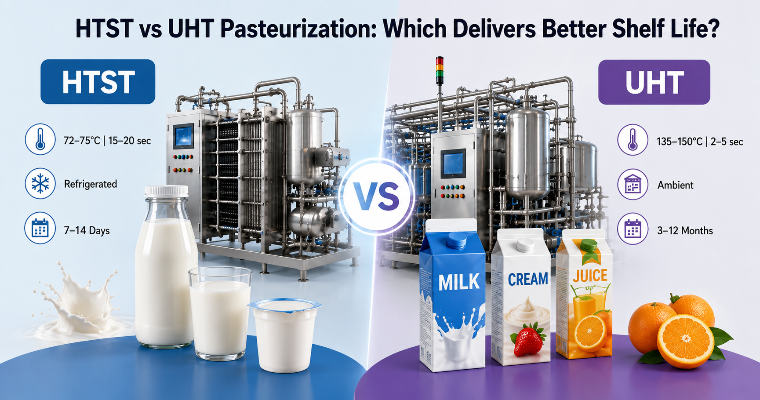
UHT processing extends shelf life to 6–12 months at ambient temperature, while HTST pasteurization gives 7–30 days under refrigeration. The shelf life difference comes down to sterilization level — UHT kills all microorganisms including spores, HTST eliminates pathogens but leaves spoilage bacteria alive. ESL (Extended Shelf Life) bridges the gap at 15–45 days. The “better” choice depends on your distribution range, cold chain budget, and target consumer experience.
How Much Does a UHT Processing Line Cost in 2026?
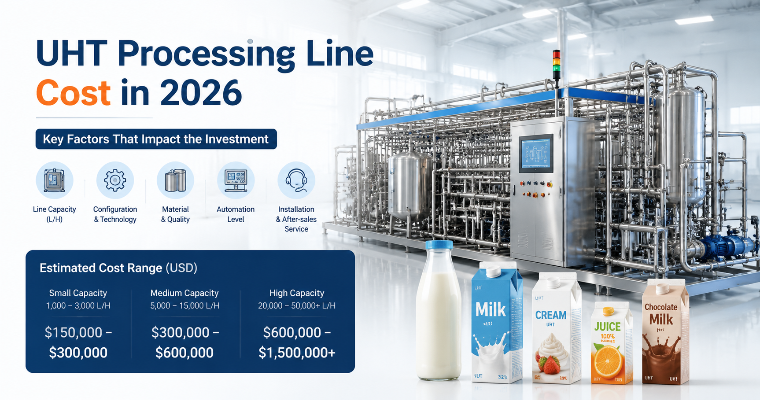
A UHT processing line costs $200,000–$400,000 for entry-level (2,000–5,000 L/day), $500,000–$1.2M for mid-scale (10,000–30,000 L/day), and $1.5M–$5M+ for industrial (50,000+ L/day). The UHT sterilizer itself accounts for 25–30% of equipment cost; the aseptic filler is the single largest line item at 15–20%. Chinese-manufactured turnkey lines are typically 40–60% cheaper than European equivalents, with 4–6 month delivery. Real total cost = equipment × 1.3–1.5 when you include installation, civil works, shipping, and commissioning.
Best UHT Sterilizer Manufacturers for Dairy and Beverage Processing Projects in 2026
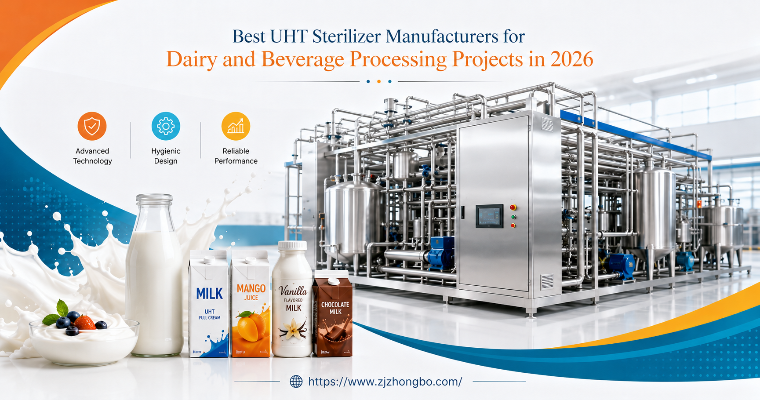
The right UHT sterilizer manufacturer depends on your project scale, budget, and technical requirements — global leaders offer integrated aseptic ecosystems for large operations, while established Chinese manufacturers like Zhongbo (30+ years, ISO 9001:2015) deliver comparable sterilization performance at 40–60% lower capital cost with faster delivery timelines.
HTST vs UHT for Dairy: How to Choose the Right Treatment by Product Type
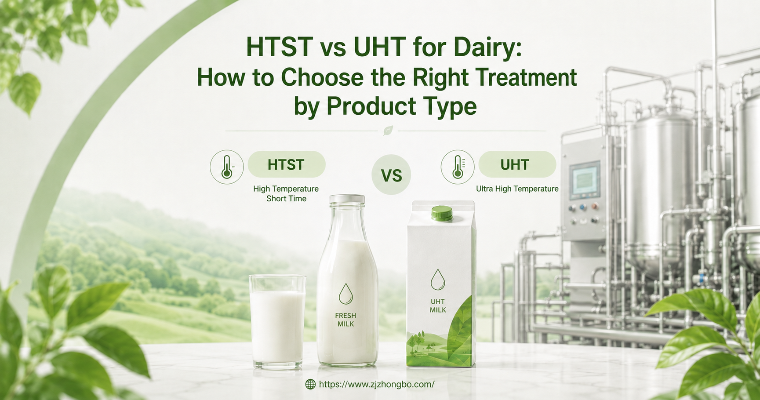
The right thermal treatment for dairy depends on the product — fresh milk demands HTST to preserve flavor and protein functionality, while shelf-stable milk and ice cream mix require UHT for long ambient shelf life. This guide maps HTST, ESL, and UHT to 10 dairy products with pH, viscosity, and equipment recommendations.
What Products Are Suitable for UHT Treatment? The Complete Reference Guide
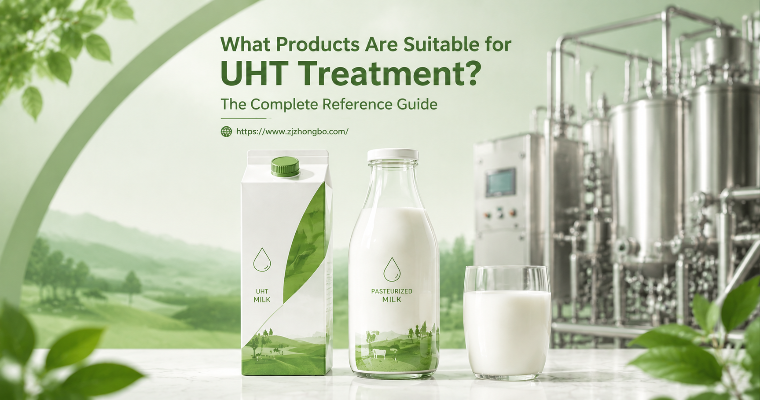
UHT (Ultra High Temperature) treatment is suitable for liquid and semi-liquid food products that require commercial sterility and ambient shelf life. The main categories include: dairy products (milk, cream, flavored milk, yogurt drinks), plant-based beverages (soy, oat, almond, coconut milk), juices and beverages (clear juice, tea, coffee, functional drinks), prepared foods (soups, sauces, dressings, tomato paste), desserts (ice cream mix, custard, pudding), and specialty nutritional products (infant formula, egg products, medical nutrition). Products with pH above 4.6 require full UHT sterilization at 135–150°C; high-acid products (pH ≤ 4.6) can use milder UHT at 85–110°C. Products not suitable include those with large solid chunks, carbonated beverages (pre-carbonation), and products with heat-sensitive active ingredients like probiotics.
UHT Milk vs Pasteurized Milk: What Is the Difference?
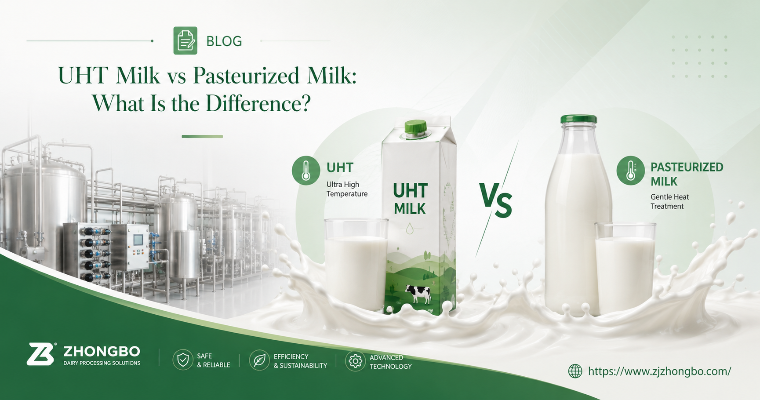
UHT milk and pasteurized milk differ in three fundamental ways: processing temperature (135–150°C vs 72–75°C), shelf life (6–12 months ambient vs 7–15 days refrigerated), and nutritional profile (higher whey protein denaturation and vitamin loss in UHT, but equal protein and calcium content). Pasteurized milk retains a fresher taste and more heat-sensitive bioactive compounds; UHT milk offers ambient storage, long-distance logistics, and lower cold-chain costs. Which is “better” depends entirely on your distribution model, target market, and brand positioning — not on a universal ranking.
How to Choose a UHT Processing Line for Beverages: The Complete Guide by Beverage Type
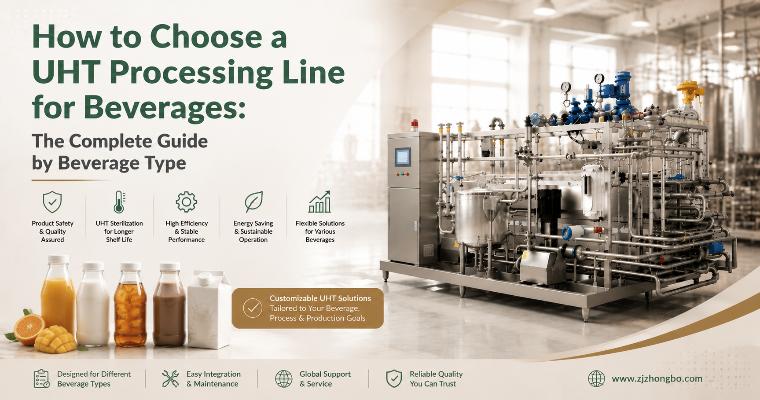
Choosing a UHT beverage line starts with one number: your product’s pH. High-acid drinks (pH ≤ 4.6) need different equipment than low-acid ones (pH > 4.6). This guide breaks down sterilizer selection for every major beverage category — juice, tea, plant-based milk, functional drinks — and maps each to the right heat exchanger type, temperature range, and filling method.
How to Choose the Right UHT Processing Line for Milk, Yogurt and Cream Production
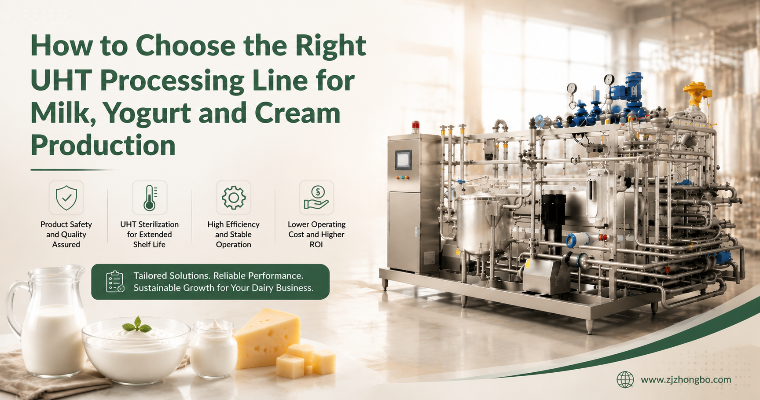
Not all dairy products run on the same UHT line. Milk, yogurt, and cream each demand different sterilizer types, hold times, and homogenization placements. This buyer’s guide breaks down the process requirements for each product and maps them to the right equipment — so you spec the line that matches your production reality, not a supplier’s catalog.