

Food & Beverage Processing
When you design a dairy, beverage, or sauce production line, the choice between HTST and UHT pasteurization directly shapes your shelf life, distribution model, packaging investment, and operating cost. This guide compares both methods side-by-side so you can decide which pasteurization system best supports your factory goals.
Zhongbo Engineering Team
Zhejiang Zhongbo Mechanical Technology Co., Ltd. — 30+ years of dairy & beverage processing equipment. ISO 9001:2015 certified.
Why HTST vs UHT Matters for Manufacturers
Pasteurization is not just a safety step. It is a strategic decision that locks in your product’s shelf life, logistics network, and margin. Pick the wrong method and you may over-invest in cold chain infrastructure you do not need, or under-invest in shelf stability and lose market reach.
The two most common industrial thermal processes are HTST (High Temperature Short Time) and UHT (Ultra High Temperature). Both make liquid food safe, but they operate at different temperatures, target different microorganisms, and require completely different downstream equipment and packaging.
Understanding the difference between HTST and UHT helps plant managers, procurement teams, and process engineers choose equipment that aligns with product type, distribution radius, and capital budget.
What Is HTST Pasteurization?
HTST stands for High Temperature Short Time. It is also called “flash pasteurization” because the product moves continuously through a heat exchanger, is heated quickly, held for a short time, and then cooled rapidly.
HTST Process Parameters
- Temperature: 72–75°C (161–167°F)
- Holding time: 15–20 seconds
- Microbial target: Pathogenic bacteria are reduced to safe levels; not all spores and spoilage organisms are destroyed
- Storage: Refrigerated (around 4°C)
- Shelf life: 7–30 days depending on product and packaging
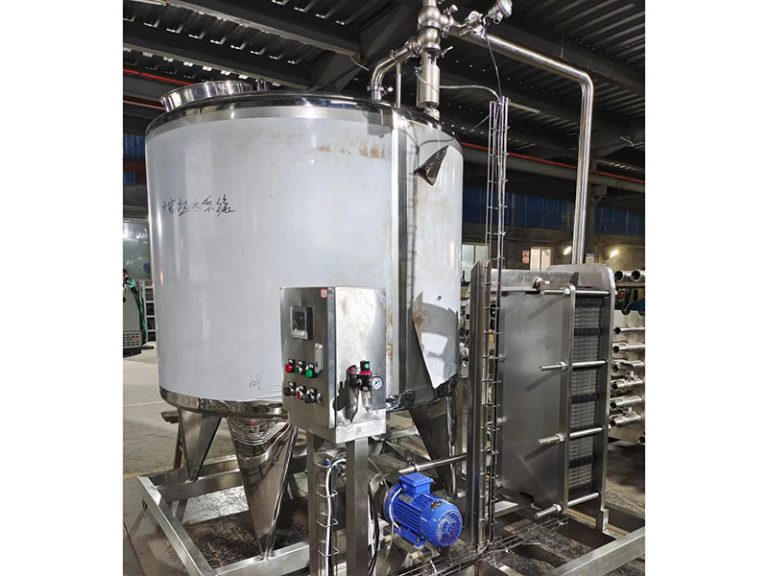
- Common equipment: plate pasteurizer with a plate heat exchanger (PHE)
HTST is the standard behind fresh milk, chilled juices, and fresh dairy beverages. It preserves a product’s natural flavor and nutritional profile better than more intense heat treatments, but it depends on an uninterrupted cold chain.
Zhongbo solution: Our plate pasteurizers handle 300–10,000 L/h with full-auto or semi-auto control and electric or steam heating options.
What Is UHT Pasteurization?
UHT stands for Ultra High Temperature. Often called UHT sterilization or aseptic processing, this method heats liquid food to a much higher temperature for an extremely short time, then cools it immediately and packages it in a sterile environment.
UHT Process Parameters
- Temperature: 135–150°C (275–302°F)
- Holding time: 2–5 seconds (some systems up to 10 seconds)
- Microbial target: Commercial sterility — destroys nearly all microorganisms and spores
- Storage: Ambient temperature
- Shelf life: 6–12 months unopened
- Common equipment: tubular pasteurizer or plate system integrated with aseptic tank and filler
UHT is the foundation of shelf-stable milk, long-life cream, plant-based drinks, and ambient sauces. Because the product is commercially sterile, it can be transported and stored without refrigeration, opening national and international distribution channels.
Zhongbo solution: Our tubular pasteurizers reach 140°C with 5–300 second hold times and capacities from 300 to 10,000 L/h.
Core Differences: HTST vs UHT

The single most important distinction is this: HTST pasteurizes; UHT sterilizes. That one difference determines shelf life, storage, packaging, and logistics.
HTST vs UHT Comparison Table
| Feature | HTST | UHT |
|---|---|---|
| Temperature | 72–75°C | 135–150°C |
| Holding Time | 15–20 seconds | 2–5 seconds |
| Microbial Level | Pasteurized — pathogens reduced | Commercially sterile |
| Shelf Life | 7–30 days | 6–12 months |
| Storage | Refrigerated | Ambient |
| Packaging | Non-aseptic filling | Aseptic filling + sterile packaging |
| Flavor Profile | Fresh, natural | Slightly cooked; modern systems retain 90–95% |
| Best For | Fresh, chilled, local products | Shelf-stable, long-distance products |
Shelf Life & Storage Impact
HTST products must stay cold from the moment they leave the filler until they reach the consumer. Any break in the cold chain shortens shelf life and risks spoilage. UHT products are far more forgiving. Once sealed in aseptic packaging, they can travel by sea, sit in warehouses, and sell in ambient retail aisles.
Taste & Nutritional Impact
HTST preserves more heat-sensitive vitamins and bioactive proteins. UHT causes more whey protein denaturation and vitamin loss, though modern systems have narrowed this gap. For most commercial beverages, the difference is small but measurable, especially for premium fresh dairy positioning.
Equipment Comparison: UHT Pasteurizer vs HTST Pasteurizer
The equipment for each method differs in heat exchanger design, holding section, and downstream integration.
HTST Pasteurization Equipment
- Plate heat exchanger (PHE) for rapid heating and regeneration
- Short holding tube sized for 15–20 second residence time
- Flow diversion valve to return under-pasteurized product
- Standard compatible filler — no sterile environment required
- Lower overall capital investment and simpler maintenance
UHT Pasteurization Equipment
- Tubular or plate heat exchanger rated for high pressure and temperature
- Very short holding tube (2–5 seconds)
- Aseptic tank and aseptic filler to maintain sterility
- Higher precision control systems for temperature and pressure
- Higher capital investment but enables ambient distribution
Cost & ROI Comparison
Initial equipment price is only part of the story. Distribution logistics often determine the true ROI.
| Cost Factor | HTST | UHT |
|---|---|---|
| Initial Investment | Lower | Higher (includes aseptic filler) |
| Energy Cost | Lower | Higher |
| Cold Chain Logistics | Required — ongoing cost | Not required |
| Packaging Cost | Standard | Premium (aseptic multilayer) |
| Best ROI Scenario | Local / regional fresh products | National / export / ambient retail |
Bottom line: UHT saves money on logistics over time. HTST saves money on upfront equipment. The right choice depends on how far your product travels and how long it needs to last.
Applications: When to Choose HTST or UHT
Choose HTST For
- Fresh milk and chilled dairy
- Cold-pressed juices
- Iced tea and fresh beverages
- Products sold within a short distance
- Premium fresh-positioned brands
Choose UHT For
- Shelf-stable milk and cream
- Plant-based drinks (oat, soy, almond)
- Flavored milk and nutritional beverages
- Soups, sauces, and dressings
- Export and long-distance distribution
Zhongbo builds complete dairy and beverage production lines around both HTST and UHT treatment, including upstream mixing, downstream aseptic filling, and CIP cleaning systems.
Process Selection Decision Matrix
Use this table to match your production goal to the right thermal process.
| Your Production Goal | Recommended Process | Why It Fits |
|---|---|---|
| Local fresh milk with premium taste | HTST | Best flavor retention; short cold-chain loop |
| National retail, ambient shelf | UHT | 6–12 month shelf life; no refrigeration needed |
| Export or remote distribution | UHT | Stable for sea freight and long warehousing |
| Chilled juice / iced tea | HTST | Fresh taste; already sold refrigerated |
| Plant-based milk in tetra packs | UHT | Aseptic carton packaging; ambient distribution |
| Limited capital, regional market | HTST | Lower equipment cost; faster payback |
Frequently Asked Questions
1. Which is safer, UHT or HTST?
Both are safe when designed and operated correctly. HTST reduces pathogens to safe levels. UHT goes further and achieves commercial sterility by destroying spores as well. The right choice depends on your product and shelf-life target, not safety alone. Not sure which fits your line? Ask our engineers.
2. Can I switch from HTST to UHT without changing my packaging line?
No. UHT requires aseptic filling and sterile packaging to maintain commercial sterility. Your standard HTST filler cannot prevent recontamination after UHT processing. If you are considering the switch, start with the right UHT pasteurization machine and aseptic packaging system.
3. Which has better ROI, UHT or HTST?
UHT generally delivers higher long-term ROI for brands distributing nationwide or exporting, because it removes cold-chain costs. HTST is more cost-effective for local fresh production with lower equipment investment. Need help calculating your ROI? Get a quote and we will walk through the numbers.
4. Does UHT always change the flavor of milk or juice?
Only slightly. UHT can create a mild cooked or caramelized note due to Maillard reactions. However, modern indirect UHT systems retain 90–95% of the original flavor, and direct steam injection systems preserve even more. For the best flavor retention in a UHT setup, explore our tubular pasteurizer options.
5. Does Zhongbo offer custom HTST and UHT pasteurization lines?
Yes. With over 30 years of experience and ISO 9001:2015 certification, Zhongbo designs turnkey HTST and UHT systems tailored to your product, capacity, and space constraints. From plate pasteurizers to tubular UHT units and CIP integration, we build complete lines. Request a free quote for your project.
Conclusion
HTST and UHT serve different production goals. HTST is the right choice for fresh, chilled products sold through a reliable cold chain. UHT is the right choice for shelf-stable products that travel long distances and sit in ambient retail.
The decision is not about which technology is better. It is about which technology fits your product, market, and business model. Map your distribution radius, shelf-life target, and budget against the comparison tables above, and the answer becomes clear.
Related Resources
- The Ultimate Guide to Indirect UHT Sterilizers
- Zhongbo Plate Pasteurizer
- Zhongbo Tubular Pasteurizer
- HTST & UHT Treatment Equipment
Ready to Choose the Right Pasteurization System?
Zhongbo has supplied HTST and UHT processing equipment to dairy, beverage, and sauce manufacturers for over 30 years. Tell us about your product and capacity, and our engineers will recommend the right system.
Last updated: July 15, 2026. Specifications and product details are based on information published on zjzhongbo.com. Contact Zhongbo directly for the most current technical data and custom project quotations.