Introduction
A practical guide for dairy engineers and project managers on selecting, sizing, and connecting multi-effect falling film evaporators for sweetened and unsweetened condensed milk production.
By Zhongbo Dairy & Beverage Equipment Team | Industrial Condensed Milk Processing
Condensed milk plants face a constant tension: remove enough water to reach the required total solids, without overheating the product. Whether you produce evaporated milk (unsweetened condensed milk) or sweetened condensed milk, the evaporation stage defines final product quality, energy consumption, and plant profitability.
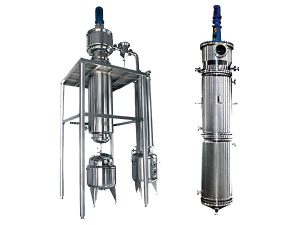
In modern plants, the answer is almost always a falling film multi-effect evaporator. This design combines thin-film heat transfer with staged energy reuse, letting milk boil at low temperature under vacuum while recycling latent heat across multiple effects. For procurement managers and process engineers, however, the real challenge is not choosing the technology—it is integrating it correctly into a larger process line.
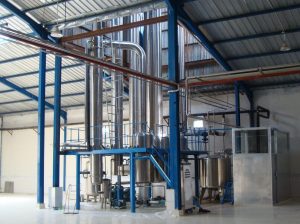
This article explains how to integrate a falling film multi-effect evaporator into an industrial condensed milk plant, from upstream milk reception to downstream packaging and cleaning.
Why Condensed Milk Plants Rely on Falling Film Multi-Effect Evaporators
Milk is a heat-sensitive liquid. When exposed to high temperature for more than a few minutes, several quality problems appear:
- Protein denaturation: Whey proteins begin to aggregate above 70 °C, changing texture and stability.
- Maillard browning: Reactions between lactose and proteins create off-flavors and darker color.
- Vitamin loss: Heat-labile vitamins such as B-complex and vitamin C degrade quickly.
- “Cooked” flavor: Consumers associate overheated dairy with poor quality.
A falling film evaporator solves these issues by spreading the milk as a thin film inside vertical tubes. Because the film is only a few millimeters thick, heat penetrates almost instantly. The product reaches its boiling point with a small temperature difference (ΔT) of 3–5 °C between the heating steam and the milk, and the residence time is typically 20–40 seconds.
Adding a multi-effect arrangement compounds the benefit. In a multi-effect system, vapor from one effect becomes the heating medium for the next. Each effect operates at a lower pressure (and therefore a lower boiling point) than the one before it. The result is that one kilogram of live steam can evaporate many kilograms of water. A well-designed six-effect system with thermal vapor recompression (TVR) can evaporate up to 12 kg of water per kilogram of steam.
That combination—gentle heat treatment plus energy reuse—is why falling film multi-effect evaporators dominate condensed milk production.
How the Condensed Milk Evaporation Process Works
The condensed milk evaporation process is best understood as a sequence of controlled unit operations. Here is the standard flow for an industrial plant:
Step 1: Raw Milk Standardization and Preheating
Raw milk is standardized for fat and solids-not-fat (SNF), then preheated. For condensed milk, preheating also serves a heat-stabilization function. Milk is typically held at 80–95 °C for 10–30 minutes (or 100–120 °C for 1–3 minutes) to denature whey proteins and precipitate calcium salts. This step improves the milk’s stability during subsequent sterilization.
Step 2: Sugar Addition (Sweetened Condensed Milk Only)
For sweetened condensed milk, sucrose is added either before pasteurization (dry sugar) or during evaporation as a concentrated syrup. The sugar must reach a final concentration of 62.5–64.5 % in the finished product to provide preservative osmotic pressure. Inline dosing pumps and refractometers control the ratio precisely.
Step 3: Multi-Effect Falling Film Evaporation
The milk-sugar mixture enters the top of the falling film evaporator through a precision distributor. The liquid flows downward as a thin film inside heated tubes, boiling under vacuum at 40–70 °C. Vapor and concentrate separate at the bottom of each effect, and the concentrate moves to the next effect at progressively lower pressure.
Typical final solids targets are:
| Product | Total Solids Target | Notes |
|---|---|---|
| Evaporated (unsweetened) milk | 30–40 % | Fat ≥ 6.5 %, SNF ≥ 16.5 % (FDA) |
| Sweetened condensed milk | ≥ 28 % total milk solids | Sugar 62.5–64.5 %; fat ≥ 8 % |
| Whole milk concentrate | Up to 52 % | Requires high-viscosity handling |
| Skim milk concentrate | Up to 50 % | Common before spray drying |
Step 4: Homogenization
After evaporation, the concentrate is homogenized at 12.5–25 MPa (125–250 bar) to break down fat globules and prevent separation during sterilization and storage. Homogenization pressure must be controlled carefully: too low, and fat separates; too high, and protein instability can cause curd formation during sterilization.
Step 5: Cooling and Crystallization (Sweetened Condensed Milk)
Sweetened condensed milk must be cooled rapidly and seeded with lactose crystals to control texture. Without controlled crystallization, large lactose crystals form, creating a gritty mouthfeel. Holding tanks then complete the crystallization process over several days.
Integrating the Evaporator Into the Plant
A falling film evaporator is not a standalone machine. Its performance depends on what happens before and after it. Here are the key integration points:
Upstream: Heat Treatment
The milk entering the evaporator must already be at a stable temperature. In most plants, this is handled by a HTST or UHT treatment system. The preheater in the evaporator itself can recover heat from the condensate and vapor, improving overall thermal efficiency.
Upstream: Sugar Dosing and Inline Mixing
For sweetened condensed milk, the sugar syrup must be added at a controlled rate before or during evaporation. The dosing system should be tied to the evaporator’s density or flow measurement to maintain the correct sugar-to-milk ratio.
Downstream: Homogenizer and Cooling
The evaporator discharge must be at a pressure and temperature suitable for the homogenizer. A buffer tank between evaporation and homogenization can smooth out flow fluctuations and allow for continuous operation.
Utilities: Steam, Cooling Water, and Vacuum
The evaporator requires a reliable steam supply (typically 0.6–0.8 MPa for first-effect heating), cooling water for the condenser, and a vacuum system. A barometric condenser or surface condenser, plus a vacuum pump, removes non-condensable gases and maintains the pressure gradient across effects.
Cleaning Integration
Dairy evaporators must be cleaned frequently to prevent protein and mineral fouling. The evaporator should be designed with Cleaning In Place (CIP) systems in mind: smooth weld seams, self-draining pipes, and easy access to the distribution plate. CIP cycles should alternate alkaline detergent, acid rinse, and final water rinse.

Selecting the Right Configuration: Effects, MVR, and TVR
The number of effects and the choice of vapor recompression determine both capital cost and operating cost. The right configuration depends on your production scale, local energy prices, and available space.
| Configuration | Typical Evaporation Load | Steam Use (kg / kg water) | Best For |
|---|---|---|---|
| 2-effect | 500–2,000 kg/h | ~0.55 | Small plants, lower capital budgets |
| 3-effect | 2,000–10,000 kg/h | ~0.33 | Mid-size dairy plants |
| 4-effect | 5,000–20,000 kg/h | ~0.25 | Large plants with steady steam supply |
| 5–6 effect + TVR | > 10,000 kg/h | 0.08–0.12 | High-volume, low-cost steam sites |
| MVR pre-concentrator | > 1,000 kg/h | Near-zero live steam | High electricity/low steam cost regions |
TVR (Thermal Vapor Recompression) uses high-pressure live steam (600–1,000 kPa) to pull and compress part of the vapor from the first effect, mixing it back into the heating steam. It is simple, reliable, and cost-effective when steam is inexpensive.
MVR (Mechanical Vapor Recompression) uses an electric compressor to raise the temperature of all vapor from the evaporator by 3–7 °C, then returns it to the heating side. MVR can reduce live steam consumption by 90 % or more and is often the lowest-operating-cost option when electricity is cheaper than steam. Zhongbo’s evaporation and concentration equipment can be configured with MVR, TVR, or hybrid arrangements.
Critical Design and Operating Parameters
Several parameters must be engineered correctly for stable, long-term operation:
Wetting Rate and Distribution
Even liquid distribution is the most important factor in falling film evaporator design. If tubes are under-wetted, dry spots form, causing protein burn-on and fouling. If they are over-wetted, heat transfer efficiency drops. Recommended wetting rates for water-like dairy feeds are typically 0.25–1.0 kg/m·s. Longer tubes (up to 20 m) and recirculation can increase wetting, but they also increase residence time.
Vacuum and Operating Temperature
Most dairy evaporators operate at 160–320 hPa absolute pressure, corresponding to water boiling temperatures of 55–70 °C. The first effect may run at the upper end (68 °C), and the last effect at the lower end (40–45 °C). This narrow temperature window protects proteins while still providing adequate evaporation rates.
Total Solids and Viscosity
As water is removed, viscosity rises. Standard falling film evaporators are suitable for low- to medium-viscosity liquids. When solids approach 50 %, a forced circulation “finisher” may be needed to handle the thicker concentrate and prevent fouling. For sweetened condensed milk, the high sugar content further increases viscosity and must be accounted for in the final effect design.
Heat Stability and Stabilizing Salts
Milk heat stability varies seasonally. If the concentrate is unstable during sterilization, stabilizing salts such as disodium hydrogen phosphate or trisodium citrate can be added. The exact dosage is determined experimentally for each milk supply.
Energy Efficiency and Total Cost of Ownership
Evaporation is the most energy-intensive step in condensed milk production. The right design can reduce operating costs dramatically:
- A 4-effect evaporator uses roughly 25 % less steam than a single-effect evaporator for the same water removal.
- A 6-effect TVR system can evaporate up to 12 kg of water per kg of steam.
- An MVR system can reduce live steam use by up to 90 %, with energy consumption dominated by electricity for the compressor.
- Heat recovery from condensate and vapor can preheat incoming milk, further reducing utility bills.
When comparing options, look at the total cost of ownership over 10 years, not just the purchase price. Energy savings from a higher-efficiency configuration often pay back the extra investment within 2 years.
Sanitary Design and CIP Considerations
Dairy evaporators must meet strict hygiene standards. Zhongbo builds evaporators in SS304, SS316, or SS316L with surface finishes suitable for food and pharmaceutical use. Key sanitary design principles include:
- All product-contact surfaces polished to Ra ≤ 0.8 µm where required.
- Self-draining design to prevent product pooling.
- Tri-clamp or DIN connections for easy disassembly.
- Seamless welds and no dead legs.
- Compliance with 3-A Sanitary Standards, EHEDG, or GMP as required by the target market.
CIP integration should be planned from the start. The distribution plate, separator, and vapor lines must be fully cleanable, and the CIP supply must be sized for the required flow velocity.
Common Integration Mistakes to Avoid
- Undersizing the upstream heat treatment: If the milk is not heat-stabilized before evaporation, it may coagulate during sterilization.
- Ignoring wetting rate at high solids: As viscosity rises, the distributor may need recirculation or larger tube diameter.
- Mismatched utility capacity: Steam, cooling water, and electricity must be available at the required rates when the evaporator is at peak load.
- Overlooking CIP access: Compact layouts that block access to the distributor or separator make cleaning difficult.
- Buying on capital cost alone: A cheaper evaporator with higher steam use can cost far more over its lifetime.
Condensed Milk Evaporator Configuration Checklist
Use this checklist to collect the data your equipment supplier will need to size and configure a falling film multi-effect evaporator for your plant.
Process Data
- Feed rate (L/h or kg/h) and annual operating hours
- Incoming total solids (% TS) and target total solids
- Product type: sweetened condensed milk, evaporated milk, or milk concentrate
- Upstream heat treatment method (HTST, UHT, or batch)
- Downstream process: homogenization, cooling, crystallization, or spray drying
Utilities and Site
- Available steam pressure (MPa) and cost per ton
- Electricity cost and available power capacity
- Cooling water temperature and flow rate
- Available floor space and ceiling height
Quality and Compliance
- Required sanitary standard (3-A, EHEDG, GMP, etc.)
- Target cleaning frequency and CIP chemicals
- Automation level: manual, semi-automatic, or full PLC/SCADA
Share this completed checklist with Zhongbo’s team to receive a configuration matched to your actual process data.
FAQs
1. Why are falling film evaporators preferred for condensed milk production?
Falling film evaporators expose milk to heat for only 20–40 seconds at 40–70 °C under vacuum. This minimizes protein denaturation, Maillard browning, and “cooked” flavor, making them ideal for heat-sensitive dairy products.
2. What is the difference between sweetened and unsweetened condensed milk evaporation?
Unsweetened (evaporated) milk is concentrated to 30–40 % total solids. Sweetened condensed milk has sugar added before or during evaporation and must reach 62.5–64.5 % sugar in the final product, which raises viscosity and changes heat transfer behavior.
3. How many effects are needed for a condensed milk evaporator?
Small plants often use 2–3 effects; large industrial plants use 4–6 effects. The optimal number depends on evaporation load, steam cost, available space, and payback period. Higher effects reduce steam use but increase capital cost.
4. What is the typical operating temperature and vacuum level?
Most dairy evaporators operate at 160–320 hPa absolute pressure, with water boiling at 55–70 °C. The first effect runs hottest (around 68 °C) and the last effect coolest (around 40 °C).
5. How does MVR reduce operating costs in condensed milk plants?
MVR compresses vapor from the evaporator and reuses it as heating steam. This can cut live steam consumption by up to 90 %, making it the lowest-operating-cost option when electricity is cheaper than steam.
6. What causes fouling in milk evaporators, and how is it prevented?
Fouling comes from protein denaturation, calcium phosphate precipitation, and burn-on at dry spots. Prevention includes proper wetting rate, controlled temperature, smooth stainless-steel surfaces, and regular CIP cycles.
7. How is the concentration of condensed milk measured during evaporation?
Concentration is usually monitored online with density meters, refractometers, or near-infrared (NIR) sensors. For sweetened condensed milk, density is also correlated with sugar content and total solids.
8. What sanitary standards apply to dairy evaporators?
Common standards include 3-A Sanitary Standards (US), EHEDG (Europe), and GMP for pharmaceutical or infant-formula applications. Materials are typically SS304, SS316, or SS316L with polished product-contact surfaces.
9. Can a falling film evaporator handle high-viscosity sweetened condensed milk?
Standard falling film evaporators handle low- to medium-viscosity feeds. For high-viscosity sweetened condensed milk, a forced circulation “finisher” or larger-diameter tubes with recirculation may be required in the final effect.
10. How do I get a falling film multi-effect evaporator sized for my plant?
Collect your feed rate, solids targets, product type, utility costs, and sanitary requirements, then contact our engineers with your process data. Zhongbo will propose a configuration, utility estimate, and layout.
Conclusion
Integrating a falling film multi-effect evaporator into a condensed milk plant is not just about buying a piece of equipment. It requires a systems view: the right number of effects, the right vapor recompression strategy, careful upstream heat treatment, and a downstream cooling and CIP plan that works together.
When engineered correctly, the result is lower steam consumption, better product quality, longer run times between cleans, and a faster return on investment. Zhongbo has supplied sanitary evaporation and concentration systems to dairy and beverage plants worldwide and can configure a solution around your specific milk supply, product mix, and utility costs.
Request a Tailored Evaporator Proposal
Related Resources
From Zhongbo
- Falling Film Evaporators for Heat-Sensitive Liquid Concentration: A Complete Sizing & Efficiency Guide
- Industrial Evaporator Selection Guide: Falling Film vs. Forced Circulation vs. Scrape Film Evaporator
- The Ultimate Guide to Falling Film Evaporators in Solvent Extraction and Ethanol Recovery
- HTST vs. UHT Pasteurization for Dairy Lines: How to Select the Right Thermal Process and Design a Matching CIP Cleaning Cycle
- How HTST & UHT Treatment Eliminates Chemical Preservatives in Commercial Milk Processing
Recommended Future Reads
- CIP System Design for Sanitary Falling Film Evaporators
- MVR vs TVR: Energy Economics for Dairy Evaporators
- How to Prevent Fouling in Milk Evaporators
- Lactose Crystallization Control in Sweetened Condensed Milk Production
- TCO Analysis: Falling Film vs. Forced Circulation Evaporators
Zhejiang Zhongbo Mechanical Technology Co., Ltd. supplies sanitary dairy and beverage processing equipment, including evaporation and concentration systems, HTST/UHT treatment lines, CIP systems, and stainless steel tanks. Contact us for a technical proposal.