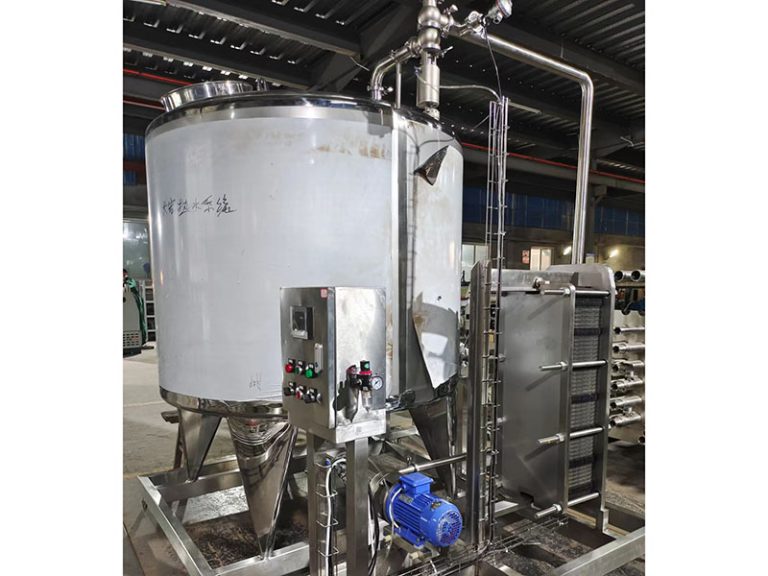
Process Tank Selection for Dairy and Beverage Lines: Agitation Design, Jacket Heating, and CIP Integration
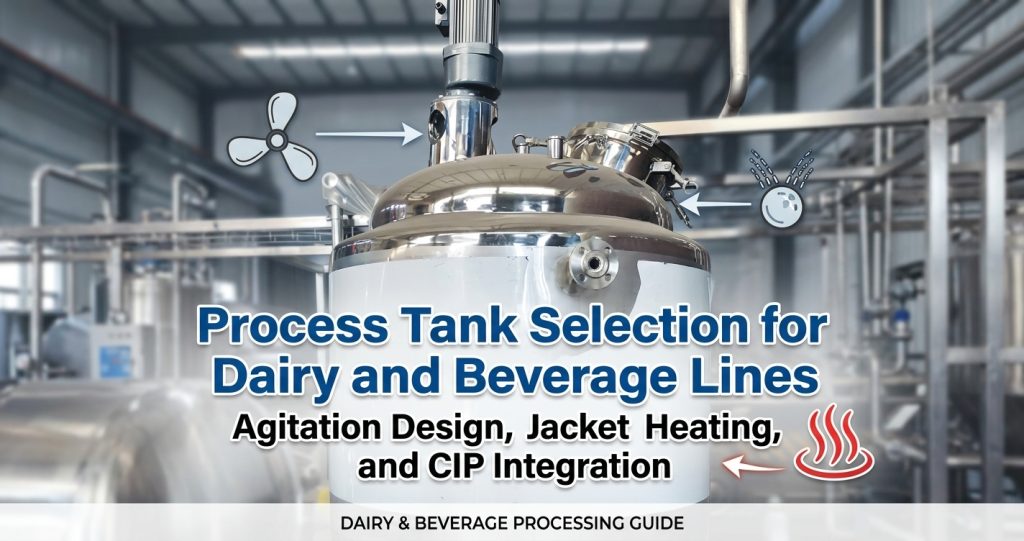
Introduction Process tanks are essential components in dairy and beverage production lines. They are used for mixing, heating, cooling, holding, buffering, and preparing liquid products before downstream processing. However, selecting the right process tank is more than choosing a suitable volume. Tank geometry, agitation, heating method, material, surface finish, and CIP integration can all affect […]
How to Choose the Right CIP System for a Dairy or Beverage Plant
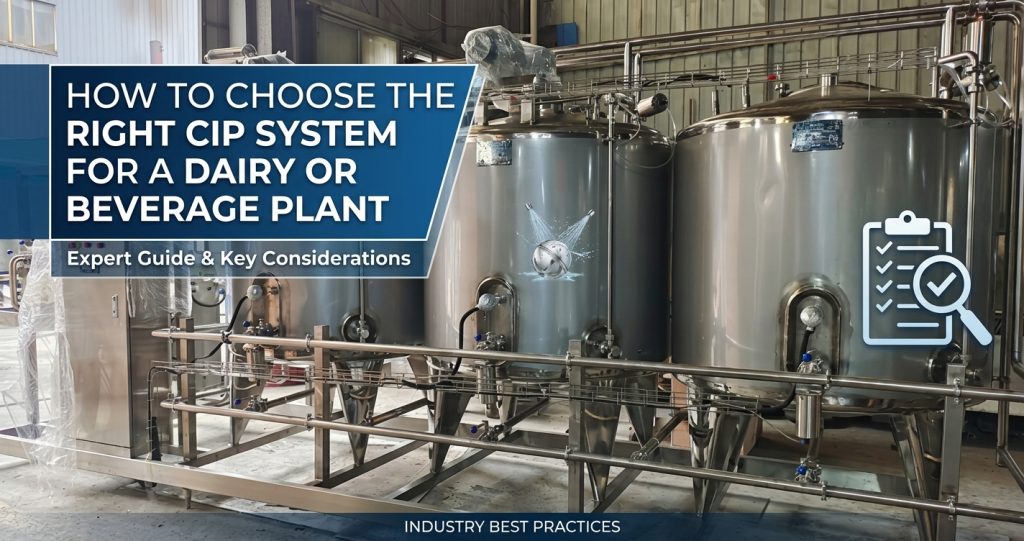
Introduction Cleaning is a critical part of dairy and beverage production. Product residues can accumulate inside tanks, pipelines, heat exchangers, filling equipment, and other processing equipment, creating hygiene risks and affecting production efficiency. A CIP (Cleaning-in-Place) system allows process equipment to be cleaned without dismantling the production line. By controlling cleaning chemicals, temperature, flow, pressure, and cleaning […]
How to Choose the Right Buffer Tank: Aseptic vs Atmospheric vs Pressure
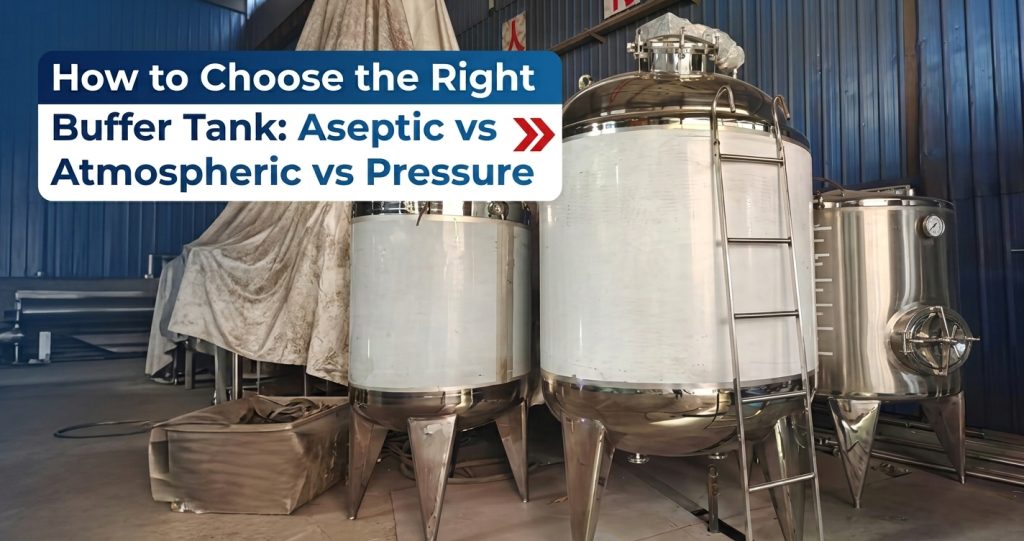
Introduction Buffer tanks play an important role in dairy and beverage processing by providing temporary product storage between different processing stages. They help balance production flow, reduce interruptions, and coordinate equipment with different processing capacities. However, not every buffer tank is suitable for every application. Aseptic, atmospheric, and pressure tanks have different designs and operating conditions. The […]
How to Choose a Sanitary Pump: Centrifugal vs Rotary Positive Displacement Pump vs High-Shear Emulsifying Pump
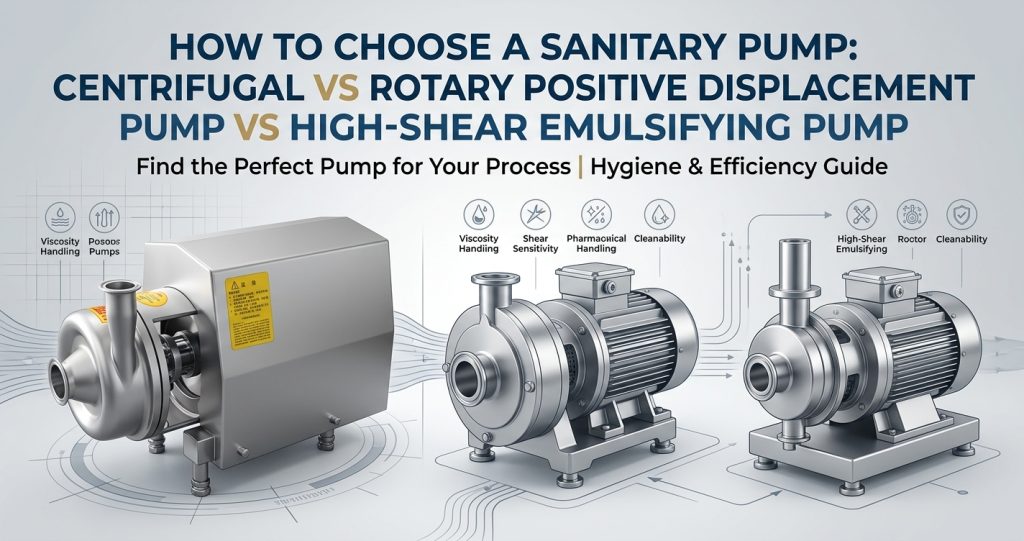
Introduction Sanitary pumps are essential for transferring liquids between tanks, processing equipment, heat exchangers, UHT systems, and filling lines in food and beverage production. However, different products require different pumping principles. Centrifugal pumps, rotary positive displacement pumps, and high-shear emulsifying pumps each have different performance characteristics. The right choice depends on flow rate, pressure, viscosity, product composition, shear […]
Package Sterilization Systems for Aseptic Beverage Lines: Dry Heat, Chemical, and UV Methods Compared
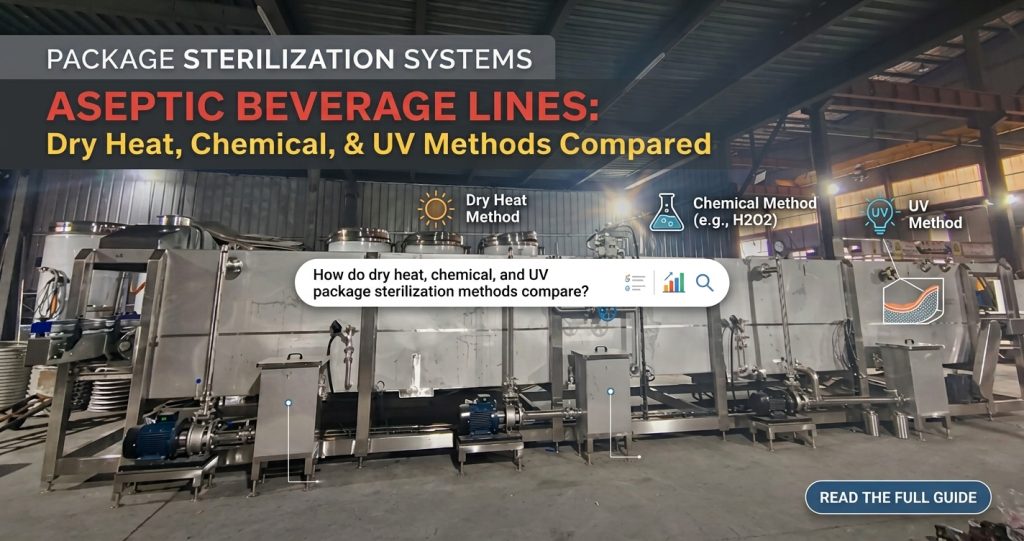
Introduction In aseptic beverage production, achieving commercial sterility is not limited to sterilizing the product itself. The packaging material and container must also be treated before filling so that microorganisms introduced from the package do not compromise the finished product. This makes package sterilization a critical step in an aseptic filling line. Depending on the container material, […]
How to Choose the Right Deaeration System for Your Beverage Production Line
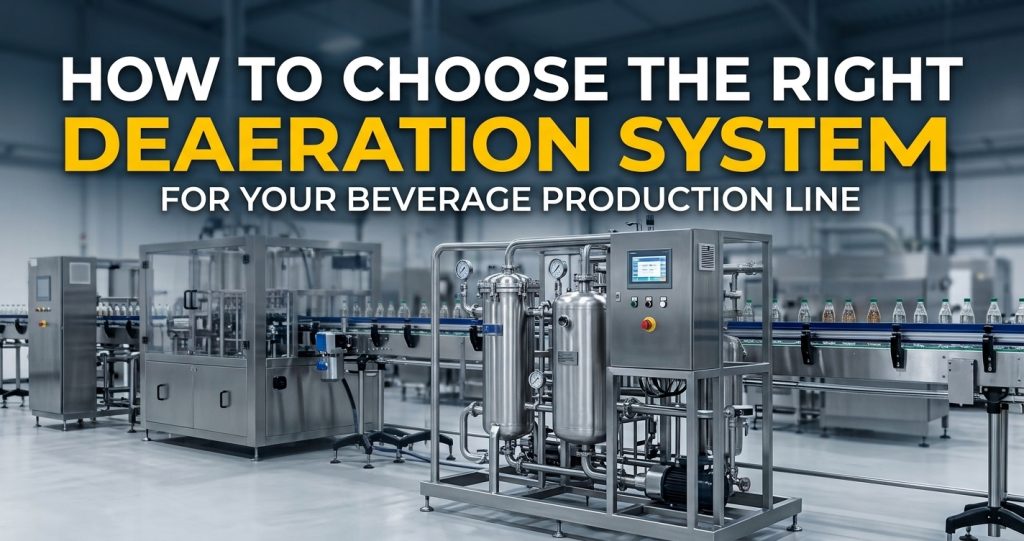
Introduction Dissolved oxygen can negatively affect beverage quality, shelf life, color, flavor, and nutritional stability. For many dairy and beverage manufacturers, removing excess oxygen before thermal treatment and filling is therefore an important part of process design. A deaeration system uses controlled vacuum and product conditions to remove dissolved and entrained air from liquids. However, different beverages […]
Hot Fill vs Aseptic Cold Fill: Which Is Better for Beverage Packaging?
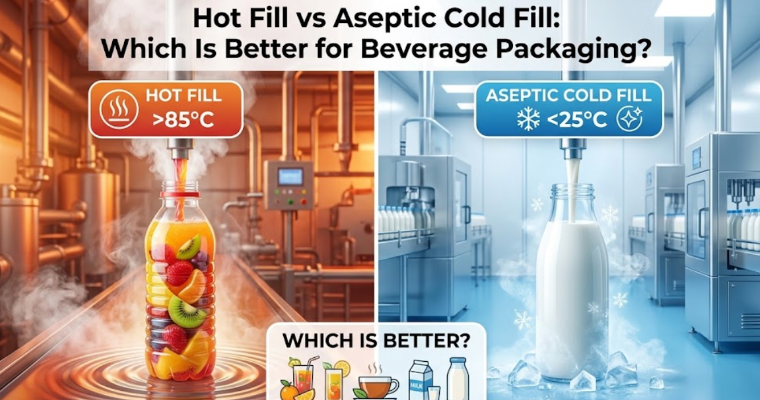
Introduction Choosing the right beverage filling method directly affects product safety, shelf life, packaging requirements, and production cost. Two widely used approaches are hot fill and aseptic cold fill. Hot fill uses elevated product temperatures to control microorganisms before the beverage is filled into suitable containers. Aseptic cold fill, by contrast, sterilizes the product and packaging separately and […]
Agitator Tank vs High Shear Emulsification Tank: Which Is Better for Your Product?
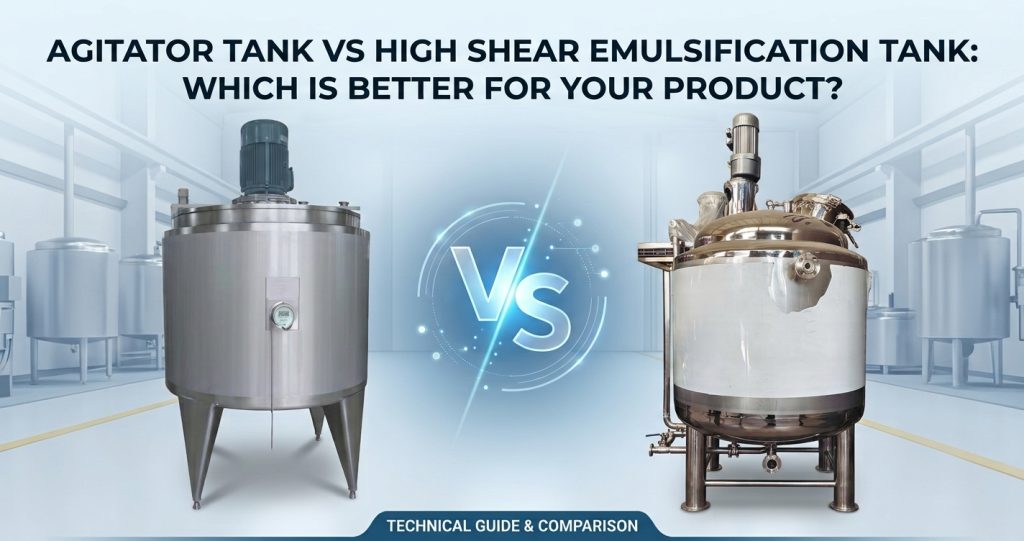
Introduction Mixing equipment plays a critical role in dairy, beverage, food, cosmetic, and other liquid-processing applications. However, not every product requires the same type of mixing. An agitator tank is generally designed for controlled bulk mixing, blending, and maintaining product uniformity. A high shear emulsification tank, by contrast, generates significantly higher shear forces to disperse, homogenize, or emulsify […]
How to Choose RO: Single-Pass vs Double-Pass for Your Beverage Plant
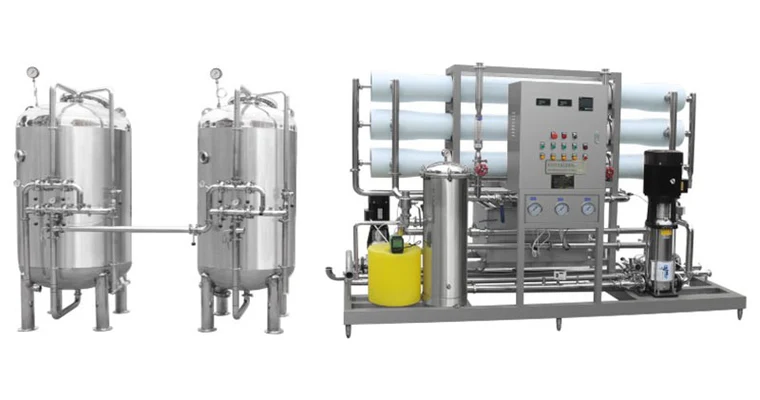
Key Takeaways Single-pass RO delivers 97–98% salt rejection and 5–10 μS/cm conductivity — sufficient for most beverage and bottled water lines. Double-pass RO pushes rejection to >99.5% and conductivity below 1–3 μS/cm, ideal for aseptic filling, pharma-grade water, and high-purity process water. The choice depends on raw water quality, target conductivity, budget, and downstream process […]
CIP vs SIP: Which Cleaning System Does Your Plant Need?
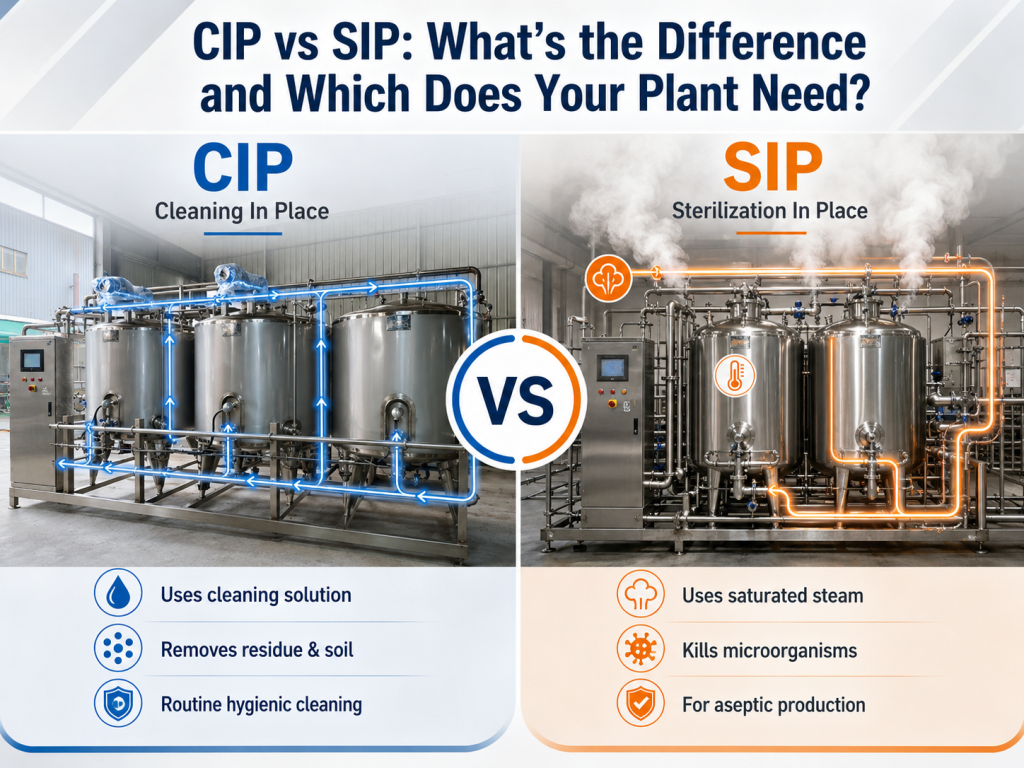
KEY TAKEAWAYS ✅ CIP cleans equipment with chemicals & water without disassembly — ideal for food, dairy & beverage plants. ✅ SIP sterilizes using saturated steam at 121–135°C — mainly for sterile pharma/biotech environments. ✅ For most food & beverage operations, a well-designed CIP system provides sufficient hygiene; SIP adds cost & complexity. ✅ A […]