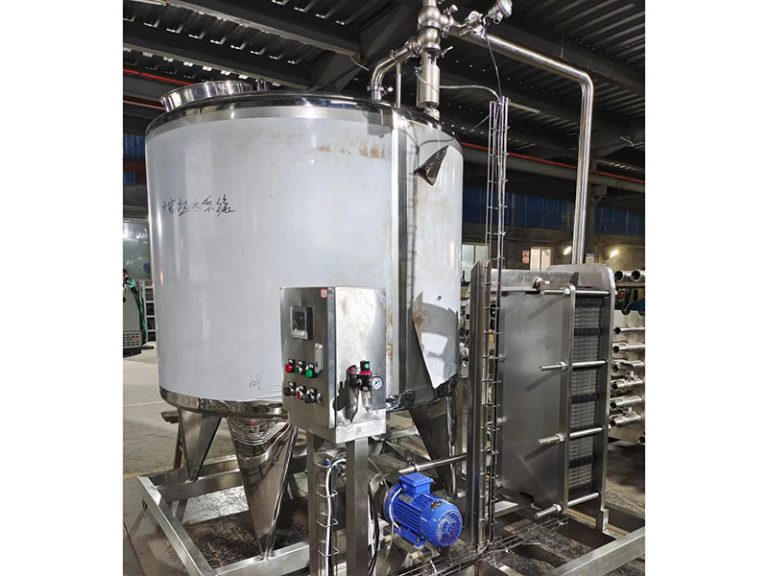
Plant Hygiene & Sanitation
A practical comparison of Clean-In-Place and Sterilize-In-Place systems — when each applies, how they work, and which one fits your food or beverage production facility.
📅 Updated August 2026 · ⏱️ 10 min read · 🎯 Plant Engineers & Production Managers
Why Understanding CIP vs SIP Matters
In any liquid food or beverage plant, hygiene is not optional — it is the foundation of product safety, regulatory compliance, and shelf-life stability. Two acronyms dominate the conversation around in-place sanitation: CIP (Clean-In-Place) and SIP (Sterilize-In-Place). They sound similar, serve adjacent purposes, and are often mentioned together — yet they address fundamentally different problems.
Choosing between them (or deciding whether you need both) has direct implications for your capital budget, operating costs, validation workload, and even the physical design of your piping and vessels. This guide breaks down each system, compares them across the criteria that matter to plant engineers, and helps you make an evidence-based decision for your specific operation.
What Is CIP (Clean-In-Place)?
Clean-In-Place (CIP) is an automated method of cleaning the interior surfaces of pipes, tanks, heat exchangers, valves, and associated fittings without disassembly. Instead of manually scrubbing equipment after every batch, a CIP system circulates controlled sequences of water, detergent solutions, acid washes, and sanitizers through the process circuitry.
The technology was pioneered by the dairy industry in the 1950s and has since become the standard hygienic practice across virtually all liquid-food sectors — milk, yogurt, juice, beer, soft drinks, plant-based beverages, and sauces. Modern CIP systems are fully programmable via PLC/HMI, log critical parameters (temperature, conductivity, flow rate, pH), and can be validated against FDA, cGMP, EHEDG, and 3-A Sanitary Standards.

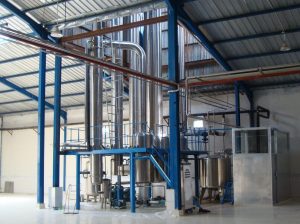
Figure 1: A Zhongbo split-type CIP system installed on-site — three chemical tanks, recirculation pump skid, and PLC control cabinet.
How a Standard CIP Cycle Works
A complete CIP cycle typically consists of five stages, each with defined parameters that must be logged for validation:
Total cycle time ranges from 30 to 90 minutes, depending on soil load, pipe length, and the level of validation required. Advanced CIP designs incorporate detergent recovery and water recycling to reduce chemical consumption and wastewater volume by up to 40%.
What Is SIP (Sterilize-In-Place)?
Sterilize-In-Place (SIP) — also called Steam-In-Place — uses saturated steam (or other validated sterilants) to achieve microbial eradication inside closed process equipment, again without disassembly. Unlike CIP, which removes visible dirt and chemical residues, SIP’s sole purpose is to kill microorganisms: bacteria, spores, fungi, and viruses.
SIP operates at far more aggressive conditions than CIP: saturated steam at 121–135°C and 2–3 bar pressure, held for a validated dwell time (typically 15–30 minutes). The entire system must be designed as a pressure vessel rated for these conditions, with proper steam traps, condensate drainage, and temperature mapping to ensure all cold spots reach sterilization temperature.
Beyond steam, other SIP methods include pressurized superheated water, chemical sterilants (hydrogen peroxide vapor), dry heat via HEPA-filtered air, and gas sterilization (ethylene oxide). However, steam remains the dominant method due to its penetrative power, low cost per cycle, and well-established validation protocols (biological indicators, Bowie-Dick tests).
CIP vs SIP: Head-to-Head Comparison
This table summarizes the core differences across the dimensions that matter most when specifying a sanitation system:
When to Choose CIP: The Food & Beverage Default
For the overwhelming majority of food, dairy, and beverage production facilities, a properly engineered CIP system is both necessary and sufficient. Here is why CIP dominates this sector:
- Removes the actual contamination source. In food processing, the primary risk is organic residue (proteins, sugars, fats) that feeds microbial growth. CIP physically removes this material; SIP cannot.
- Matches the product’s inherent preservation method. Most food and beverage products rely on pasteurization/UHT treatment, refrigeration, acidity (pH <4.6), or packaging barriers for microbiological safety — not terminal sterilization of the process equipment itself.
- Faster turnaround between batches. A CIP cycle completes in under 90 minutes. An equivalent SIP cycle (including heat-up, dwell, and cool-down) often exceeds 90 minutes, directly reducing OEE (Overall Equipment Effectiveness).
- Lower capital and operating cost. CIP systems do not require pressure-rated vessels, steam generators sized for sterilization duty, or extensive condensate management infrastructure.
- Easier to validate for food-grade compliance. CIP parameters (time, temperature, conductivity, flow rate) are straightforward to monitor, document, and audit against HACCP, FDA 21 CFR Part 117, and GFSI schemes (SQF, BRC, FSSC 22000).
If your plant processes milk, yogurt, juice, beer, soft drinks, plant-based beverages, sauces, or dressings, a CIP system from a specialized manufacturer such as Zhongbo’s CIP Cleaning System lineup will cover your sanitation requirements. These systems support both split-type (separate tank skid) and integrated configurations, with fully automatic PLC control and recipe storage for multiple product lines.
When You Might Actually Need SIP
SIP is not “better” than CIP — it serves a different purpose. You should consider adding SIP capability if any of the following apply to your operation:
- Aseptic processing lines. If you produce shelf-stable products filled into sterile containers (aseptic UHT milk, aseptic juice, nutritional formulas), the filler and upstream piping may require SIP before each production run to guarantee sterility.
- Pharmaceutical or biotech manufacturing. Injectable drugs, biologics fermentation, cell culture media preparation, and parenteral nutrition products operate under GMP regulations that mandate validated sterilization — not just cleaning.
- Extended hold periods between productions. If equipment sits idle for days or weeks (e.g., seasonal operations), a periodic SIP cycle provides an extra layer of assurance against dormant biofilm reactivation.
- Regulatory requirement. Certain markets or customer specifications (e.g., infant formula export to EU, pharmaceutical co-manufacturing contracts) explicitly require documented sterilization cycles in addition to cleaning.
Important caveat: SIP cannot replace CIP. Steam sterilization is ineffective on dirty surfaces — soil acts as a thermal insulator and shields microorganisms. Any SIP cycle must be preceded by a thorough CIP cleaning. In practice, most facilities that need SIP run CIP first, then SIP as a sequential protocol.
Quick Decision Guide: CIP or SIP (or Both)?
Use this table to quickly identify which system matches your production profile:
Common Mistakes When Specifying CIP or SIP Systems
- Undersizing the CIP pump and tank capacity. If flow velocity drops below 1.5 m/s in pipes, turbulence is lost and cleaning effectiveness plummets. Always size for the worst-case circuit (longest run, smallest diameter).
- Using incompatible elastomers. Caustic soda degrades Buna-N (NBR) seals rapidly. Specify EPDM, PTFE, or FKM (Viton) throughout the CIP circuit.
- Neglecting dead legs in piping design. Stagnant zones where cleaning fluid doesn’t reach become biofilm reservoirs. Follow EHEDG guidelines for zero-dead-leg valve clusters and piping slopes.
- Skipping the intermediate rinse conductivity check. Without verifying caustic removal, residual alkali can contaminate the next product batch (and alter its pH).
- Assuming SIP replaces CIP. As emphasized above, steam cannot penetrate soil layers. Every SIP cycle must be preceded by a validated CIP sequence.
- No data logging or SCADA integration. Manual paper logs are audit-vulnerable. Modern CIP systems should auto-log all parameters to a central database for traceability.
Zhongbo CIP Systems: Built for Your Sanitation Needs
Zhejiang Zhongbo Machinery Technology Co., Ltd. designs and manufactures automated CIP cleaning systems tailored to dairy, juice, beverage, and liquid food applications. Our CIP lineup includes:
- Split-Type CIP Systems — Separate chemical tank skid with independent acid/alkali/detergent/hot-water tanks, recirculation pumps, and PLC control panel. Ideal for larger plants with multiple production lines sharing one CIP station.
- Integrated CIP Systems — Compact single-skid design combining tanks, pumps, and controls in a smaller footprint. Suited for medium-scale operations and space-constrained facilities.
- Fully Automatic Control — Siemens/OMRON PLC + HMI touch screen with recipe storage (up to 99 programs), real-time parameter display, alarm logging, and remote monitoring capability.
- Construction Standards — SUS304/316L stainless steel, electropolished contact surfaces, sanitary tri-clamp connections, EHEDG-compliant design, ASME-certified pressure vessels where applicable.
Explore our full CIP Cleaning System catalog or request a custom configuration based on your plant layout and cleaning circuit requirements.
Frequently Asked Questions: CIP vs SIP
Q1: What is the single biggest difference between CIP and SIP?
CIP cleans; SIP sterilizes. CIP removes dirt, protein films, mineral scale, and organic residues using chemical solutions and water. SIP kills microorganisms using high-temperature steam (or other sterilants). Think of it this way: CIP washes the dishes; SIP puts them through an autoclave. For food and beverage plants, CIP handles the day-to-day sanitation need; SIP is reserved for sterile-environment applications.
Q2: Can SIP completely replace CIP in my plant?
No. Steam cannot penetrate soil layers — organic residue acts as a thermal insulator that shields microorganisms underneath. If you run SIP on dirty equipment, you will get “sterile dirt”: the surface looks processed, but contaminants remain trapped beneath. Every effective SIP protocol must be preceded by a thorough CIP cycle. The two technologies are complementary, not interchangeable.
Q3: How long does a typical CIP cycle take? Can I shorten it?
A full 5-stage CIP cycle (pre-rinse → alkaline wash → intermediate rinse → acid wash → final sanitize/rinse) takes 30 to 90 minutes, depending on soil load and circuit complexity. You can optimize cycle time by: (a) increasing flow velocity to improve mechanical action, (b) raising wash temperature within material limits, (c) using enzyme-based detergents that cut soak time, and (d) implementing single-use (SUS) protocols for light-changeover scenarios. However, never skip stages arbitrarily — each serves a validated purpose.
Q4: Which industries primarily use CIP versus SIP?
CIP is the default across food, dairy, beverage, brewing, cosmetics, and general liquid processing — essentially any industry where products receive their own microbial kill-step (pasteurization, UHT, HPP, refrigeration, or acidic formulation). SIP is concentrated in pharmaceutical injectables, biotech fermentation, sterile API manufacturing, parenteral nutrition, and certain medical-device production — environments where GMP regulations demand documented sterility assurance levels (SAL 10⁻⁶).
Read: Evaporator Selection Guide →
Q5: Is CIP enough for aseptic filling operations?
For aseptic processing (producing shelf-stable products in sterile containers), CIP alone is usually not sufficient. The aseptic filler, balance tank, and connecting piping typically require a post-CIP SIP cycle to guarantee sterility before each production run. That said, the upstream processing equipment (pasteurizers, homogenizers, evaporators, heat exchangers) still relies on CIP-only sanitation because those areas are covered by the product’s own thermal treatment. So in many aseptic plants, you end up with a hybrid: CIP everywhere, plus SIP at the filler.
Q6: What are the most common causes of CIP system failure?
The top failure modes we see in the field are: (1) Inadequate flow velocity — below 1.5 m/s loses turbulence and cleaning efficiency; (2) Dead legs in piping — stagnant zones harbor biofilm; (3) Wrong seal materials — NBR degrades in caustic, causing leaks and contamination; (4) Spray ball coverage gaps — undersized or poorly positioned spray devices miss tank surfaces; (5) No conductivity/pH monitoring — operators guess when rinsing is complete, leading to chemical carryover or incomplete cleaning. All of these are preventable with proper hydraulic design, correct material specification, and instrumented control.
Q7: How do I decide whether my plant needs CIP only, or CIP plus SIP?
Start with two questions: (1) Does my product receive a validated microbial kill-step after leaving the equipment? (pasteurization, UHT, retort, HPP). If yes → CIP-only is likely adequate. (2) Do I have a regulatory or contractual requirement for documented equipment sterility? (pharma GMP, aseptic fill certification, injectable manufacturing license). If yes → you need CIP + SIP. Use the decision table above as a quick reference, and consult with a process engineer who understands both your product’s hazard analysis and your local regulatory framework. Zhongbo’s engineering team can help you specify the right configuration.
Related Resources
- Plate Heat Exchanger vs Tubular Heat Exchanger: Which Fits Your Line? — Compare the two dominant heat transfer technologies for pasteurization and UHT applications.
- Falling Film vs Forced Circulation Evaporator: Which Suits Your Plant? — Choose the right evaporation technology for juice, dairy, and concentrate production.
- Zhongbo CIP Cleaning System — Explore our split-type and integrated CIP system specifications, layouts, and case studies.
- Tubular Heat Exchangers — High-efficiency tubular units for UHT, pasteurization, and heat recovery in sanitary applications.
Disclaimer: This article is provided for informational purposes only. Always consult a qualified process engineer and comply with local food safety and pharmaceutical regulations when designing or modifying cleaning and sterilization systems. Specifications vary by application — contact Zhongbo for a project-specific assessment.