A practical engineering comparison of U-values, regeneration efficiency, fouling behavior, and total cost of ownership — so you can match the right heat exchanger to your specific product matrix, not just a datasheet.
By Zhongbo Engineering Team | July 2026 | 12 min read
Why Thermal Efficiency Matters in Low-Acid Beverage Processing
Low-acid beverages — defined by the U.S. FDA as products with a finished equilibrium pH greater than 4.6 and a water activity (aw) above 0.85 — include fluid milk, plant-based milks (oat, almond, soy), ready-to-drink (RTD) coffees and teas, nutritional beverages, and coconut water. Because these products support the growth of Clostridium botulinum spores, thermal processing is not optional — it is a regulatory requirement under 21 CFR Part 113.
This means the heat exchanger at the core of your pasteurization or UHT line is not just another component on the P&ID. It is the single piece of equipment that determines whether your process is legally compliant, commercially viable, and energy-efficient. The thermal efficiency of your heat exchanger directly controls:
- Steam consumption (kg steam per 1,000 L product) — the #1 variable OPEX line item in any thermal beverage plant
- Regeneration efficiency (%) — how much thermal energy you recover from the hot product to pre-heat the incoming cold product
- Product quality retention — excessive thermal exposure denatures whey proteins, triggers Maillard browning, and destroys heat-labile vitamins
- CIP chemical and water consumption — fouling-prone exchangers demand longer, hotter, and more chemically aggressive cleaning cycles
- Production uptime — every unplanned shutdown for cleaning or gasket replacement is lost revenue
Let’s examine how plate and tubular designs compare on each of these dimensions — starting with the thermal fundamentals.
Plate Heat Exchangers: Design & Thermal Profile

How They Work
A plate heat exchanger (PHE) consists of a stack of thin (0.5–0.7 mm), corrugated stainless steel plates compressed between a fixed frame and a movable pressure plate. The corrugations create alternating flow channels: hot and cold fluids pass through every other channel in a counter-current configuration. Gaskets around the perimeter and port holes of each plate seal adjacent channels from each other and from the atmosphere.
This geometry delivers three thermal advantages that no tubular design can match simultaneously:
- Enormous specific surface area: The corrugated pattern packs 200–700 m² of heat transfer area per cubic meter of exchanger volume — roughly 3–5 times the area density of a comparable tubular unit.
- High turbulence at low Reynolds numbers: The plate corrugations create turbulent flow at velocities as low as 0.2–0.5 m/s. Turbulence disrupts the thermal boundary layer, driving the convective heat transfer coefficient (h) dramatically upward.
- True counter-current flow: With hot and cold fluids flowing in opposite directions along the full plate length, the log-mean temperature difference (ΔTlm) is maximized. This enables approach temperatures as low as 1–3°C — a figure tubular designs simply cannot reach in practical operation.
Typical Thermal Performance in Beverage Pasteurization
| Parameter | Plate Heat Exchanger |
|---|---|
| Overall heat transfer coefficient (U) | 3,000 – 7,000 W/m²·K |
| Approach temperature | 1 – 3°C (with 100% counter-current flow) |
| Max regeneration efficiency | 90 – 95% |
| Typical channel gap | 2 – 5 mm |
| Max operating pressure (gasketed) | 16 – 25 bar |
| Max operating temperature (gasketed) | 150 – 160°C (short-term sterilization) |
| Product viscosity limit | Typically ≤ 500 cP for standard gaps |
| Particle size tolerance | ≤ 1.5 mm (clean, homogeneous fluids) |
Where PHEs Excel in Low-Acid Beverage Processing
Plate heat exchangers are the undisputed thermal efficiency champion for clean, homogeneous, low-viscosity low-acid beverages:
- Standard fluid milk (skim, whole, reduced-fat) — the classic 4-section PHE pasteurizer (regeneration / heating / holding / cooling) can recover 94–95% of thermal energy
- Clear fruit juices and coconut water — even with pasteurization at 95–98°C, PHEs deliver rapid heating and cooling with minimal flavor degradation
- Nutritional and protein beverages — provided they are fully homogenized and free of visible particulates
- Brewery applications (wort cooling, beer pasteurization) — high volume, low fouling potential
Tubular Heat Exchangers: Design & Thermal Profile
How They Work
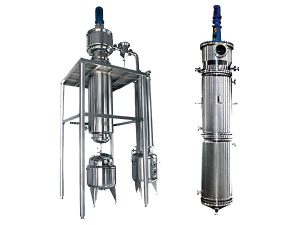
A tubular heat exchanger routes the product through one or more inner tubes while the heating or cooling medium (hot water, steam, or chilled water) flows counter-currently in the surrounding shell or annular space. Zhongbo manufactures three tubular configurations tailored to different product viscosities and particulate loads:
- Tube-in-tube (double layer): Product in the inner tube, service medium in the annular jacket. Ideal for moderate viscosity (up to ~5,000 cP) with small particulates.
- Multi-tube shell-and-tube: A bundle of small-diameter product tubes housed within a larger shell. High throughput, large surface area, suits clean fluids at scale.
- Corrugated / spiral tube: The tube surface is formed with dimples or spirals to induce controlled turbulence. This increases the U-value by 25–60% compared to smooth-tube designs while maintaining the open cross-section that PHEs lack. Suitable for viscosities up to 10,000 cP with pulp, fibers, or small particles.
Typical Thermal Performance in Beverage Pasteurization
| Parameter | Tubular Heat Exchanger (Corrugated) |
|---|---|
| Overall heat transfer coefficient (U) | 1,000 – 3,000 W/m²·K |
| Approach temperature | 3 – 8°C (partial counter-current, limited turbulence) |
| Max regeneration efficiency | 70 – 85% |
| Typical tube ID | 12 – 50 mm |
| Max operating pressure | 40 – 60 bar (multi-tube); 100+ bar (single-tube) |
| Max operating temperature | 200+°C |
| Product viscosity limit | ≤ 10,000 cP (corrugated); ≤ 5,000 cP (smooth) |
| Particle size tolerance | 3 – 10 mm (depending on tube diameter) |
Where Tubular Exchangers Outperform in Low-Acid Beverage Processing
The tubular design sacrifices some raw thermal efficiency to gain process robustness. It is the preferred choice when:
- Plant-based milks (oat, almond, soy, rice): These products contain insoluble fibers, cell wall fragments, and native proteins that form thick boundary layers on plate surfaces. A tubular exchanger’s larger cross-section keeps the product moving without clogging.
- Juices with pulp and fiber: Orange juice with pulp, mango nectar, and tomato-based beverages contain particulates that would bridge the narrow 2–5 mm gaps in a PHE.
- RTD milk teas and coffees: Products containing emulsified oils, stabilizers (CMC, xanthan gum), and suspended micro-particles demand the wider flow path and higher shear tolerance of tubular designs.
- High-viscosity nutritional formulations: Meal replacement beverages and clinical nutrition products with viscosities exceeding 500 cP rapidly exceed PHE pumpability limits.
- UHT sterilization of complex beverages: The combination of 135–140°C temperature, high pressure, and product with any heterogeneity pushes beyond the safe operating envelope of gasketed PHEs.
Head-to-Head Thermal Efficiency Comparison
| Engineering Metric | Plate Heat Exchanger | Tubular Heat Exchanger | Winner |
|---|---|---|---|
| U-value (W/m²·K) | 3,000 – 7,000 | 1,000 – 3,000 | PHE |
| Approach temperature (°C) | 1 – 3 | 3 – 8 | PHE |
| Regeneration efficiency | 90 – 95% | 70 – 85% | PHE |
| Heat transfer area density (m²/m³) | 200 – 700 | 50 – 150 | PHE |
| Viscosity tolerance (cP) | ≤ 500 | ≤ 10,000 | Tubular |
| Particle tolerance (mm) | ≤ 1.5 | 3 – 10 | Tubular |
| Max operating pressure (bar) | 16 – 25 | 40 – 100+ | Tubular |
| Fouling resistance (clean fluid) | Low (high turbulence self-cleans) | Moderate | PHE |
| Fouling resistance (high-protein / fiber) | High (rapid milkstone buildup) | Moderate (larger path resists clogging) | Tubular |
| CIP compatibility | Excellent (fully demountable) | Good (CIP & mechanical rodding) | PHE |
| Gasket replacement frequency | 12 – 36 months | Connection gaskets only; tube body is welded | Tubular |
| Capacity expansion | Add plates to existing frame | Replace or install additional modules | PHE |
| Initial capital cost (per m²) | Lower | Higher (more metal per duty) | PHE |
PHEs win 8 out of 12 head-to-head metrics on paper. But real-world performance depends on your product, not a spec sheet. A PHE that delivers 95% regeneration with skim milk may deliver 60% with oat milk — and fail outright when fibers bridge the plates.
Thermal Efficiency Quick-Reference Card — Plate vs. Tubular Heat Exchanger
| Key Metric | Plate (Gasketed) | Tubular (Corrugated) |
|---|---|---|
| U-value (W/m²·K) | 3,000 – 7,000 | 1,000 – 3,000 |
| Regeneration Efficiency | 90 – 95% | 70 – 85% |
| Approach Temperature | 1 – 3°C | 3 – 8°C |
| Max Viscosity (cP) | ≤ 500 | ≤ 10,000 |
| Max Particle Size (mm) | ≤ 1.5 | 3 – 10 |
| Max Pressure (bar) | 16 – 25 | 40 – 100+ |
| Gasket Maintenance | Every 12–36 months | Connections only |
| CIP Ease | Fully demountable | CIP + rodding |
| Capacity Expansion | Add plates | Add modules |
| Initial Cost | Lower | Higher |
Green = thermal efficiency advantage | Blue = process robustness advantage | Orange = watchpoint
The Regeneration Efficiency Factor: Why It Dominates OPEX
In any continuous pasteurization line, the regeneration section is the largest single plate pack or tube bundle. Its job: simultaneously cool the hot pasteurized product and pre-heat the cold raw product — using only the thermal energy already in the process fluid. Every kilowatt recovered in regeneration is one kilowatt you do not have to buy as steam.
The math is straightforward:
Regeneration Efficiency (%) = (Tproduct,out − Tproduct,in) / (Tpasteurization − Tproduct,in) × 100
Practical example: A milk HTST line pasteurizing at 73°C with raw milk entering at 4°C:
| Scenario | Regeneration % | Pre-heated to | Remaining ΔT | Steam demand (kg/h, 10k L/h) |
|---|---|---|---|---|
| PHE at 94% Regen | 94% | 68.9°C | 4.1°C | ~70 |
| Tubular at 80% Regen | 80% | 59.2°C | 13.8°C | ~235 |
The tubular exchanger requires 3.4× more steam to close the remaining temperature gap. Over 6,000 operating hours per year, this differential in regeneration efficiency translates to:
- ~1,000 tonnes of additional steam consumption annually for a 10,000 L/h line
- $20,000–$40,000/year in additional boiler fuel cost (depending on local energy prices)
- Higher cooling water demand on the cooling section
However — this steam savings argument only holds if the product is compatible with PHE operation. If your plant-based milk clogs the plates every 4 hours, no amount of theoretical thermal efficiency saves money. Process stability > theoretical heat transfer every time.
Engineering Rule of Thumb: If your cleaning interval is shorter than 6 hours with a PHE, the downtime and CIP costs erase the thermal efficiency advantage. Switch to a tubular design.
Application Decision Matrix: Which Beverage, Which Exchanger?
| Beverage Product | Key Challenge | Recommended Exchanger | Expected U-value (W/m²·K) |
|---|---|---|---|
| Skim / whole milk (HTST) | Protein fouling on hot side | PHE | 4,000 – 6,000 |
| Oat milk (HTST/UHT) | Fibers, starch gel, high viscosity | Tubular | 1,500 – 2,500 |
| Almond / soy milk | Protein + fiber sediment | Tubular | 1,800 – 2,800 |
| Clear apple / grape juice | Low fouling, high volume | PHE | 3,500 – 5,500 |
| Orange juice with pulp | Pulp fibers, narrow PHE gap hazard | Tubular | 2,000 – 3,000 |
| RTD coffee / milk tea | Emulsified oil, stabilizers | Tubular | 1,800 – 2,800 |
| Coconut water (clear) | Heat-sensitive flavor | PHE | 4,000 – 6,000 |
| Meal replacement / clinical nutrition | High viscosity (>500 cP) | Tubular | 1,200 – 2,200 |
| Fermented dairy drinks (kefir, lassi) | pH drop + protein aggregation | PHE (wide gap) | 2,500 – 4,000 |
| Evaporated / condensed milk | High solids, high viscosity post-concentration | Tubular | 1,500 – 2,500 |
The Fouling Factor: How Thermal Efficiency Degrades Over Time
No heat exchanger maintains its clean condition U-value indefinitely. In low-acid beverage processing, two classes of fouling dominate:
| Fouling Type | Mechanism | Dominant in | CIP Removal |
|---|---|---|---|
| Type A (Protein / Organic) | Denatured whey proteins (β-lactoglobulin) deposit on hot surfaces above 65°C, forming a gel-like “milkstone” layer | Dairy, plant-based milks | Hot alkaline wash (NaOH, 75–85°C) |
| Type B (Mineral Scale) | Calcium phosphate and calcium carbonate precipitate from hard water or mineral-rich products, forming hard scale | Coconut water, mineral water-based beverages | Acid wash (HNO&sb3; or H&sb3;PO&sb4;, 60–70°C) |
In a PHE, the high initial U-value degrades faster in protein-heavy products because the narrow channels (2–5 mm) accumulate fouling deposits more rapidly. A fouling resistance (Rf) of just 0.0001 m²·K/W can reduce the effective U-value by 20–30%. This is why PHE-based dairy pasteurizers require CIP cycles every 6–10 hours.
In a tubular exchanger, the larger cross-section and (in corrugated designs) self-induced turbulence delay the onset of critical fouling. However, once fouling is established inside a tube, mechanical rodding may be required — CIP alone may not fully restore the clean U-value. This is why tubular exchangers in protein-heavy applications often run longer between cleans (10–16 hours) but require periodic mechanical intervention.
Practical Guidance: If your production schedule allows for a daily 2-hour CIP window, a PHE is manageable for most dairy products. If you need ≥16-hour continuous runs with complex beverages, specify a corrugated tubular exchanger with CIP-compatible design and mirror-polished internal surfaces (Ra < 0.4 μm) to suppress fouling adhesion.
Zhongbo Engineering Solutions for Low-Acid Beverage Lines
At Zhongbo, we do not ask you to choose between thermal efficiency and process robustness — we engineer the system that balances both for your specific product. Our approach is to match the heat exchanger technology to the fluid, not to a catalog price:
- For clean, low-viscosity beverages (fluid milk, clear juices, coconut water): We deploy high-efficiency plate heat exchangers with multi-section regeneration, approach temperatures of 1–3°C, and up to 95% heat recovery. EPDM or FKM gaskets, SUS316L plates, and fully demountable frames for rapid gasket replacement.
- For plant-based milks, pulp juices, and RTD beverages: We specify corrugated tubular heat exchangers with tube-in-tube or shell-and-tube configurations. Available in straight-tube, multi-tube, and spiral-corrugated variants — handling viscosities to 10,000 cP and particulates to 10 mm without clogging.
- For UHT applications (135–140°C): Our tubular UHT sterilizers combine heating, holding, and cooling sections in a single sanitary skid, integrated with upstream blending tanks and downstream aseptic filling. Full PID control with ±0.1°C accuracy and automatic divert on temperature deviation.
Every Zhongbo heat exchanger is fabricated from SUS304 or SUS316L stainless steel, with mirror-polished internal surfaces (Ra < 0.4 μm) to minimize fouling adhesion, fully compatible with automated CIP (Clean-in-Place) systems. Our engineering team provides complete process calculations — including U-value estimation, pressure drop analysis, and regeneration efficiency projections — before you commit to a purchase.
For upstream and downstream integration, Zhongbo supplies the full processing ecosystem:
- Falling Film Evaporators — for concentrating milk, juices, and plant-based beverages before thermal processing
- Continuous Tunnel Spray Sterilizers — for in-container post-packaging pasteurization of glass bottles, cans, and pouches
- CIP Systems — fully automated multi-phase cleaning with programmable sequences for alkaline wash, acid rinse, and final sanitization
Contact Zhongbo Engineering for a Heat Exchanger Sizing Consultation
Technical FAQ: Plate vs. Tubular Heat Exchanger Thermal Efficiency in Low-Acid Beverage Processing
Q1: Why is thermal efficiency the decisive factor when choosing a heat exchanger for low-acid beverage lines?
Because steam consumption is the #1 variable OPEX in a thermal beverage plant. A 14% difference in regeneration efficiency (PHE at 94% vs. tubular at 80%) translates to approximately 1,000 tonnes of additional steam per year on a 10,000 L/h line — equivalent to $20,000–$40,000 in annual boiler fuel costs. Explore Zhongbo plate heat exchangers engineered for maximum regeneration.
Q2: What U-values can I expect from plate vs. tubular heat exchangers in pasteurization?
Plate heat exchangers deliver U-values of 3,000–7,000 W/m²·K for clean, low-viscosity beverages. Corrugated tubular exchangers operate at 1,000–3,000 W/m²·K. The factor-of-2-to-3 difference arises from the PHE’s greater surface area density and higher turbulence at equivalent flow rates. View Zhongbo tubular heat exchanger technical specifications.
Q3: How does regeneration efficiency differ between plate and tubular designs in HTST systems?
A properly sized PHE with sufficient plate surface area can achieve 90–95% regeneration — meaning only 5–10% of the required thermal energy comes from external steam. Tubular systems typically achieve 70–85% due to lower U-values and limited counter-current flow configuration. The gap narrows with corrugated tube designs but does not close completely. Read our guide on HTST vs. UHT pasteurization.
Q4: Why do plant-based milks (oat, almond, soy) favor tubular over plate heat exchangers?
Plant-based milks contain insoluble fibers, cell wall fragments, and starch gels that bridge the narrow 2–5 mm gaps in PHEs. Oat milk, in particular, forms a viscous starch gel when heated that rapidly fouls plate surfaces. Tubular exchangers with 12–50 mm tube IDs allow these particulates to pass without clogging, maintaining process continuity even if raw U-value is lower. Specify a tubular exchanger for your plant-based milk line.
Q5: What is “approach temperature” and why does it matter?
Approach temperature is the difference between the hot fluid inlet temperature and the cold fluid outlet temperature in the regeneration section. PHEs achieve 1–3°C approach due to true counter-current flow and high turbulence. Tubular exchangers manage 3–8°C. Every degree of approach temperature improvement reduces steam demand by approximately 1.4% — a critical figure in energy-intensive pasteurization plants.
Q6: How does fouling affect the thermal efficiency of plate vs. tubular exchangers over time?
In protein-heavy products (milk, soy), PHE fouling resistance can reduce effective U-value by 20–30% within 6–10 hours, necessitating a CIP cycle. Tubular exchangers foul more slowly (10–16 hours) due to larger cross-sections, but when fouling does occur, it may require mechanical rodding — CIP alone may not fully restore the clean U-value. A mirror-polished internal surface (Ra < 0.4 μm) delays fouling in both designs. Learn about CIP cleaning cycle design for heat exchangers.
Q7: Which heat exchanger type delivers lower total cost of ownership (TCO) over 10 years?
For clean, low-viscosity beverages: PHE wins on TCO due to 3–4× lower steam consumption and lower capital cost. However, the gasket replacement cost (every 12–36 months) must be factored in. For complex beverages (plant-based milks, pulp juices, RTD coffee): tubular wins on TCO because the avoided downtime, reduced cleaning frequency, and eliminated risk of plate blockages outweigh the higher capital cost and lower raw thermal efficiency. Request a TCO analysis for your specific product.
Q8: Can I use one heat exchanger type for both HTST pasteurization and UHT sterilization in the same line?
Generally, no. UHT sterilization at 135–140°C exceeds the safe operating envelope of gasketed PHEs. Even if the plates survive, the gaskets will fail prematurely. For UHT, a tubular exchanger (or brazed/welded PHE) is mandatory. If your line runs both HTST and UHT, Zhongbo can design a hybrid configuration: PHE for HTST production days, tubular for UHT campaigns. Read our guide to indirect UHT sterilizers.
Q9: What sanitary standards apply to heat exchangers in low-acid beverage processing?
The key standards are: FDA 21 CFR Part 113 (thermally processed low-acid foods packaged in hermetically sealed containers — governs the thermal process design, not the hardware); 3-A Sanitary Standards (governs material, surface finish, cleanability, and drainability for dairy and food equipment); EHEDG guidelines (European Hygienic Engineering & Design Group — covers hygienic design principles). Zhongbo equipment is fabricated to 3-A standards with SUS304/SUS316L material and mirror-polished Ra < 0.4 μm internal surfaces as standard. Contact our compliance team for certification documentation.
Q10: How does Zhongbo help engineers select the optimal heat exchanger for a specific low-acid beverage line?
Our process begins with a no-obligation engineering consultation where we collect your product data (viscosity, particle size distribution, pH, protein content, target flow rate, inlet/outlet temperatures), then run thermal sizing calculations to recommend the optimal exchanger type, configuration, and material specification. We provide a full report with projected U-values, regeneration efficiency, pressure drop, steam demand, and CIP cycle parameters before you commit to a purchase. Request Your Free Sizing Consultation
Conclusion & Next Steps
The choice between plate and tubular heat exchangers for low-acid beverage processing is not a simple “which one is better” question. It is a product-matrix-driven engineering decision that must weigh thermal efficiency against process robustness:
Decision Framework Summary
- Identify your product type: Clean low-viscosity beverage → start with a PHE evaluation. Any particulates, fibers, or viscosity > 500 cP → start with a tubular evaluation.
- Calculate the regeneration efficiency gap: Quantify the annual steam cost difference between PHE (90–95%) and tubular (70–85%) for your hourly throughput and local energy prices.
- Assess the real-world cleaning interval: If your product fouls a PHE in < 6 hours, the downtime and CIP costs erase any thermal efficiency advantage. Specify tubular.
- Consider future product flexibility: If your line may expand to plant-based milks, pulp juices, or RTD beverages in the future, a tubular exchanger protects that optionality without a capital reinvestment.
- Engage a manufacturer with both technologies: An OEM that only sells one type of exchanger will always “prove” that type is optimal. Work with a manufacturer like Zhongbo that engineers both — and can recommend based on your product, not our catalog.
Zhongbo engineers are ready to run the thermal sizing calculations for your specific beverage product. Provide us with your product parameters (viscosity, particle size, pH, target flow rate, inlet/outlet temperatures), and we will deliver a complete heat exchanger recommendation with projected U-values, regeneration efficiency, steam demand, and TCO analysis — at no obligation.
Request a Tailored Heat Exchanger Proposal for Your Beverage Line
Related Resources & Engineering Guides
- HTST vs. UHT Pasteurization for Dairy Lines: Process Selection & CIP Design — The companion guide to thermal process selection, covering how your pasteurization method interacts with heat exchanger selection and CIP cycle design.
- The Ultimate Guide to Indirect UHT Sterilizers — Deep dive into tubular and plate-based UHT sterilizer design, temperature control, and aseptic line integration.
- Aseptic UHT vs. In-Container Sterilization for Low-Acid Beverages — The upstream decision that determines your entire heat exchanger architecture.
- How HTST & UHT Treatment Eliminates Chemical Preservatives — How precise thermal efficiency enables clean-label beverage production.
- Industrial Evaporator Selection Guide — The upstream concentration equipment that feeds into your heat exchanger-based pasteurization line.
Zhongbo (Zhejiang Zhongbo Mechanical Technology Co., Ltd.) — Sanitary thermal processing systems engineered for low-acid beverage and dairy production worldwide. All equipment fabricated to FDA 21 CFR 113, 3-A Sanitary Standards, and CE requirements.