Introduction
When engineering a modern low-acid beverage or liquid dai ry plant, selecting a thermal preservation method is never an isolated decision. It is a complex thermodynamic equation directly bound to your final packaging format. Whether you are processing traditional cow’s milk, high-viscosity oat matrices, formulation-rich milk coffees, or coconut creams, one rigid rule applies: Your packaging dictates your sterilization architecture.
B2B procurement managers and plant engineers often find themselves at a crossroads: Should they invest in a continuous upstream Aseptic UHT (Ultra-High Temperature) line, or opt for a downstream In-Container Post-Packaging Sterilization system?
As a leading turnkey manufacturer of low-acid food and beverage systems, Zhongbo Machinery breaks down the processing mechanics, product quality trade-offs, and downstream engineering requirements for both methods to help you optimize your next capital investment.
Method 1: Continuous Aseptic UHT Processing Loops
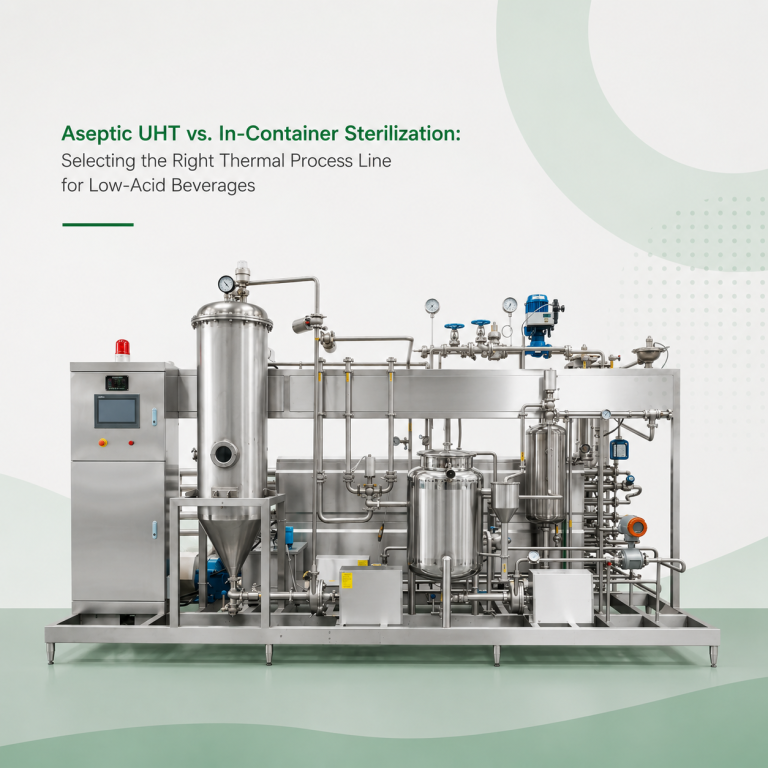
In an aseptic processing configuration, the raw product is brought to commercial sterility before it ever touches a package. The fluid moves through a highly controlled, pressurized continuous-flow matrix where it undergoes rapid thermal shock.
The Structural Flow & Mechanics
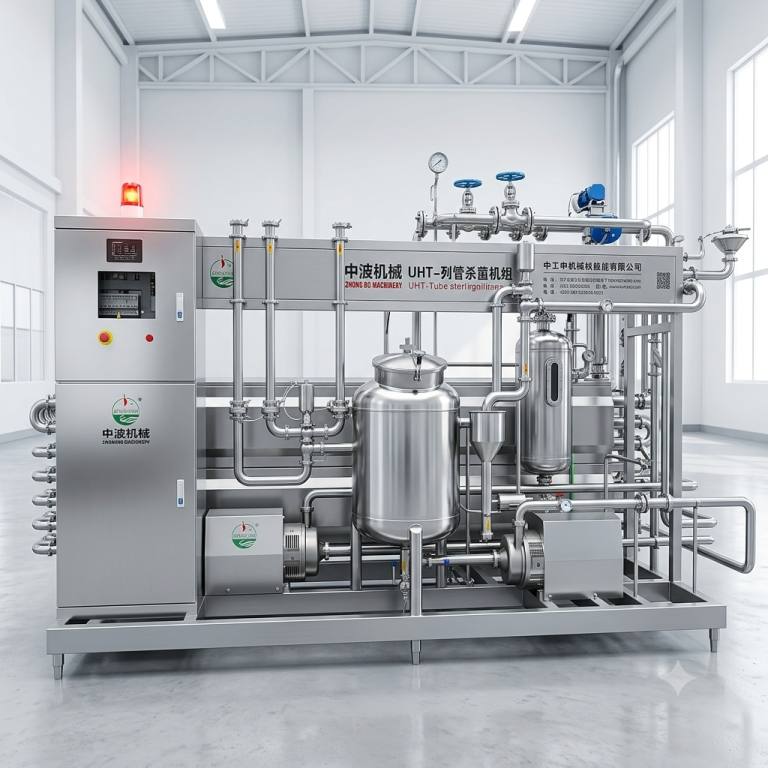
The formulation fluid is pumped from stainless steel blending systems, pre-heated via regenerative thermal loops, and passed into an indirect tubular or plate-type UHT sterilizer. Here, it is subjected to temperatures between 135°C to 140°C for a rapid holding window of 2 to 5 seconds. It is then flash-cooled and routed to a pressurized aseptic surge tank before entering an aseptic filling machine that forms, fills, and hermetically seals the product in a sterile environment.
Best Packaging Affinities:
- Aseptic paperboard brick cartons (e.g., Tetra Pak styles)
- Aseptic PET / HDPE bottles
- Flexible aseptic bag-in-box systems
Upstream Processing Essentials for Aseptic UHT Lines
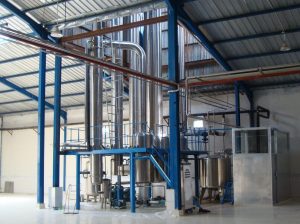
An aseptic UHT loop cannot achieve process stability without precise upstream product preparation. Zhongbo Machinery designs and manufactures the full ecosystem required to prepare your product before it hits the sterilizer:
| Associated Equipment | Zhongbo Engineering Application & Value |
| High-Shear Blending & Mixing Tanks | Ensures perfect emulsification of stabilizers, fats, and solids in plant-based milks (oat, almond) to prevent phase separation inside UHT tubes. |
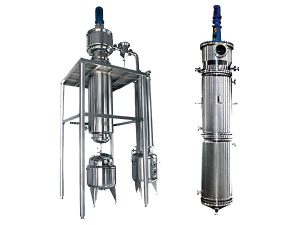
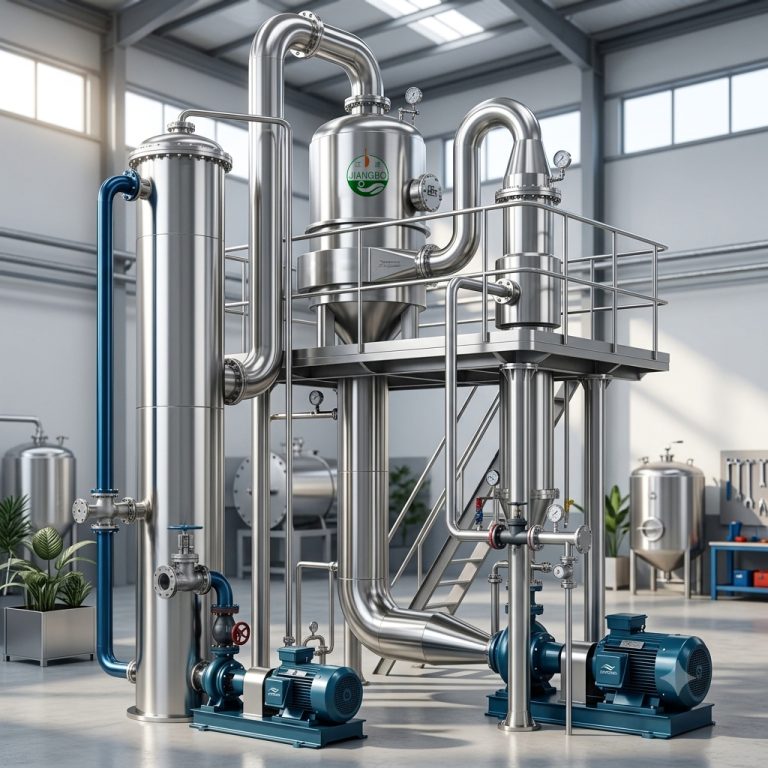
| Falling Film Multi-Effect Evaporators | Crucial for concentrated milk and condensed dairy profiles; removes water mass gently under vacuum before thermal processing to protect proteins. |
| Sanitary Aseptic Storage Surge Tanks | Maintains a strict sterile, pressurized buffer zone ($N_2$ or sterile air blanket) between the continuous UHT output and downstream filler lines. |

Method 2: In-Container Post-Packaging Sterilization
In sharp contrast to aseptic processing, in-container sterilization relies on treating the product and the package simultaneously. The beverage is filled into standard, non-sterile containers, hermetically sealed, and then subjected to a rigorous thermal cook cycle inside a pressurized machine environment.
The Structural Flow & Mechanics
Once sealed, the containers enter an automated batch retort/autoclave or pass continuously through an industrial horizontal Tunnel Spray Sterilizer. The line uses water sprays or saturated steam to ramp container core temperatures to 115°C – 121°C, holding them for 20 to 30 minutes. A gradual cooling cycle using compressed air overpressure follows to eliminate sudden internal pressure shocks that could cause structural container failure.
Best Packaging Affinities:
- Glass beverage bottles with lug caps
- Two-piece and three-piece aluminum or tinplate cans
- High-Density Polyethylene (HDPE) rigid bottles
- Retortable flexible pouches
How It Impacts the Formulation:
Because the thermal cycle is prolonged (measured in minutes rather than seconds), the heat load on the product matrix is intense. This triggers noticeable Maillard reactions, yielding a distinct cooked flavor profile and caramelized hue. However, for applications like canned milk teas, ready-to-drink (RTD) coffees, and evaporated canned milks, this caramelization is highly desirable for regional taste preferences.
Zhongbo Downstream Solutions: Continuous Tunnel Processing
For operations prioritizing massive throughput speeds and heavy rigid packaging like tin cans or glass bottles, batch autoclaves create labor bottlenecks. The solution is a continuous, automated tunnel layout.
Our heavy-duty Continuous Tunnel Spray Sterilizer line divided into multiple synchronized temperature zones (pre-heating, sterilizing, warm cooling, and cold water spraying) allows containers to travel seamlessly on a modular belt matrix. This layout entirely removes manual loading labor, minimizes thermal shock breakage in glass, and guarantees uniform lethal heat factors across thousands of units per hour.
Technical Comparison Matrix: Helping Procurement Select
When designing a factory layout, engineering teams must evaluate capital expenditures (CAPEX), operational expenses (OPEX), packaging shelf appeal, and plant scalability.
| Engineering Metric | Continuous Aseptic UHT Line | In-Container Tunnel / Retort |
|---|---|---|
| Thermal Degradation | Ultra-Low (High freshness retention) | Moderate to High (Cooked flavor profile) |
| Packaging Cost Barrier | High (Requires sterile aseptic filling tech) | Low (Standard, non-sterile fillers allowed) |
| Risk of Re-contamination | Requires strict cleanroom micro-control | Zero (Product is pre-sealed before heating) |
| Plant Sanitation Complexity | Requires rigorous multi-phase CIP loops | Low internal machine CIP footprint |
B2B Technical FAQ: Sterilization Line Integration
Q1: Why does a plant-based beverage line require a high-shear mixing tank before UHT processing?
A: Plant-based milks (oat, rice, soy) contain insoluble fibers and native proteins that easily sediment under high temperatures. High-shear blending breakdown ensures a uniform colloidal suspension, drastically reducing protein burning and fouling inside the subsequent plate heat exchanger channels.
Q2: Can glass bottles go through a continuous tunnel spray sterilizer without breaking?
A: Yes, provided the tunnel features precise progressive multi-zone heating and cooling. Sudden thermal differentials ($\Delta T > 30^\circ\text{C}$) cause thermal shock fractures. Zhongbo tunnels utilize sequential water spray zones to ramp and ramp-down temperatures smoothly.
Q3: What is the mechanical role of a multi-effect falling film evaporator in a dairy line?
A: It concentrates the liquid matrix under a low-temperature vacuum environment. This efficiently draws out water content to increase Total Milk Solids (TMS) without scorched nutrient scale-up, lowering subsequent thermal processing volume costs.
Q4: Why is an aseptic storage tank required between a UHT unit and the packaging filler?
A: UHT sterilizers operate as strict, continuous-flow thermodynamic systems, while filling machines can experience sudden downstream mechanical indexing stops or reel-change pauses. The aseptic surge tank acts as a sterile, pressurized volumetric accumulator to buffer these flow discrepancies safely.
Q5: How do multi-phase CIP cleaning cycles address different fouling types across these lines?
A: High-temperature processing areas face Type A protein-rich fouling, requiring hot alkaline washes (NaOH) to dissolve organic scaling, followed by acid washes ($HNO_3$) to dissolve Type B mineral scale build-up inside plate or tubular pathways.
Related Resources & Engineering Guides
- HTST vs. UHT Pasteurization for Dairy Lines: Process Selection & CIP Design
- Upcoming Project Profile: Integrating Falling Film Multi-Effect Evaporators in Industrial Condensed Milk Plants
- Upcoming Technical Sheet: Calculating Overpressure Parameters in Continuous Beverage Retorts and Spray Tunnels
Consult ZHONGBO on Your Turnkey Line Configuration
From high-shear raw material mixing and falling film evaporation to continuous UHT loops and downstream tunnel spray pasteurization, Zhongbo Machinery delivers complete, integrated processing skids engineered to international sanitary standards.