Introduction
Buffer tanks play an important role in dairy and beverage processing by providing temporary product storage between different processing stages. They help balance production flow, reduce interruptions, and coordinate equipment with different processing capacities.
However, not every buffer tank is suitable for every application. Aseptic, atmospheric, and pressure tanks have different designs and operating conditions.
The right choice depends on the product, required hygiene level, operating temperature, pressure, capacity, and how the tank connects with upstream and downstream equipment.
What Is a Buffer Tank in Dairy and Beverage Processing?
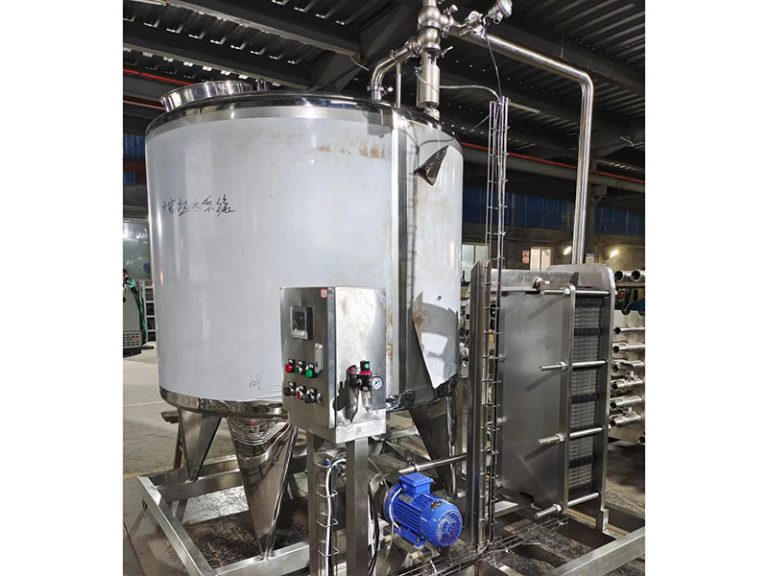
A buffer tank is a sanitary storage vessel used to temporarily hold or stabilize product during processing.
It can be installed between:
- Mixing and thermal processing
- UHT and filling
- Processing and packaging
- Different production lines
- Upstream and downstream equipment with different flow rates
A buffer tank helps prevent production interruptions when the capacities of connected machines do not perfectly match.
For example:
Mixing → UHT → Buffer Tank → Filling
If the filling machine temporarily operates at a different flow rate from the UHT system, the buffer tank can provide temporary product storage and help maintain continuous production.
Aseptic vs. Atmospheric vs. Pressure Buffer Tanks
Aseptic Tanks
An aseptic tank is designed for applications where the processed product must remain microbiologically protected after sterilization.
It is typically used when maintaining product sterility between thermal processing and aseptic filling is critical.
Aseptic tanks may incorporate:
- Hygienic product connections
- Sterile air or gas protection
- Controlled pressure
- CIP and sterilization capability
- Aseptic valves and pipelines
They are particularly suitable for products such as:
- UHT milk
- Dairy beverages
- Plant-based beverages
- Long-life beverages
- Other commercially sterile products
For an aseptic processing line, the buffer tank must be considered part of the overall sterile barrier rather than simply a storage vessel.

Atmospheric Tanks
Atmospheric tanks operate approximately at atmospheric pressure and are generally used for products that do not require pressurized or aseptic storage.
They can be suitable for:
- Ingredient preparation
- Beverage blending
- Intermediate storage
- Non-aseptic processing
- Water or liquid storage
Their simpler operating conditions can make them a practical choice for applications where pressure control and aseptic protection are not required.
However, atmospheric tanks should still use an appropriate sanitary design when handling food products.
Pressure Tanks
Pressure tanks are designed to operate under controlled positive pressure.
They may be selected when the process requires:
- Pressurized product handling
- Closed transfer
- Controlled gas pressure
- Reduced exposure to the surrounding environment
- Integration with pressurized processing equipment
The tank design must account for the required working pressure, temperature, safety factors, vessel configuration, and applicable pressure-vessel requirements.
Pressure tanks should not be selected simply because they provide “higher performance.” Their operating pressure should be determined by the actual process requirements.
Key Factors When Choosing a Buffer Tank
Product and Process Requirements
The first question is: What product will the tank hold, and where is the tank located in the process?
Consider:
- Product viscosity
- Temperature
- Acidity
- Sensitivity to contamination
- Foaming characteristics
- Required holding time
- Upstream and downstream equipment
For example, a buffer tank located between UHT treatment and aseptic filling has very different requirements from a tank used for ingredient preparation.
Tank Capacity and Sizing
Tank capacity should be based on both production flow and the required buffer time.
A simplified approach is:
Buffer Capacity ≈ Product Flow Rate × Required Buffer Time
However, actual sizing should also consider:
- Working volume
- Headspace
- Maximum and minimum operating levels
- CIP volume
- Product expansion
- Production fluctuations
- Filling interruptions
Oversizing can increase capital cost and product residence time, while undersizing may fail to provide sufficient buffering during changes in production flow.
Temperature and Pressure Requirements
Operating temperature and pressure are critical design parameters.
A tank used for chilled dairy products may require cooling or insulation, while a tank positioned after UHT processing must be designed for the relevant product temperature and sterile conditions.
For pressure tanks, the vessel must be designed according to the specified operating and design pressure.
The tank may also require:
- Heating or cooling jackets
- Thermal insulation
- Temperature sensors
- Pressure sensors
-
Safety devices
Hygiene and CIP Integration
Food-processing buffer tanks should be designed for effective cleaning and hygienic operation.
Important features may include:
- Stainless-steel sanitary construction
- Smooth internal surfaces
- Appropriate weld quality and surface finish
- Drainability
- Hygienic valves and connections
- Spray balls or rotary spray devices
- CIP compatibility
CIP integration is particularly important when the tank is part of a continuous dairy or beverage production line.
The tank should be designed so that cleaning solutions can effectively reach product-contact surfaces and return to the CIP system without creating dead zones.
Which Buffer Tank Is Right for Your Processing Line?
A simple selection framework is:
| Tank Type | Typical Application | Main Feature |
| Aseptic Tank | UHT and aseptic filling | Sterile product protection |
| Atmospheric Tank | Mixing and intermediate storage | Simple, non-pressurized operation |
| Pressure Tank | Closed or pressurized processing | Controlled positive pressure |
The correct choice depends primarily on the process rather than tank name alone.
Buffer Tank Integration Between UHT and Filling Lines
One of the most important applications of buffer tanks is the connection between thermal processing and filling.
A typical configuration is:
Mixing → UHT → Aseptic Buffer Tank → Aseptic Filler
The buffer tank provides controlled intermediate storage and helps maintain a stable product supply to the filler.
For aseptic applications, the tank must maintain the required sterile conditions throughout holding and transfer.
For non-aseptic products, an atmospheric or appropriately designed pressure tank may be sufficient.
Integration should also consider:
- Product flow rate
- Filling speed
- Tank working volume
- Pump capacity
- Valve configuration
- CIP connections
- Temperature control
- Sterile air or gas requirements
Zhongbo Buffer Tank Solutions
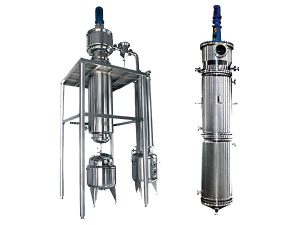
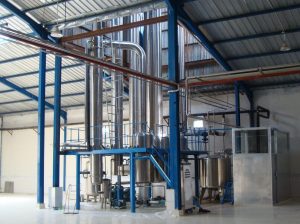
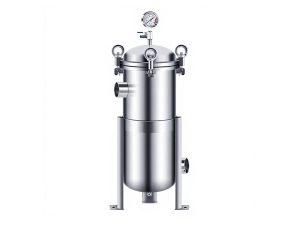
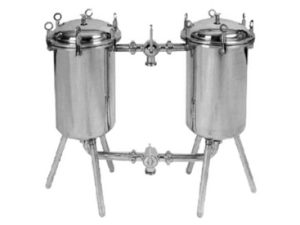
Zhongbo provides a range of Buffer Tank Solutions for food, dairy, and beverage processing applications.
Its equipment portfolio includes different tank configurations for specific processing requirements, including:
These tanks can be selected according to product characteristics, capacity, temperature requirements, process configuration, and hygiene requirements.
For a dairy or beverage production line, the buffer tank should be considered together with the mixing system, UHT equipment, pumps, filling machine, and CIP system.

Conclusion
The choice between aseptic, atmospheric, and pressure buffer tanks should be based on the actual processing conditions and product requirements.
Aseptic tanks are designed for sterile processing and are particularly important between UHT and aseptic filling. Atmospheric tanks provide a simpler solution for non-pressurized mixing and intermediate storage. Pressure tanks are appropriate when controlled positive pressure or closed pressurized transfer is required.
Capacity, temperature, pressure, sanitary design, and CIP integration should all be evaluated before selecting the tank.
For dairy and beverage manufacturers, Zhongbo’s stainless steel buffer tank solutions provide different configurations that can be integrated with mixing, UHT, filling, pumping, and CIP systems according to the requirements of the production line.
FAQs
- What is a buffer tank used for?
A buffer tank temporarily stores product between processing stages, helping balance flow rates and reduce interruptions between upstream and downstream equipment.
- What is the difference between an aseptic and atmospheric tank?
An aseptic tank is designed to maintain microbiological protection for sterile products, while an atmospheric tank operates approximately at atmospheric pressure and is generally used for non-aseptic applications.
- When should I use a pressure buffer tank?
A pressure tank should be considered when the process requires controlled positive pressure or closed, pressurized product transfer.
- How do I size a buffer tank?
Start with the required product flow rate and buffer time. Then consider working volume, headspace, production fluctuations, CIP requirements, and the operating characteristics of connected equipment.
- Can a buffer tank be installed between UHT and filling?
Yes. Buffer tanks are commonly used to provide controlled intermediate storage between thermal processing and filling. For aseptic products, an appropriately designed aseptic tank is required.
- Why is CIP important for buffer tanks?
CIP allows product-contact surfaces to be cleaned without dismantling the tank. Proper sanitary design helps ensure effective cleaning and reduces the risk of contamination.
- Which buffer tank is best for dairy processing?
It depends on the process. Aseptic tanks are appropriate for sterile dairy products, while atmospheric or refrigerated tanks may be suitable for other dairy processing and storage applications.
- How do I choose the right buffer tank?
Consider the product, processing stage, capacity, temperature, pressure, required hygiene level, holding time, CIP requirements, and connection with upstream and downstream equipment.