Introduction
In aseptic beverage production, achieving commercial sterility is not limited to sterilizing the product itself. The packaging material and container must also be treated before filling so that microorganisms introduced from the package do not compromise the finished product.
This makes package sterilization a critical step in an aseptic filling line. Depending on the container material, beverage formulation, production speed, and required sterility level, manufacturers may use dry heat, chemical sterilization, UV treatment, or a combination of technologies.
Among these methods, hydrogen peroxide-based sterilization is widely used in aseptic packaging, while dry heat and UV technologies can provide alternative approaches for specific packaging materials and line configurations.
The challenge is selecting a system that provides effective microbial reduction while remaining compatible with packaging materials, production speed, filling conditions, and the overall aseptic process.
This guide compares the major package sterilization methods and explains how to select the right system for an aseptic beverage production line.
What Is Package Sterilization in Aseptic Filling?
Package sterilization is the process of reducing or eliminating viable microorganisms on packaging materials and containers before they come into contact with a commercially sterile beverage.
In an aseptic filling system, three elements need to be controlled:
Product → Package → Filling Environment
Even if the beverage has been properly sterilized, contamination of the container or filling environment can compromise the final product.
Package sterilization can therefore involve treating:
- Plastic bottles
- PET containers
- HDPE containers
- Glass containers
- Aseptic cartons
- Cups and other preformed packages
The exact sterilization method depends heavily on the package material and geometry.
For example, heat-based methods may be suitable for packaging materials with sufficient thermal resistance, while chemical sterilization can be useful for materials that cannot withstand high temperatures. UV treatment can provide a chemical-free surface treatment approach, but its effectiveness depends strongly on direct exposure and package geometry.
The sterilization step must also be integrated with the filling process. A sterile package should remain protected between sterilization and filling to prevent recontamination.

Why Is Container Sterilization Important Before Filling?
The purpose of container sterilization before filling is to establish a sufficiently low microbial load on the package before the beverage enters it.
If microorganisms remain on the internal package surface, they can multiply during storage depending on the product and packaging conditions.
This is particularly important for shelf-stable beverages that are intended to remain safe and stable without refrigeration.
A typical aseptic process can be represented as:
Product Sterilization → Package Sterilization → Aseptic Filling → Sealing
The package sterilization step must therefore be coordinated with:
- Product sterilization
- Filling temperature
- Filling speed
- Package material
- Sterilant concentration
- Exposure time
- Sterilization chamber conditions
- Aseptic-zone design
The objective is not simply to apply the strongest possible sterilization treatment. Excessive heat, chemicals, or UV exposure can damage packaging materials or negatively affect line efficiency.
Instead, the system should achieve the required microbial reduction while maintaining package integrity and process reliability.
Package Sterilization Methods for Aseptic Beverage Lines
Dry Heat Sterilization
Dry heat sterilization uses elevated temperatures to reduce or eliminate microorganisms on heat-resistant packaging materials.
The main advantage of dry heat is that it does not introduce chemical residues into the sterilization process.
It can be considered for applications involving:
- Heat-resistant containers
- Specific plastic packaging
- Glass containers
- Components requiring thermal sterilization
However, dry heat requires careful control of temperature and exposure time.
Higher temperatures can increase sterilization effectiveness, but excessive thermal exposure may deform or damage certain plastic packaging materials.
Important design considerations include:
- Sterilization temperature
- Exposure time
- Package material
- Container wall thickness
- Heating uniformity
- Production speed
- Cooling requirements
Dry heat is therefore most appropriate when the packaging material can tolerate the required thermal conditions.
Chemical Sterilization with Hydrogen Peroxide
Hydrogen peroxide is one of the most widely used chemical sterilization agents in aseptic packaging applications.
Hydrogen peroxide packaging sterilization typically involves exposing packaging surfaces to a controlled concentration of hydrogen peroxide, followed by removal or evaporation of residual sterilant before filling.
The process may include:
Package Preparation → H₂O₂ Application → Exposure → Sterilant Removal → Aseptic Filling
Hydrogen peroxide offers several advantages:
- Strong antimicrobial activity
- Relatively low thermal load compared with high-temperature sterilization
- Compatibility with various packaging applications
- Possibility of integration into continuous packaging lines
However, the system must carefully control sterilant concentration, contact time, temperature, and residual peroxide.
Residual hydrogen peroxide must be reduced to an acceptable level before the package enters the filling stage.
Chemical sterilization is particularly useful when packaging materials have limited heat resistance and when continuous high-speed processing is required.
UV Sterilization
UV sterilization uses ultraviolet radiation to inactivate microorganisms on exposed surfaces.
UV treatment can be attractive because it does not require chemical sterilants and does not expose packaging to the same thermal load as dry heat.
However, UV effectiveness depends heavily on line and package design.
UV radiation works most effectively when the target surface has direct exposure. Shadows, folds, opaque materials, irregular container geometries, and contamination on the surface can reduce treatment effectiveness.
Important factors include:
- UV intensity
- Exposure time
- Distance from the UV source
- Surface geometry
- Package transparency
- Line speed
- Surface cleanliness
For this reason, UV is often better suited to specific packaging components or surfaces where reliable exposure can be achieved.
Dry Heat vs. Chemical vs. UV Sterilization
Choosing between dry heat, chemical, and UV sterilization requires consideration of more than microbial reduction alone.
Sterilization Effectiveness
Each technology has different operating requirements.
Dry heat depends on achieving sufficient temperature and exposure time. Hydrogen peroxide depends on sterilant concentration, contact time, temperature, and effective removal of residues. UV depends strongly on radiation intensity and direct surface exposure.
The appropriate method should therefore be validated for the specific packaging material, container geometry, and production conditions.
Material Compatibility
Packaging material is one of the most important selection factors.
Dry heat may be unsuitable for materials that deform at elevated temperatures.
Hydrogen peroxide may provide an alternative for heat-sensitive packaging, but compatibility with the material and sterilant must be confirmed.
UV may be suitable for certain exposed surfaces but can be limited by opaque or complex packaging structures.
Manufacturers should evaluate:
- Thermal resistance
- Chemical compatibility
- UV transmission
- Package deformation
- Surface characteristics
- Sterilant absorption or retention
Process Speed and Integration
For high-volume beverage production, sterilization must keep pace with filling.
A system that provides excellent microbial reduction but becomes a bottleneck before the filler may not be suitable for commercial production.
The sterilization system should therefore be evaluated according to:
- Containers per minute
- Exposure time
- Package transfer speed
- Sterilization chamber dimensions
- Sterilant application and removal
- Integration with the filling machine
Continuous systems are particularly valuable for large-scale beverage lines because they can maintain a controlled sterilization process while containers move continuously toward filling.
SAL 10⁻⁶ Requirements
SAL 10⁻⁶, or a Sterility Assurance Level of 10⁻⁶, is commonly used as a stringent target in sterilization validation contexts. It represents a theoretical probability of no more than one viable microorganism surviving per million sterilized units under the defined validation conditions.
However, SAL should not be treated as simply a machine specification.
Achieving a defined SAL requires a validated sterilization process that considers:
- Initial microbial load
- Microorganism resistance
- Sterilization conditions
- Exposure time
- Temperature
- Sterilant concentration
- Package geometry
- Process consistency
For aseptic beverage packaging, manufacturers should establish the required microbial performance through appropriate validation rather than assuming that any particular sterilization technology automatically achieves SAL 10⁻⁶.
Package Sterilization Applications
Aseptic Carton Sterilization
Aseptic cartons typically consist of multiple layers of paperboard, polymer, and sometimes aluminum foil.
Because the material structure is sensitive to excessive heat, chemical sterilization is commonly considered for aseptic carton applications.
Hydrogen peroxide-based systems can treat the package surface before filling while maintaining the required production speed.
Important considerations include:
- Sterilant penetration/contact
- Residual hydrogen peroxide
- Package material compatibility
- Sterilization uniformity
- Filling-zone protection
The sterilization system should be designed together with the carton forming, filling, and sealing process rather than as an independent unit.
Container Sterilization Before Filling and Continuous Spray Tunnel Sterilization
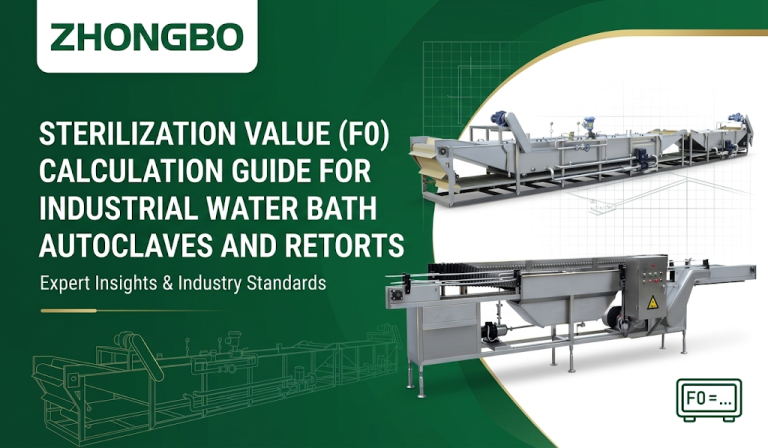
For rigid containers and certain beverage packaging applications, continuous sterilization tunnels can provide a practical way to integrate container treatment into a production line.
A continuous spray tunnel sterilization system can apply a controlled sterilizing medium to containers as they move continuously through the treatment zone.
Depending on the process design, the system can incorporate stages such as:
Container Infeed → Pre-treatment → Sterilization Spray → Holding/Contact Zone → Rinsing or Sterilant Removal → Filling
The main advantage of a continuous tunnel configuration is its compatibility with automated production.
It can help maintain consistent treatment conditions while containers move through the sterilization zone at a controlled speed.
For manufacturers, the key parameters include:
- Spray coverage
- Sterilant concentration
- Temperature
- Contact time
- Conveyor speed
- Container geometry
- Drainage
- Sterilant recovery or removal
- Integration with the filling machine
The correct configuration depends on the package and sterilization medium. Process validation is essential to confirm that the required microbial reduction is achieved throughout the container surface.
Zhongbo Package Sterilization Systems
Zhongbo provides Package Sterilization Systems for food and beverage processing applications.
The equipment portfolio is designed to support package sterilization as part of an integrated processing and filling line. Depending on the package and process requirements, package sterilization can be coordinated with upstream sterilization, filling, and downstream packaging operations.
For continuous production, Zhongbo’s Tunnel Spray Sterilizer provides a continuous tunnel-based approach for treating containers as they move through the sterilization process.
A continuous spray tunnel can be particularly useful when manufacturers need to combine:
- Continuous container handling
- Controlled sterilization conditions
- Consistent spray coverage
- Automated production
- Integration with downstream filling
The appropriate sterilization system should be selected based on package type, production capacity, sterilization medium, required microbial reduction, and the configuration of the complete filling line.
Rather than selecting a sterilizer as a standalone machine, manufacturers should evaluate how the equipment interacts with the product sterilization system, filling machine, conveyor, aseptic zone, and packaging process.
How to Choose the Right Package Sterilization System?
A practical selection process should begin with the packaging material and filling process.
Consider the following factors:
- What type of package are you sterilizing?
Identify whether the line uses cartons, PET bottles, HDPE containers, glass, cups, or another package type.
- What sterilization performance is required?
Define the required microbial reduction and validation target based on the beverage, package, and aseptic process.
- How heat-resistant is the package?
If the package cannot tolerate high temperatures, chemical or UV-based approaches may be more suitable.
- Is chemical sterilization acceptable?
For hydrogen peroxide systems, evaluate material compatibility, sterilant concentration, contact time, and residual removal.
- Can UV reach the entire target surface?
UV is highly dependent on direct exposure. Complex geometries and shadowed surfaces can reduce effectiveness.
- What is the required production speed?
The sterilizer must be able to operate at the same production rate as the filling line without becoming a bottleneck.
- How will sterilization integrate with filling?
Package sterilization, transfer, filling, and sealing should be designed as one aseptic process.
FAQs
- What is package sterilization in aseptic filling?
Package sterilization is the treatment of packaging materials or containers before filling to reduce or eliminate microorganisms that could contaminate the commercially sterile beverage.
- Why must containers be sterilized before filling?
Even when the beverage has been properly sterilized, microorganisms remaining on the package can contaminate the product. Container sterilization helps maintain the microbiological integrity of the aseptic filling process.
- What is the difference between dry heat and chemical packaging sterilization?
Dry heat uses elevated temperature to achieve microbial reduction, while chemical sterilization uses a sterilizing agent such as hydrogen peroxide. The appropriate method depends on packaging material, required process conditions, production speed, and validation requirements.
- How does hydrogen peroxide sterilize packaging?
Hydrogen peroxide acts as an antimicrobial agent when applied at a controlled concentration and exposure condition. After treatment, residual peroxide must be effectively removed or reduced before filling.
- Is UV sterilization suitable for all beverage containers?
No. UV treatment requires sufficient direct exposure to the target surface. Opaque materials, complex geometries, folds, and shadowed areas can limit its effectiveness.
- What is SAL 10⁻⁶ in packaging sterilization?
SAL 10⁻⁶ represents a theoretical probability of one viable microorganism surviving per million sterilized units under defined validation conditions. It is a process-validation concept rather than a simple equipment specification.
- What is continuous spray tunnel sterilization?
Continuous spray tunnel sterilization treats containers while they move through a controlled tunnel. It can be integrated into automated beverage lines and is useful when continuous container processing is required.
- How do I choose a package sterilization system?
Consider the package material, container geometry, required microbial reduction, sterilization method, production speed, chemical or thermal compatibility, and integration with the filling line.
Conclusion
Package sterilization is a critical component of aseptic beverage production. The purpose is not simply to sterilize the container, but to establish a controlled microbial barrier between the sterilized beverage and the filling environment.
Dry heat, hydrogen peroxide chemical sterilization, and UV treatment each have different advantages and limitations. Dry heat can provide a chemical-free thermal approach but requires heat-resistant packaging. Hydrogen peroxide offers strong antimicrobial performance with relatively low thermal exposure and is widely applicable to aseptic packaging. UVcan provide chemical-free surface treatment but requires reliable direct exposure.
The right solution depends on the package, process, and production line.
For manufacturers evaluating a package sterilization system for an aseptic beverage line, the most important factors are sterilization effectiveness, material compatibility, production speed, validation requirements, and integration with filling and sealing equipment.
Zhongbo’s Package Sterilization Systems and Tunnel Spray Sterilizer can be considered as part of an integrated beverage processing and packaging solution, with the final configuration determined according to the specific container, sterilization requirements, and production capacity.