


Introduction
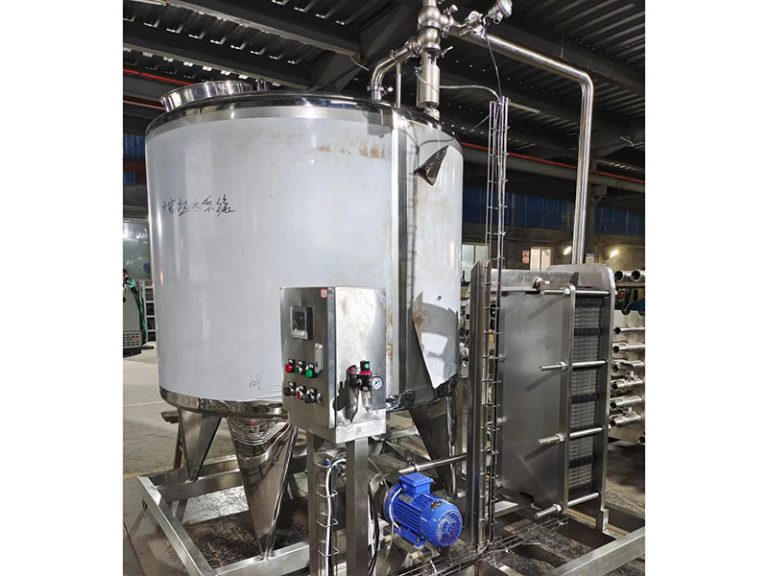
Pasteurization consumes large amounts of energy because the product must be heated to a precise temperature and then cooled back down. The largest single energy-saving feature in any pasteurizer is thermal regeneration: the hot pasteurized product pre-heats the incoming cold raw product through a heat exchanger, recovering heat that would otherwise be thrown away. This guide explains how to calculate regeneration efficiency, what the numbers mean for plate and tubular pasteurizers, and how to specify a system that hits your energy target.
What Thermal Regeneration Means
In a regenerative pasteurizer, raw cold product and hot pasteurized product pass through opposite sides of a heat exchanger. Heat flows from the outgoing hot product to the incoming cold product. The raw product enters the system pre-heated, so the boiler or hot-water set needs less energy to bring it to pasteurization temperature. Meanwhile, the pasteurized product leaves the regenerator cooler, so the chilled-water load for final cooling is also reduced.
The Regeneration Efficiency Formula
Regeneration efficiency (%) = (Tregen,in − Traw,in) / (Tpasteurize − Traw,in) × 100
Where:
- Traw,in = temperature of incoming raw product.
- Tpasteurize = pasteurization hold temperature.
- Tregen,in = temperature of raw product after the regenerator, before final heating.
For example, raw milk enters at 5 °C and pasteurization is at 72 °C. If the regenerator raises the raw milk to 62 °C, efficiency is (62 − 5) / (72 − 5) × 100 = 85 %.
Plate Pasteurizer Regeneration
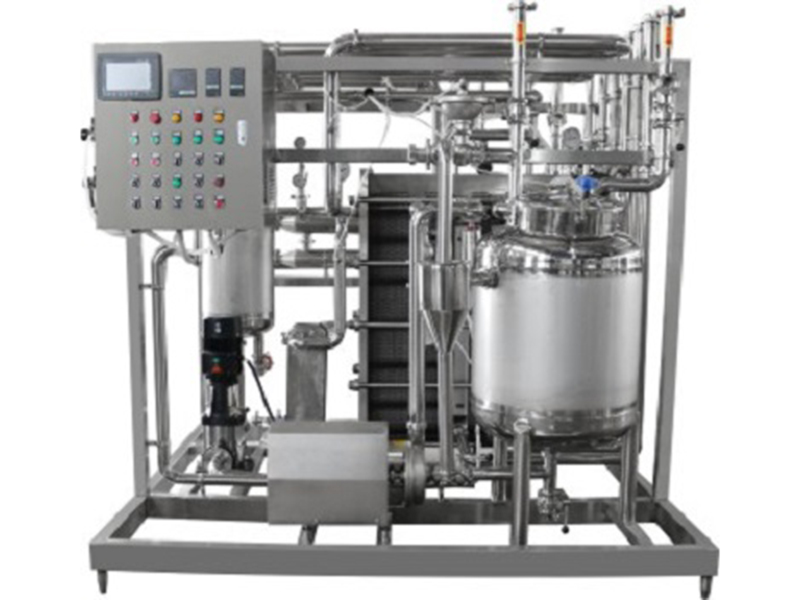
A plate pasteurizer uses a stack of gasketed or welded plates to create large heat-transfer area in a small footprint. Plate units can achieve regeneration efficiencies of 90 % or more for low-viscosity products like milk and juice. The thin channels and high turbulence give excellent U-values, but they are more sensitive to particulates and require regular gasket inspection.
Tubular Pasteurizer Regeneration
A tubular pasteurizer runs product through tubes surrounded by the counter-flowing product or heating medium. Tubular units handle higher viscosity, particulates, and fibers better than plate units, but their U-values are lower because the heat-transfer area per volume is smaller. Regeneration efficiencies of 75–85 % are typical, with higher values achievable on clean, water-like fluids.
Plate vs Tubular Regeneration
| Factor | Plate Pasteurizer | Tubular Pasteurizer |
|---|---|---|
| Typical regeneration efficiency | 85–95 % | 75–85 % |
| Best for | Milk, juice, thin fluids | High-viscosity, particulate, fiber |
| Heat-transfer area | Very high | Moderate |
| Particulate tolerance | Low | High |
| Gasket maintenance | Periodic | None (welded) |
| Energy saved vs no regeneration | 85–93 % | 75–82 % |
Factors That Affect Efficiency
- Heat-transfer area. More plates or longer tubes raise efficiency but increase cost and pressure drop.
- Flow balance. Regeneration relies on equal hot-side and cold-side flow. During start-up or CIP, efficiency drops because the flows differ.
- Fouling. Milk proteins and minerals reduce U-value over time; CIP restores it.
- Viscosity. Viscous products have lower U-values and thicker boundary layers, lowering achievable efficiency.
- Approach temperature. The closer the cold outlet gets to the hot inlet, the higher the efficiency, but also the larger the heat exchanger.
Energy Savings
Without regeneration, heating 10,000 L/h of milk from 5 °C to 72 °C requires roughly 780 kW. With 90 % regeneration, only 78 kW of new heating is needed. The same logic applies to cooling: the hot pasteurized milk pre-cools itself in the regenerator, cutting chilled-water demand. Regeneration is usually the largest energy saver in the whole plant after boiler optimization.
Specifying for Target Efficiency
State the required regeneration efficiency, product flow rate, inlet temperature, pasteurization temperature, viscosity, allowable pressure drop, and CIP frequency. For thin dairy and juices, 90 % is achievable with a plate heat exchanger regeneration section. For particulate products, 80 % with a tubular unit is more realistic. Do not chase 95 % if it requires a pressure drop or fouling rate that hurts uptime.
Common Mistakes
- Using catalogue efficiency. Real efficiency is lower under fouling and partial load.
- Ignoring flow balance. Unequal flows destroy regeneration during start-up and low-load operation.
- Wrong heat exchanger for product. Plates for particulate products plug; tubes for thin fluids waste area.
- Skipping CIP. Fouled plates drop efficiency by 10–20 % within days.
FAQ
What is a good regeneration efficiency target?
90–95 % for plate pasteurizers on thin fluids; 75–85 % for tubular units on viscous or particulate products.
Does regeneration affect pasteurization accuracy?
No, regeneration is before the final heater and after the cooler. The hold tube still sees the exact target temperature.
Can I retrofit regeneration?
Yes, by adding a plate or tubular heat exchanger between the incoming raw and outgoing pasteurized product streams.
Why does efficiency drop during CIP?
During CIP the flows and temperatures differ from production, so heat recovery is not designed to operate.
Is higher efficiency always better?
Not if it requires excessive pressure drop, area, or cleaning. The optimum balances energy savings against capital and maintenance.
Conclusion
Thermal regeneration is the single biggest energy saver in pasteurization. A plate pasteurizer on thin milk or juice can recover 90 % or more of the heat; a tubular pasteurizer on viscous or particulate product typically recovers 75–85 %. Calculate efficiency from the actual temperature rise of the incoming product, specify for the fouled case, and keep CIP on schedule. Do that, and the pasteurizer becomes a heat-recovery machine as much as a pathogen-kill step.