

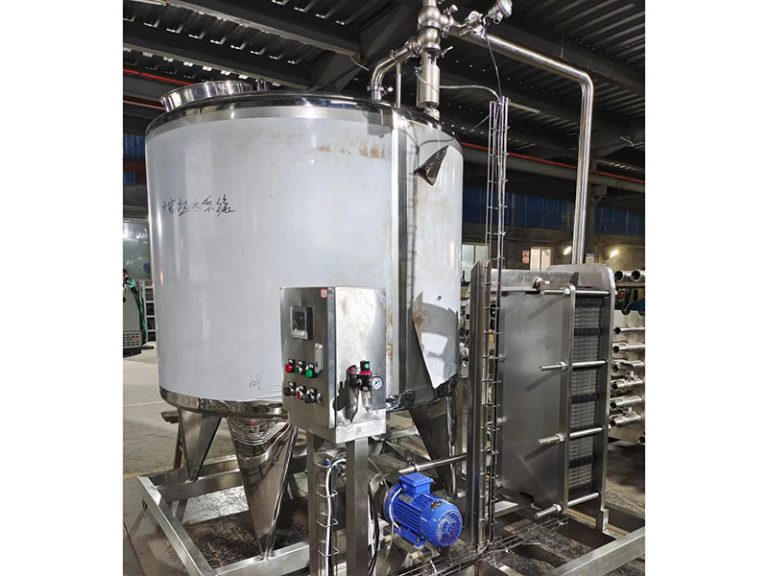

Introduction
Herbal and botanical extraction sits at the front of every tea, tincture, essential-oil, and plant-protein line. Before you specify a boiler, a concentrator, or a filling machine, you have to answer one question that quietly decides the economics of the whole plant: do you extract in batches, or do you extract continuously? The answer drives your capital layout, your labor plan, your solvent bill, and—often overlooked—the consistency of the active compounds in your finished extract.
This guide compares the two dominant equipment families for botanical lines: the multifunctional extraction tank (batch) and the percolation tank (continuous), both of which we build for herbal, pharmaceutical, and food-grade applications. We will look at how each works, where each wins, the numbers that matter when you size them, and how to avoid the selection mistakes that cost plants months of rework.
If you are scaling from pilot to production, or replacing a rented line, the sections below give you a concrete basis to choose—and to justify the choice to whoever signs the purchase order.
Why the Extraction Mode Shapes Your Whole Line
The extractor is not a standalone island. It sets the rhythm for everything downstream:
- Capex vs. opex. A batch tank is cheap to buy and easy to validate, but it ties up labor between cycles. A continuous percolation system costs more up front and needs steadier feedstock handling, but it runs with far less operator attention per kilogram of extract.
- Footprint. Batch lines need multiple tanks if you want parallel cycles; continuous lines occupy a long, narrow footprint but rarely sit idle.
- Quality一致性. Batch-to-batch variation is inherent in any discontinuous process. Continuous percolation stabilizes solute concentration in the effluent, which makes downstream concentration and standardization far easier.
- Utility load. Batch extraction spikes steam and cooling demand at the start of every cycle; continuous extraction spreads the load, which is gentler on your boiler and your energy bill.
Rule of thumb: if your annual run is below roughly 300 tonnes of raw botanical, a batch multifunctional tank almost always wins on total cost. Above that, continuous percolation starts to pay back the higher capital within 12–24 months.
Batch Extraction: The Multifunctional Extraction Tank
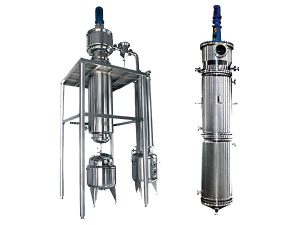
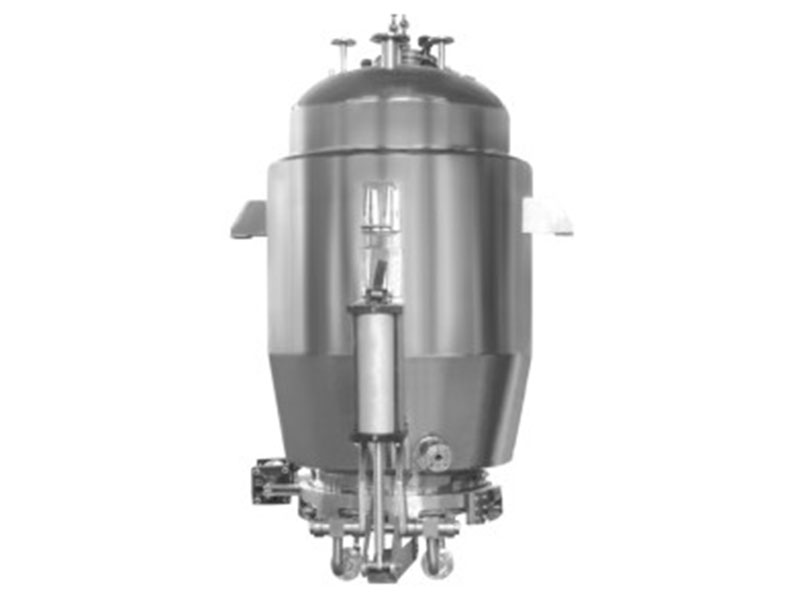
The multifunctional extraction tank is the workhorse of batch botanical processing. It is a jacketed, pressurized (or atmospheric) vessel that can perform hot extraction, warm maceration, reflux extraction, and even slight concentration in one shell.
How a Batch Cycle Works
A typical cycle has five stages: (1) load botanical material and solvent; (2) heat under stirring to the target temperature (often 60–100 °C for water or hydro-ethanol); (3) hold with agitation for the residence time; (4) drain the miscella through the bottom screen; (5) recover residual solute by one or two short re-extraction or pressing steps. Total cycle time for a 1–3 m³ tank usually lands between 3 and 6 hours including cleaning.
Best Applications
- Heat-stable roots, barks, and seeds where long residence time actually helps yield.
- Multi-product plants that switch recipes daily—the tank is easy to clean and revalidate.
- High-value botanicals where you want full control over each discrete lot for traceability.
Cycle Time, Yield & Solvent Use
Batch yield is sensitive to solid-to-liquid ratio and to how many re-extraction steps you accept. A single pass at 1:8 solid-to-solvent often recovers 70–80 % of soluble actives; a second short wash pushes recovered total to 88–93 %. Solvent consumption per tonne of dry botanical in a well-run batch line is typically 6–10 m³, most of which is recoverable by downstream concentration.
Continuous Extraction: The Percolation Tank
The percolation tank (often arranged as a battery of columns) runs the opposite logic: solvent flows downward through a packed bed of botanical material, and enriched miscella leaves the bottom continuously while fresh solvent enters the top.
How Continuous Percolation Works
Ground material is packed into the column. Solvent is pumped through at a controlled flow rate—too fast and it channels; too slow and residence time balloons. As solvent moves down the bed it meets increasingly exhausted material, so the exiting miscella reaches a high, stable concentration. Counter-current arrangements (fresh solvent meeting nearly spent solids) push extraction efficiency above 95 % while using less solvent than any batch method.
Best Applications
- Heat-sensitive leaves and flowers where short contact time protects volatiles.
- Single-formula, high-volume runs where you do not change recipe for weeks.
- Plants chasing the lowest possible solvent-to-product ratio for cost or emissions reasons.
Solvent Economy & Throughput
Because the bed is always in contact with solvent at the right concentration gradient, continuous percolation typically uses 3–5 m³ of solvent per tonne of dry botanical—roughly half the batch figure—and holds effluent concentration within a narrow band, which protects the vacuum concentrator downstream from load swings.

Continuous vs Batch: Side-by-Side Comparison
| Factor | Batch (Multifunctional Tank) | Continuous (Percolation) |
|---|---|---|
| Mode | Discrete lots, 3–6 h/cycle | Steady flow, 24/7 capable |
| Solvent per tonne dry botanical | 6–10 m³ | 3–5 m³ |
| Typical recovery | 88–93 % (2 passes) | 95 %+ (counter-current) |
| Labor per kg extract | Higher (loading/unloading) | Lower (automated feed) |
| Batch-to-batch variation | Moderate | Low, stable effluent |
| Recipe changeover | Fast, easy to validate | Slow, best for single formula |
| Capital cost | Lower | Higher |
| Best annual volume | < 300 t raw botanical | > 300 t raw botanical |
Neither is “better” universally. The comparison above is the actual decision matrix we walk customers through before quoting a line.
Solvent Selection & Process Safety
Water is the default for tea and many food extracts; hydro-ethanol (usually 40–70 % ethanol) is common for resins, flavonoids, and essential-oil fractions. Ethanol raises two obligations: solvent recovery and explosion-protection zoning. Batch tanks are easier to keep closed and recover solvent from; continuous columns need sealed solvent loops and grounded, ATEX-rated plumbing. If you are new to ethanol extraction, start with a batch multifunctional tank and add a recovery still—you avoid a large continuous-solvent capital commitment until volume justifies it.
Protecting Heat-Sensitive Botanicals
Leaves, flowers, and many herbs carry volatiles and pigments that degrade above ~60 °C. Two levers protect them: shorten residence time (favor continuous percolation at lower temperature) and concentrate the miscella under vacuum so you never boil off the actives. We routinely pair a percolation column with a double-effect vacuum concentrator so the extract sees temperatures below 50 °C end to end. Batch lines can do the same, but you must keep each cycle’s hold time tight and cool the miscella before concentration.
How to Choose the Right Extractor for Your Line
A simple decision path:
- What is your annual dry-botanical throughput? Under 300 t → batch. Over 300 t and single-formula → continuous.
- How many recipes do you run? Many changeovers → batch (fast, easy to validate). One or two → continuous.
- Are the actives heat-sensitive? Yes and high-volume → continuous + vacuum concentration. Yes but low-volume → batch with short hold + vacuum concentration.
- What is your solvent? Water-only → either works. Ethanol at scale → continuous only if volume clears the payback; otherwise batch + recovery still.
Integration with Downstream Concentration & Storage
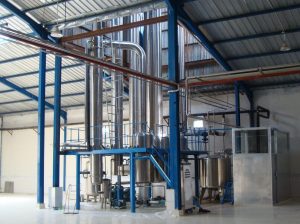
The extractor hands off to concentration and then to storage. A stable, high-concentration miscella from continuous percolation lets a vacuum concentrator run at its design point instead of swinging with batch drains. After concentration, an aseptic tank (or a hygienic buffer tank) holds the clarified extract before filling. Planning the extractor and these downstream vessels together prevents the classic bottleneck where a fast extractor floods a small concentrator.
Common Mistakes in Extractor Selection
- Sizing on peak, not average. A tank big enough for the seasonal spike sits half-empty all year. Size for the median month and add a second unit later.
- Ignoring solvent recovery. The cheap extractor becomes expensive once you pay to dispose of or rebuy solvent you could have recovered.
- Forgetting cleaning validation. Batch tanks win precisely because they are easy to clean between lots—don’t pick continuous if your product mix demands frequent, documented changeovers.
- Under-specifying the screen. Both batch and percolation rely on a bottom screen; the wrong mesh blinds within a week. Match mesh to your ground-particle size, not to a catalogue default.
FAQ
Can one tank do both batch and continuous extraction?
Not truly. A multifunctional batch tank can mimic semi-continuous operation with repeated short draws, but it is not a percolation column. If you need genuine continuous flow, specify a percolation battery.
Which is better for heat-sensitive herbs?
Continuous percolation at lower temperature with shorter residence time generally protects volatiles better, provided you pair it with vacuum concentration.
How do I size the vessel?
Start from daily raw-botanical tonnes ÷ cycles per day (batch) or ÷ bed throughput (continuous), then add 20–30 % headroom for cleaning and variation.
Do I need a solvent recovery still?
If you use ethanol at any scale, yes—recovery typically pays for itself within the first year and keeps you compliant on emissions.
Which is easier to validate for pharma GMP?
Batch multifunctional tanks, because each lot is discrete and documented. Continuous lines are validatable but need more instrumented sampling.
Conclusion
Batch and continuous extraction are not rivals—they fit different volumes, recipes, and actives. Below roughly 300 tonnes a year of dry botanical, or with frequent recipe changeovers, the multifunctional extraction tank is the lower-risk, lower-cost choice. Above that, running a single formula, the percolation tank cuts solvent and labor and stabilizes quality. Whichever you pick, plan it together with vacuum concentration and storage so the whole line—not just the extractor—runs at its design point.