

Introduction
On a 24-hour dairy line, changing a filter bag is not a five-minute job. It is a shutdown: stop the flow, drain, open the housing, and then explain to quality why the line needs a rinse and a swab before restart. Do that twice a shift and the filter becomes the constraint on your whole day. A duplex filter exists to remove that constraint. Whether it is worth the extra valves and floor space is a decision you can make with a few numbers.
How a Duplex Filter Works
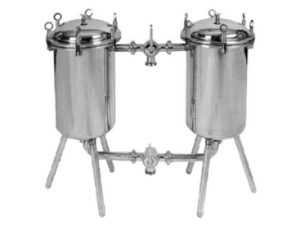
A duplex filter is two complete filter housings and one changeover valve set. Both housings are piped in parallel and isolated by three-way valves, so you can put either one in service while the other is opened, drained and recharged. In the sanitary version the changeover is usually a pair of three-way plug or butterfly valves with a common actuator, and in the better designs the switch is a single handle so nobody can leave both sides half-open.
The important part is not the second housing. It is the valve logic and the drain arrangement that let you service one side while the other is under pressure and in production, without a cross-connection between a dirty housing and a clean stream.
What a Shutdown Actually Costs
People compare filter prices and forget the cost of the stop. On a line running 20 m³/h, a 15-minute changeover interrupts 5 m³ of throughput. That is the easy number. The harder ones are the product left in the line that goes to drain, the rinse water and time before you can prove the line is clean again, and the scheduling risk if the changeover happens during a CIP window that is already tight.
Then add the human factor. A filter that has to be changed mid-shift gets changed less often than it should. People stretch the interval to the next break, run the bag past its differential limit, and the particle that eventually gets through is the one you were trying to catch.
Quick test: if your change interval is shorter than the time it takes to stop, rinse and restart the line, a single-basket filter is not protecting anything — it is just adding a stop to the schedule.
Side-by-Side Comparison
| Criterion | Duplex filter | Single-basket filter |
|---|---|---|
| Changeover | Under a minute, no line stop | Line stop, drain, rinse, restart |
| Footprint | Roughly double, plus valve clearance | Single housing, compact |
| Capital cost | Higher — two housings, valve set | Lower |
| Hygiene risk | Depends entirely on valve design | Low, but only if opened, cleaned and closed properly |
| Best fit | Continuous shifts, high dirt load, no bypass allowed | Batch plants, low dirt load, generous schedule |
The Changeover Sequence, Step by Step
A duplex filter is only as good as its switch sequence. Written out, it looks like this:
- Confirm the standby housing is clean, closed and full of product or water. Starting a switch with a dry housing introduces an air slug that will trip a downstream flow switch.
- Equalise pressure across the two housings before moving the valve, so the actuator does not have to fight a differential.
- Move the valve in one motion to bring the standby side online. Avoid an intermediate position where both sides are throttled, unless the valve is designed for it.
- Isolate and drain the dirty housing. Vent it so it empties completely — a vacuum in the bowl will hold liquid in.
- Clean, inspect, recharge, and leave the housing full and closed, ready for the next switch.
Write that sequence on a card and put it on the wall. Duplex filters fail in practice not because the valve is wrong but because an operator improvises the order under pressure at three in the morning.
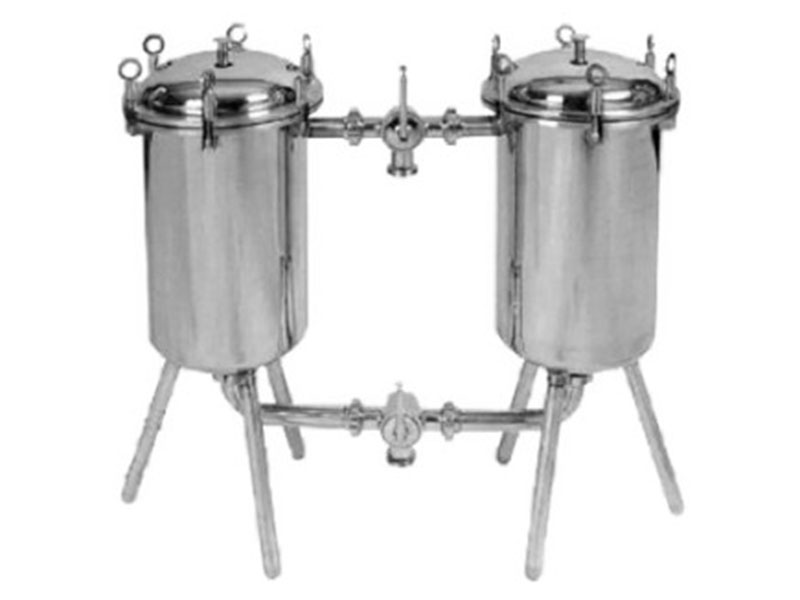
Two housings, one valve set: the standby side is serviced while the duty side keeps the line running.
Valve Design Decides the Hygiene Outcome
The failure mode to design out is a path from the open, dirty housing back into the flowing product. A simple three-way ball valve with a common port can, in the wrong position, connect both housings at once. Sanitary designs use either a pair of butterfly valves interlocked so only one can be open, or a purpose-built changeover valve with a vented cavity between the seats.
Ask three questions before you buy. What happens if the actuator loses air mid-stroke? Can both housings be open at the same time in any legitimate valve position? And can the cavity between seats be drained and cleaned? A duplex filter that fails the third question will develop a stagnant pocket that no CIP cycle reaches.
When a Single Filter Is the Right Answer
Plenty of plants do not need duplex. If you run two shifts with a natural break between them, if the dirt load lets a bag last a week, or if the line can be isolated for ten minutes without losing product, a single housing with a spare bag on the shelf is simpler, cheaper and easier to clean. Duplex pays back on continuous operation, not on principle.
A middle option is a single housing with a bypass loop that is physically locked out except during a documented changeover. It keeps the capital cost down and forces the discipline that a single-filter plant usually lacks. Just make sure the bypass is a locked valve, not a line someone left open.
Filtration
Running a line that cannot afford to stop?
Tell us your flow rate, product and current change interval. Zhongbo will size a duplex housing and the valve set that matches how your shift actually runs.
Fitting It Into the Cleaning Routine
A duplex filter adds a branch to your cleaning circuit, and branches are where CIP coverage gets thin. Either the housing is cleaned as part of the product circuit with both sides in the loop, or it is cleaned separately on a manual procedure. Mixing the two is how you get one side that is always clean and one side that is never quite clean.
Check that flow through each branch reaches the velocity your CIP system is designed for; splitting one stream into two branches halves the velocity in each. If you are already fighting cleaning failures, our piece on seven reasons CIP stops working is a useful check before you add more pipework, and CIP vs SIP covers when a sterile circuit changes the rules entirely.
If the duty is fine filtration rather than bulk dirt removal, a duplex filter with pleated cartridges rather than bags is the usual combination, and the cartridge rating follows the same logic as any precision filter — size for the dirty state, not the clean one.
Frequently Asked Questions
Can both housings be in service at the same time?
On many duplex filters, yes, and that is a legitimate way to run at double flow with half the pressure drop. The risk is that both sides then load at the same rate and need changing together. If you use parallel operation, stagger the cartridge changes so one side is always fresh.
Does a duplex filter need two differential gauges?
Yes, one per housing. A single gauge on the common outlet tells you the differential of whichever side is running, and gives you no warning about the standby side. Fit one per housing and you can compare them at a glance and predict when the next change is due.
What happens if the changeover valve is moved with the line under pressure?
A well-designed valve handles it, but a cheap three-way ball valve can produce a pressure spike or, worse, a brief path between the two housings. If your procedure says “equalise first”, the valve probably needs it. If the valve is genuinely designed for dead-head switching, the supplier should be able to show you a test report.
Can I convert my existing single filter into a duplex?
Often yes, if there is room and the existing housing is still in production. You need a second housing of the same size, a changeover valve set, and enough straight pipe for the branches to drain. It is usually cheaper than a new skid but more disruptive than it looks, because the tie-in happens on a live line.
Is a duplex filter suitable for CIP solutions?
It can be, with the right seals and a housing rated for the caustic temperature. The usual arrangement is to filter the return line so debris does not recirculate onto sprayed surfaces. Check the gasket material against your chemical concentration and temperature before assuming a standard EPDM seal will last.
How much space should I allow around the skid?
Enough to remove a housing bowl and pull a cartridge straight out, plus room to swing the valve handle. In practice that means 600–800 mm of clear space on the service side and full access to the drain. A duplex filter squeezed against a wall is a single filter with extra parts.
Do bag and cartridge housings share the same body?
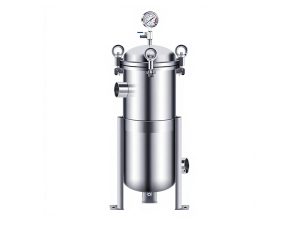
Usually not. Bag housings use a basket and a sealing ring at the top; cartridge housings use a perforated core and end-cap seals. Some sanitary housings accept both with an adapter, which is convenient for trials but adds a crevice. Choose one format per duty and stay with it.
Why does the standby housing smell after a week?
Because it was closed wet. A housing left full of product at ambient temperature is an incubator. Either leave it clean and dry with the bowl loose, or fill it with the same solution the line is holding. The worst state is half-full and sealed.
Can the changeover be automated?
Yes, and it is worth doing if the filter is in a critical duty. A differential transmitter per housing plus a pneumatic actuator lets the PLC switch on setpoint and alarm if the switch fails. Keep a manual override, and make sure the fail position sends flow to the cleaner housing rather than stopping the line.
What is the payback on a duplex over a single filter?
Work it out from lost production, not from the filter price. If a changeover costs 20 minutes of line time and you do it twice a shift, the annual cost of stopping usually exceeds the price difference within a few months. Plants with one change a week rarely see a payback at all.
Final Thoughts
Duplex filtration is not about buying a second housing. It is about deciding, in advance, that a filter change should never be a reason to stop a 24-hour line — and then building the valve logic and the written sequence that make that true. If your change interval is shorter than your changeover time, you already have the answer. Size the housings for the dirty state, keep the standby side closed and full, and put the sequence on the wall where the operator can see it.
Related Resources
Equipment on this site
- Sanitary Precision Filter — fine filtration with pleated cartridges.
Further reading