How to Choose the Right Heat Exchanger for Dairy and Beverage Processing
Every dairy and beverage line moves heat as much as it moves liquid. Whether you are pasteurizing milk, heating juice before filling, cooling whey after evaporation, or tempering a plant-based base, the heat exchanger is the component that does the work efficiently — or quietly drains your energy budget. Choosing the wrong type means higher utility cost, harder cleaning, product damage, or a line that simply cannot handle your recipe.
This guide walks through the two heat exchanger families Zhongbo builds for food plants — plate and tubular heat exchangers — and gives you a practical selection framework based on viscosity, particulates, hygiene, and total cost of ownership.
Why the Heat Exchanger Decides Line Efficiency
A heat exchanger transfers thermal energy between two streams without mixing them. In dairy and beverage plants the “hot” side is usually utility water, steam, or a regenerating product stream; the “cold” side is the product being heated or cooled. Two numbers matter most:
- Heat transfer efficiency — how much energy you recover (regeneration of 90%+ is common in well-designed plate systems).
- Holdup volume and surface cleanliness — how much product sits in the unit, and how easily CIP removes it.
Get both right and you cut steam, chilled-water, and cleaning-chemical consumption at the same time. Get them wrong and the losses compound across every shift.
Plate Heat Exchangers: Compact and High-Efficiency
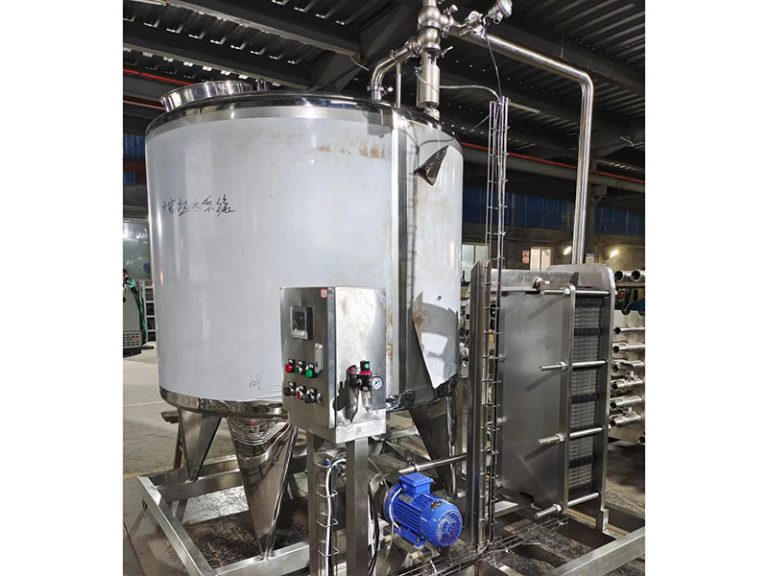
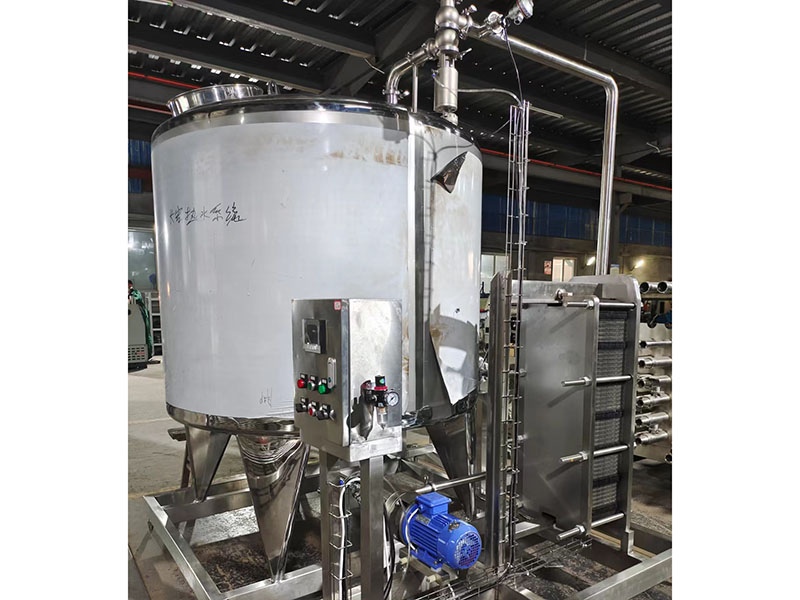
A plate heat exchanger (PHE) stacks thin, corrugated stainless plates with gaskets. Product and service fluids flow in alternate channels, giving an enormous surface area in a small footprint.
Where plate exchangers win:
- Very high heat transfer coefficient and excellent regeneration (often 90–96%).
- Small footprint, easy to expand by adding plates.
- Easy to open, inspect, and clean manually between campaigns.
- Lower capital cost per kW transferred for clean, low-viscosity fluids.
Watch-outs: gaskets are a maintenance item; narrow channels clog with fibrous or particulate products; not ideal for high viscosity or products with pulp, pulp flecks, or protein clumps.
Tubular Heat Exchangers: Built for Tough Products
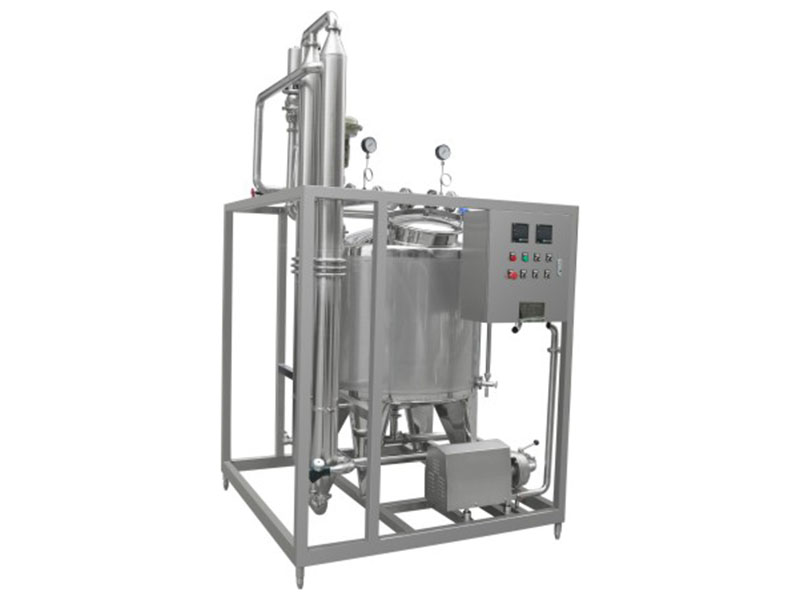
A tubular heat exchanger passes product through one or more concentric or nested tubes while the service fluid flows in the opposing annulus. There are no gaskets in the product path.
Where tubular exchangers win:
- Handles high viscosity, particulates, and fibers (fruit pulp, yogurt cultures, curds, concentrates) without fouling.
- No gaskets in contact with product — fewer leak paths, suited to higher pressure.
- Smooth, fully drainable bore is easy to CIP and inspect.
- Better for long, continuous duty on demanding recipes.
Watch-outs: lower surface-area density, so a larger footprint and typically higher capital cost than a plate unit for the same duty on a clean fluid.
Plate vs Tubular: Side-by-Side
| Factor | Plate Heat Exchanger | Tubular Heat Exchanger |
|---|---|---|
| Best product | Clean, low-viscosity fluids (milk, clear juice, water) | Viscous, particulate, fibrous fluids (pulp, curd, concentrate) |
| Regeneration efficiency | 90–96% | 70–90% (depends on design) |
| Footprint | Compact | Larger |
| Cleaning | Open/inspect manually; gasket care | CIP-friendly, drainable bore |
| Capital cost (clean fluid) | Lower | Higher |
| Typical use | HTST regeneration, cooling, water recovery | Pasteurizing pulp/juice, heating concentrates |
Five Questions to Pin Down Before You Specify
1. What is actually in the stream?
Clear milk or whey permeate → plate. Mango pulp, tomato, cultured yogurt, or anything with suspended solids → tubular. This single question eliminates half the debate.
2. What temperatures and regeneration do you need?
If energy recovery is a priority (most HTST lines), plate regeneration sections are hard to beat. Tubular can still regenerate but with more surface and cost.
3. How will you clean it?
Both must integrate with your CIP system. Plate units need gasket inspection; tubular units need a fully drainable, cleanable bore. Plan downtime around the one you choose.
4. What is the line layout and throughput?
Space-constrained plants favor plate. High, steady throughput on a tough product favors tubular. Pair the exchanger with the right sanitary pump so flow and pressure stay in the design window.
5. What does the product do downstream?
A heat exchanger rarely stands alone. It feeds a buffer tank, a pasteurizer, or an evaporator. Size it for the whole line, not just the single duty.
Typical Applications in Zhongbo Lines
- Milk: plate regeneration in HTST, plate cooling before filling.
- Juice: tubular heating for pulpy recipes; plate for clear juice.
- Plant-based beverages: tubular for oat/rice bases with suspended solids.
- Whey and concentrates: tubular pre-heating before evaporation.
Frequently Asked Questions
Can one heat exchanger handle both milk and pulp?
Not optimally. Keep a plate unit on clean streams and a tubular unit on particulate streams, or you will trade efficiency for clogging. Many plants run both in series.
Which is easier to keep hygienic?
Both are hygienic when designed for CIP. Tubular has no gaskets in the product path; plate units need scheduled gasket checks. Choose based on which maintenance your team can sustain.
Do I need regeneration?
If you heat and cool the same product (HTST, juice lines), regeneration pays back fast — often within a season of operation on a plate unit.
How do I size it?
Start from flow rate, inlet/outlet temperatures, and product properties (viscosity, solids). Zhongbo sizes the plate count or tube length to your duty and confirms with a thermal calculation.
Ready to Specify the Right Unit?
Zhongbo designs plate and tubular heat exchangers as part of complete dairy and beverage lines, matched to your product and your thermal treatment step. Tell us your recipe, throughput, and layout, and we will size the exchanger that minimizes energy and cleaning cost.