Introduction
On paper, tea extraction is simple. Put leaves in water, pull out the soluble compounds, remove the leaves, concentrate the liquid.
A real tea processing plant doesn’t work that way. One extraction tank won’t get you to a sellable product.
The finished extract has to meet requirements for soluble solids, flavor, color, aroma, concentration, microbiological safety, and consistency. The line also has to move large quantities of plant material and hot extraction liquid, handle suspended particles, and survive repeated cleaning cycles.
So a well-designed tea extraction and concentration line connects several process stages. No single machine does the job:
Tea Leaves → Preparation → Extraction → Solid-Liquid Separation → Clarification → Buffering → Concentration → Final Treatment → Storage or Further Processing
The right configuration depends on the tea variety, extraction method, target extract concentration, and final application. Tea extract ends up in ready-to-drink tea, instant tea products, tea beverages, functional formulations, or as an ingredient for downstream processing.
This guide walks through the major equipment a tea extraction and concentration line needs, and what to weigh when selecting each stage.
-
Start with the Tea Extract Specification
Define the finished extract first. Pick equipment second.
Different tea products demand very different process conditions. Black tea, green tea, oolong tea, herbal tea, and blended botanical materials don’t extract the same way.
Specifications worth nailing down:
- Type of tea or botanical material
- Leaf size and physical condition
- Moisture content
- Extraction ratio
- Extraction temperature
- Extraction time
- Number of extraction stages
- Target soluble solids
- Target extract concentration
- Color requirements
- Aroma requirements
- Suspended solids
- Final application
- Required production capacity
The most important distinction is between extraction capacity and final extract capacity.
A line can chew through a large quantity of tea leaves and still produce a much smaller quantity of concentrated extract once the water comes out.
Size the equipment around the complete material balance, not the weight of leaves entering the factory.
-
Tea Leaf Preparation
The first stage gets the raw material ready for efficient extraction.
Depending on the raw material, preparation may include:
- Receiving and inspection
- Sorting
- Removal of foreign material
- Cutting or size reduction
- Blending of different tea materials
- Temporary storage
- Controlled feeding into the extraction system
The goal is a reasonably consistent feed.
Particle size matters more than people expect. Too coarse, and extraction turns inefficient. Too fine, and you generate more suspended solids, which makes downstream separation and filtration harder.
Design the preparation system around the tea material you actually process. One configuration won’t fit every product.
-
Extraction Tank: The Core of the First Processing Stage
The extraction tank sits at the center of the front end of the line.
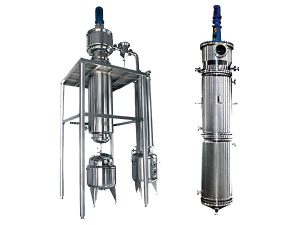
Zhongbo’s multifunctional extraction tank is designed for plant and food extraction and can support processes including atmospheric extraction, pressurized water decoction, warm soaking, hot reflux, forced circulation, and percolation. The equipment can also be configured for dynamic or countercurrent extraction.
For a typical water-based tea extraction process, the basic sequence is:
Tea Leaves + Water → Heating → Extraction → Discharge of Extract
What the tank has to deliver is controlled contact between the tea material and the extraction liquid.

Key design considerations:
Temperature Control
Extraction temperature governs how fast soluble compounds move from the plant material into the liquid.
Higher temperature speeds extraction up. Push thermal exposure too far, though, and it starts costing you flavor and aroma.
The right temperature comes out of product trials, not guesswork.
Extraction Time
The system needs enough residence time to reach the desired extraction level, without dragging the process out longer than it needs to be.
Liquid-to-Solid Ratio
The amount of extraction water affects both extraction efficiency and how much liquid you’ll have to concentrate later.
More water is not automatically better. Every extra liter adds evaporation load downstream.
Agitation or Circulation
Controlled movement of the liquid improves contact between the extraction medium and the plant material and helps hold extraction conditions steady.
-
Multi-Stage Extraction Can Improve Process Control
For some tea products, a single extraction pass can’t deliver the right balance between yield and quality.
A multi-stage approach splits the process into controlled steps:
First Extraction → Drain → Second Extraction → Combine Extracts
For suitable raw materials, continuous or countercurrent extraction is also worth a look.
Zhongbo’s extraction equipment supports dynamic and countercurrent extraction concepts, which behave differently from simple static soaking.
The choice comes down to:
- Raw material characteristics
- Desired extraction yield
- Product quality requirements
- Water consumption
- Production capacity
- Downstream concentration cost
Optimize the extraction method together with the concentration process. Treating them as separate equipment decisions will cost you.
-
Solid-Liquid Separation After Extraction
After extraction, the process holds two main phases:
Liquid extract + Spent tea material
The spent leaves have to go before the extract reaches the concentration section.
Depending on the product and process design, this stage may include:
- Extraction tank discharge screens
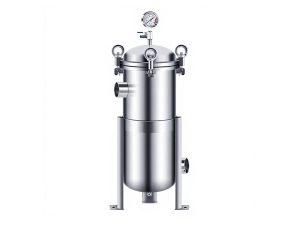
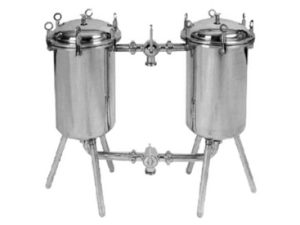
- Filtration
- Strainers
- Clarification equipment
- Centrifugal separation
- Other solid-liquid separation equipment
The point here isn’t a perfectly clear liquid. Not at this stage.
The separation system just needs to remove enough solids to protect downstream pumps, heat-transfer surfaces, evaporators, and other equipment. Fine plant particles foul evaporators quickly, which is why this stage deserves real attention.
-
Transfer Pumps Keep the Line Moving
Once the tea extract has been separated from the spent leaves, sanitary pumps carry it to the next stage.
Zhongbo supplies stainless steel pumps for sanitary liquid-processing applications, including food and beverage processing. Its centrifugal pump design uses stainless steel wetted components and a hygienic structure.
Pump selection should account for:
- Flow rate
- Product temperature
- Viscosity
- Suspended solids
- Suction conditions
- Required pressure
- Cleaning requirements
Choose the pump as part of the overall process, not on its own. The pump feeding an evaporator, for instance, may need very different operating characteristics from one moving extract between storage tanks.
-
Buffer Tanks Help Separate Process Stages
Flow rates across a tea extraction line don’t match up on their own. Extraction runs in batches; concentration equipment often runs continuously, or at least at a steadier flow.
A buffer tank provides temporary holding capacity between the two.
A typical arrangement:
Extraction → Separation → Buffer Tank → Pump → Concentration
What the buffer tank does:
- Smooth fluctuations in flow
- Separate batch extraction from continuous concentration
- Provide temporary holding capacity
- Support stable evaporator operation
- Facilitate sampling and quality checks
- Improve overall process coordination
Zhongbo offers stainless steel buffer tanks as part of its liquid-processing equipment portfolio, with customized solutions available for production-line requirements.
Size the working volume from actual production flow and required buffer time. Grabbing a standard tank off the shelf is how you end up with a bottleneck or wasted capital.

-
Clarification Before Concentration
Whatever enters the evaporator shapes how well the concentration system performs.
If the extract carries too many suspended particles, insoluble plant components, or other fouling materials, the heat-transfer surfaces will contaminate faster.
Depending on the tea product, clarification is an intermediate step worth including.
The goals may include:
- Removing fine particles
- Improving visual clarity
- Reducing evaporator fouling
- Protecting downstream equipment
- Improving final extract consistency
The right clarification technology depends on the appearance you need and the final application. A tea extract headed for a clear ready-to-drink beverage needs a different strategy from one headed for further processing.
-
Concentration: Removing Water from the Tea Extract
After extraction and clarification, the liquid still carries a lot of water. Concentration removes part of it and raises the level of soluble tea components.
At this point, the evaporation and concentration system takes over the line.
Zhongbo’s evaporation and concentration portfolio includes several evaporator configurations, including falling film, forced circulation, scraped-film, coil-type and vacuum concentration equipment.
For tea extract, the right technology depends on:
- Feed flow rate
- Initial solids concentration
- Target concentration
- Viscosity
- Heat sensitivity
- Fouling tendency
- Required evaporation capacity
- Energy availability
-
Falling Film Evaporation for Tea Extract
Falling film evaporation fits when the tea extract is relatively low in viscosity and heat-sensitive.
The liquid runs as a thin film over the heated surface while water evaporates under controlled conditions. Product residence time stays short, which is a real advantage with heat-sensitive extracts.
Zhongbo’s evaporation guidance identifies tea extract among the food and beverage applications of falling film evaporation and describes the use of falling film systems for heat-sensitive liquid concentration.
Falling film systems can also be arranged as multi-effect evaporators, where vapor generated in one effect provides heating for another. In a larger continuous tea-processing plant, that cuts fresh steam demand.
-
Vacuum Concentration for Heat-Sensitive Tea Products
Vacuum operation lowers the boiling temperature of water. That matters when you need to concentrate a product without exposing it to unnecessary heat.
For tea extracts, temperature management isn’t optional. Flavor and aroma carry real commercial value.
Set the exact vacuum level and evaporation temperature from the tea formulation and process trials.
Zhongbo’s product portfolio includes vacuum concentration equipment as well as falling film and other evaporation systems, allowing the concentration configuration to be matched to different product characteristics.
-
MVR and Multi-Effect Options for Larger Tea Plants
In a high-capacity tea extraction plant, energy consumption can become a major operating cost.
Two common strategies for cutting fresh steam demand:
Multi-effect evaporation
Vapor generated from one evaporation stage is reused as the heating medium for another stage.
MVR — Mechanical Vapor Recompression
Generated vapor is mechanically compressed and reused as a heating medium.
Both can be built into broader evaporation configurations.
The right selection depends on:
- Annual operating hours
- Evaporation load
- Steam price
- Electricity price
- Available electrical capacity
- Product temperature requirements
- Required final concentration
A smaller or intermittently operated tea line may not justify the same evaporation configuration as a large plant running continuously.
-
Deaeration and Final Product Quality
After concentration, the tea extract may need additional treatment depending on where it’s headed.
For tea beverages, dissolved oxygen deserves attention. Oxygen drives changes in flavor and color.
Zhongbo’s vacuum deaeration equipment is designed for beverage and dairy applications and can be integrated with evaporation and concentration systems. The company’s published applications specifically include tea drinks.
One possible downstream configuration:
Concentrated Extract → Deaeration → Final Formulation → Heat Treatment → Filling
Not every tea extract needs the same downstream equipment, though. The final process depends on whether the product is sold as:
- Liquid tea extract
- Concentrated tea extract
- Ready-to-drink tea
- Tea beverage base
- Ingredient for another food product
- Further-dried tea extract
-
CIP Is Part of the Process Design
A tea extraction line handles organic plant material, soluble solids, pigments, and other product residues. Plan the cleaning from the start of equipment design.
A typical CIP system may serve:
- Extraction tanks
- Transfer piping
- Pumps
- Buffer tanks
- Heat exchangers
- Evaporators
- Downstream processing equipment
Important design considerations:
- Drainability
- Internal surface finish
- Spray coverage
- Cleaning flow velocity
- Chemical compatibility
- Temperature
- Cleaning time
- Rinse requirements
Zhongbo supplies CIP systems as part of its processing-equipment portfolio and positions CIP as part of integrated food and beverage production solutions.
A line that cleans easily loses less time to downtime and holds production conditions steadier.
-
Automation and Process Control
A modern tea extraction and concentration line runs on several variables that have to work together:
- Extraction temperature
- Extraction time
- Tank level
- Pump flow
- Evaporation pressure
- Vacuum level
- Product temperature
- Concentration
- Steam flow
- CIP parameters
Automation coordinates these stages and cuts manual intervention.
Zhongbo states that its automation solutions can incorporate PLC systems, Siemens touch screens, Schneider electrical components, and process valves and measurement equipment.
For a complete tea line, design automation around the process sequence. Bolting controls onto individual machines doesn’t give you an integrated line.
A Typical Tea Extraction and Concentration Line
A basic industrial configuration looks like this:
Tea Leaf Receiving
↓
Preparation / Sorting
↓
Extraction Tank
↓
Solid-Liquid Separation
↓
Extract Buffer Tank
↓
Clarification / Filtration
↓
Transfer Pump
↓
Vacuum / Falling Film / Other Evaporation System
↓
Concentrated Tea Extract
↓
Optional Deaeration
↓
Final Treatment or Storage
↓
Filling / Further Processing
↓
CIP
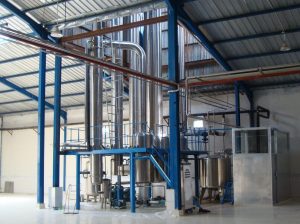
You can expand or simplify the actual configuration depending on the product. A high-capacity tea beverage factory, for example, may integrate extraction, concentration, deaeration, blending, pasteurization or UHT treatment, buffer storage, and filling into one automated production system.
How to Size a Tea Extraction and Concentration Line
Size from the material balance.
Say a plant starts with a given quantity of tea material and uses extraction water to produce a dilute extract. The design calculation has to establish:
Raw Material Input → Extraction Liquid → Extract Flow → Solids Content → Concentration Target → Final Extract Output
Then size the concentration stage by the amount of water that has to leave:
Water to Evaporate = Feed Extract Flow − Final Concentrated Extract Flow
The calculation needs to account for soluble solids and other retained components. Don’t treat the entire feed as water.
This is why a manufacturer needs actual feed and target specifications before selecting an evaporator.
Common Mistakes When Building a Tea Extraction Line
Mistake 1: Selecting the extraction tank before defining the final product
Extraction conditions should come from the required extract specification, not the other way around.
Mistake 2: Using too much extraction water
More water means more downstream evaporation duty.
Mistake 3: Ignoring fine solids
Poor separation means more fouling and more cleaning.
Mistake 4: Selecting the evaporator based only on capacity
Two extracts at the same flow rate can need very different evaporator configurations. Viscosity, solids, and heat sensitivity all change the answer.
Mistake 5: Treating CIP as an afterthought
Design the extraction and concentration sections for effective cleaning from the beginning.
Mistake 6: Focusing only on individual machines
A tea processing line is a connected system. Tank capacity, pump flow, evaporation rate, buffer volume, and downstream equipment all have to balance.
Mistake 7: Ignoring energy costs
In larger plants, the evaporation stage can become the biggest energy consumer. Evaluate multi-effect, TVR, or MVR configurations during the initial engineering stage. Retrofitting later is expensive.
What to Ask a Tea Processing Equipment Manufacturer
Before requesting a complete quotation, get this information together.
Raw Material
- Tea type
- Leaf condition
- Particle size
- Moisture content
- Daily raw-material input
Extraction
- Extraction method
- Water-to-tea ratio
- Extraction temperature
- Extraction time
- Number of extraction stages
Extract
- Extract flow rate
- Initial soluble solids
- Target concentration
- Viscosity
- pH
- Color requirements
- Suspended solids
Production
- Daily production target
- Operating hours
- Batch or continuous operation
- Future capacity expansion
Utilities
- Steam pressure
- Electricity supply
- Cooling water
- Process water
- Compressed air, if applicable
Cleaning
- Required CIP method
- Cleaning frequency
- Cleaning chemicals
- Required cleaning temperature
The more complete this information is, the easier it becomes to design a properly balanced extraction and concentration line.
Q&A
Q1. What equipment is needed for a tea extraction and concentration line?
A typical line may include raw-material preparation equipment, extraction tanks, solid-liquid separation equipment, pumps, buffer tanks, clarification or filtration equipment, an evaporation/concentration system, optional deaeration equipment, final treatment equipment, storage tanks, and CIP.
The exact configuration depends on the tea product and production capacity.
Q2. What type of extraction tank is suitable for tea?
A multifunctional extraction tank can support different extraction methods, including water decoction, warm soaking, hot reflux, forced circulation, percolation, and other extraction processes. Pick the configuration according to the tea material and the extraction conditions you need.
Q3. Why is a buffer tank useful in a tea extraction line?
A buffer tank separates upstream extraction from downstream concentration. It absorbs flow fluctuations and gives the concentration system a more stable feed.
Q4. How do I choose an evaporator for tea extract?
Start with the feed flow rate, initial solids, target concentration, viscosity, heat sensitivity, fouling tendency, and required evaporation capacity. Falling film, vacuum, forced circulation, scraped-film, or other systems may fit, depending on the product.
Q5. Is falling film evaporation suitable for tea extract?
It can be, for relatively low-viscosity, heat-sensitive tea extracts. Falling film evaporation provides continuous thin-film processing and can be integrated into multi-effect or MVR configurations for larger production lines.
Q6. Does every tea processing line need deaeration?
No. The need for deaeration depends on the final product and quality requirements. For tea beverages, dissolved oxygen may need to be controlled because oxidation affects product quality. Zhongbo offers vacuum deaeration equipment for tea drinks and other beverage applications.
Q7. Can tea extraction and concentration equipment be customized?
Yes. Zhongbo states that it provides customized solutions and turnkey production-line support. Its extraction equipment can be configured for different extraction processes, and its evaporation portfolio covers multiple concentration technologies.
Q8. Can the extraction and concentration stages be fully automated?
Yes. Automation can be integrated across extraction, pumping, concentration, tank levels, temperature, vacuum, and cleaning sequences. Zhongbo’s automation solutions include PLC and industrial control components for integrated processing lines.
Q9. What information should I provide when asking for a tea extraction line quotation?
At minimum, provide the tea type, raw-material capacity, extraction method, extraction-water ratio, extraction temperature and time, extract flow rate, initial and target solids, desired final product, operating hours, available utilities, and CIP requirements.
Q10. Can Zhongbo supply a complete tea extraction and concentration line?
Zhongbo identifies Tea Extraction and Concentration as one of its processing solutions and states that it provides turnkey processing projects involving extraction, concentration, evaporation, tanks, pumps, and related process equipment.
Conclusion
A tea extraction and concentration line isn’t just an extraction tank bolted to an evaporator. The best results come from designing the entire process as one connected system.
A typical line starts with tea preparation and controlled extraction, followed by solid-liquid separation, clarification, buffering, and sanitary transfer. The extract is then concentrated using an evaporation technology selected for its solids content, viscosity, heat sensitivity, fouling behavior, and required production capacity.
For smaller or specialized applications, a simple extraction and vacuum concentration system may be enough. Larger continuous plants should evaluate falling film, multi-effect, MVR, or hybrid evaporation systems to improve energy efficiency and production capacity.
The upstream and downstream equipment matters just as much. Buffer tanks steady the flow, sanitary pumps keep product moving, deaeration can help control dissolved oxygen in tea beverages, and a properly designed CIP system makes hygienic production repeatable.
Zhongbo provides extraction equipment for plant and food processing, evaporation and concentration equipment, stainless steel pumps, buffer tanks, CIP systems, and related process equipment. Its published portfolio also identifies tea extraction and concentration as a complete processing solution.
For a customized tea extraction and concentration line, send Zhongbo your tea type, raw-material capacity, extraction method, water-to-tea ratio, extraction temperature and time, extract flow rate, initial and target concentration, final product, operating schedule, and available utilities. Those parameters let the extraction, separation, concentration, storage, and cleaning systems be designed as one integrated production line.
For more information, visit Zhongbo’s official website or explore its Extraction Equipment and Evaporation & Concentration equipment.