Why Your Manufacturer Choice Determines Project Success
Choosing a UHT sterilizer is not like buying a standardized pump or motor. A UHT system is the heart of your processing line — if it fails, your entire production stops. The manufacturer you choose determines not just the equipment price, but your operational reality for the next 10–15 years.
Here is what happens when buyers make the wrong choice:
| Wrong Choice | Real Consequence |
|---|---|
| Buying on price alone — selecting the cheapest quote | Undersized heat exchangers, poor welding that traps product residue, CIP coverage below 90%, leading to biofilm buildup, product recalls, and 3X maintenance costs within 2 years. |
| Overbuying — paying for a Tier 1 brand when your scale does not justify it | Capital tied up in over-specified equipment. A 3,000 L/h dairy plant does not need a Tetra Pak integrated aseptic line — a well-engineered tubular UHT from a qualified Chinese manufacturer achieves identical sterility at half the cost. |
| Ignoring after-sales capability | Equipment delivered but no commissioning engineer arrives for 3 weeks. Spare parts take 2 months. One unplanned shutdown costs more than the savings from choosing a no-support vendor. |
| No reference check — trusting the brochure | A beautiful website and polished PDFs hide the fact that the “manufacturer” is a trading company with no factory, no engineers, and no quality control. |
The global UHT processing market reached approximately USD 5.2 billion in 2025 and continues growing at over 13% annually, according to MarketsandMarkets research. This growth has attracted both genuine innovators and opportunistic resellers. Knowing how to tell them apart is what this guide is about.

How to Evaluate a UHT Sterilizer Manufacturer: 7 Criteria
Before comparing specific manufacturers, you need a consistent evaluation framework. Here are the seven criteria that experienced procurement teams use:
Technical Capability and Engineering Depth
A manufacturer’s technical depth shows in their ability to customize — not just sell standard models. Ask these questions:
- Can they adjust hold-tube length and diameter for your specific product’s viscosity and required F0 value?
- Do they have in-house thermal calculation capability, or do they outsource process design?
- Can they handle special materials (316L for high-chloride products, duplex stainless for high-acid)?
- Do they offer multiple heat exchanger types (plate, tubular, coil, scraped-surface) — or only one?
Red flag: A manufacturer who cannot explain the difference between direct and indirect UHT heating in technical terms, or who recommends the same heat exchanger for milk and high-viscosity cream.
Certifications and Compliance
Certifications are the minimum baseline — not a differentiator, but an absolute requirement:
| Certification | What It Covers | Required For |
|---|---|---|
| ISO 9001:2015 | Quality management system — design, production, inspection, after-sales | All projects (baseline) |
| CE Marking | EU health, safety, and environmental requirements | Export to EU / EEA markets |
| 3-A Sanitary Standards | Hygienic equipment design for dairy and food | US market, premium dairy projects |
| EHEDG | European hygienic engineering and design | EU premium dairy, aseptic applications |
| FDA 21 CFR | US food contact material and process regulations | US market |
For most buyers outside the EU and US, ISO 9001:2015 + CE is the practical certification combination that balances quality assurance with cost.
Product Range and Technology Breadth
A manufacturer offering only one heat exchanger type limits your options. The right supplier should cover:
- Plate pasteurizers — for low-viscosity liquids (milk, clear juice, tea)
- Tubular pasteurizers — for medium-to-high viscosity, fibrous, and particulate products (yogurt, oat milk, cream, sauces)
- Coil/Scraped-surface — for very high viscosity and large particulates
After-Sales Support and Service Network
After-sales is where most manufacturers separate from pretenders. Evaluate:
- Commissioning: Do they send engineers to your site for installation and startup — or just ship the crate and send a manual?
- Training: Do they train your operators on CIP procedures, parameter adjustment, and basic troubleshooting?
- Spare parts: What is the lead time on critical spares (gaskets, seals, PLC modules)? Do they maintain a parts inventory?
- Remote support: Can they diagnose issues via remote access to your PLC, or do you always wait for an on-site visit?
- Warranty: 12 months is standard. Longer warranties signal confidence in build quality.
Pricing Model and Total Cost of Ownership
Never evaluate on purchase price alone. Calculate 5-year total cost of ownership (TCO):
| Cost Component | Typical Share of 5-Year TCO |
|---|---|
| Equipment purchase | 35–45% |
| Installation and commissioning | 10–15% |
| Energy consumption (steam, electricity, chilled water) | 30–40% |
| Spare parts and maintenance | 8–12% |
| Downtime cost (production loss) | 5–10% (variable) |
A manufacturer with 90%+ heat recovery will save more in energy over 5 years than the difference in purchase price between two competing quotes.
Delivery Timeline
Tier 1 manufacturers typically quote 6–12 months for a custom UHT line. Chinese manufacturers with in-house fabrication can deliver in 3–6 months. If your project is time-sensitive — a new product launch, seasonal production window, grant deadline — delivery speed may outweigh other factors.
Verified Customer References
This is the most important criterion and the most frequently skipped. Always ask for:
- Contact details of 3 customers with similar product applications to yours
- Photos or videos of installed equipment (not just the factory showroom)
- Option to visit an operating plant (if geographically feasible)
Global Tier 1 Manufacturers at a Glance
These companies dominate the high-end UHT market. They offer integrated processing + aseptic filling + packaging ecosystems, global service networks, and decades of validated technology. They are the right choice for large multinational projects — and the wrong choice for buyers who do not need the full ecosystem.
Tetra Pak (Switzerland)
The undisputed market leader in integrated UHT + aseptic packaging. Tetra Pak’s UHT systems — direct (VTIS steam injection) and indirect (tubular, plate) — are engineered to pair with their aseptic fillers, creating a closed sterile chain from raw product to sealed package. Key strengths: global service network in 160+ countries, unmatched aseptic validation expertise, proprietary OneStep technology for water/energy reduction. Best for: large dairy processors who need guaranteed sterility and are committed to the Tetra Pak packaging ecosystem. Price level: premium.
GEA Group (Germany)
GEA is strong in component-level engineering and flexible UHT configurations. Unlike Tetra Pak’s integrated ecosystem approach, GEA sells the thermal processing core — direct infusion, direct injection, and indirect systems — that can integrate with any customer’s existing filler and packaging line. Key strengths: up to 90% energy recovery, NiSoMate inline quality sensor for UHT, pilot plant testing facilities. Best for: mid-to-large processors who want engineering flexibility and already have packaging infrastructure. Price level: premium.
Alfa Laval (Sweden)
Alfa Laval is first and foremost a heat exchanger specialist. Their Steritherm DSI (direct steam injection) UHT systems are known for minimal thermal impact — rapid heating and cooling that preserves flavor in heat-sensitive products. Key strengths: Extend technology for longer production runs between CIP, deep expertise in fouling prevention, strong in cream and viscous product applications. Best for: processors focused on product quality preservation and run-time efficiency. Price level: premium.
SPX FLOW / APV (USA)
APV (under SPX FLOW) has carved out a position in energy-efficient UHT with its SteamRecycle infusion technology — a closed-loop system that reuses 100% of process steam after startup, cutting CO₂ emissions and water use. The APV InfusionPlus system was recently deployed in a large-scale dairy UHT project for Arla Foods in Scotland. Key strengths: sustainability credentials, large-scale project experience, infusion technology for gentle heating. Best for: sustainability-focused large dairies. Price level: premium.
Krones AG (Germany)
Krones is primarily a filling and packaging company, but their VarioAsept M UHT systems (3,500–60,000 L/h) are well-integrated with their aseptic filling lines. Their strength is the complete beverage line — from UHT treatment through aseptic filling to packaging — particularly for PET bottle applications. Best for: beverage processors building complete aseptic cold-fill lines. Price level: premium.
Established Chinese and Asian Manufacturers
Over the past 15 years, Chinese UHT sterilizer manufacturers have undergone a significant transformation. The stereotype of “cheap but low quality” no longer applies to the top tier of established manufacturers — companies with 20–30+ years of history, ISO 9001 certification, CE-compliant designs, and 100+ completed turnkey projects across multiple continents.
What changed:
- Automation investment: Laser cutting, automatic welding (replacing manual welding), automatic polishing, and CNC machining are now standard in top-tier Chinese factories — producing weld quality and surface finish (Ra ≤ 0.8 μm) comparable to European equipment.
- Component sourcing: Leading Chinese manufacturers use the same global-brand components as European OEMs: Siemens PLCs, Danfoss/Schneider VFDs, Alfa Laval/APV-compatible heat exchanger plates, E+H/Endress+Hauser sensors. The “Chinese equipment” label refers to the fabrication and integration — not the control components.
- Export maturity: Established manufacturers now export to 50+ countries across Southeast Asia, Africa, Middle East, South America, and Eastern Europe, with English-speaking engineering teams and international project management experience.
- Price advantage: Capital cost is typically 40–60% lower than equivalent Tier 1 equipment. This is not from cutting corners — it is from lower labor costs, leaner overhead, factory-direct sales, and no brand premium markup.
Not all Chinese manufacturers are equal. The gap between a top-tier established manufacturer (with ISO 9001, CE, 100+ projects, in-house engineering team) and a small workshop assembler (no certifications, no references, trading company front) is wider than the gap between a top Chinese manufacturer and a Tier 1 European OEM. Due diligence is everything.
Zhongbo: 30+ Years of Dairy & Beverage Processing Expertise
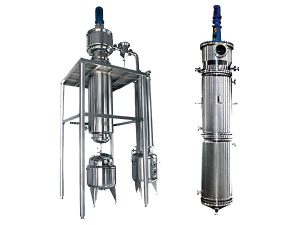
Zhongbo (Zhejiang Zhongbo Mechanical Technology Co., Ltd.) represents the established tier of Chinese UHT equipment manufacturers — the category that procurement teams should evaluate seriously alongside Tier 1 OEMs for mid-size and cost-sensitive projects.
Company Profile
| Founded | 1993 (Wenzhou Jiangbo Dairy Equipment) → 2013 (Zhongbo Mechanical Technology) |
| Factory | 13,333 m² manufacturing facility in Wenzhou, Zhejiang, China |
| Certifications | ISO 9001:2015, CE-compliant equipment |
| Engineering Team | 20+ professional engineers specializing in thermal process design, automation, and mechanical engineering |
| Project Track Record | 100+ turnkey projects completed across dairy, beverage, pharmaceutical, and chemical sectors |
| Product Range | Plate, tubular, and coil pasteurizers; multi-effect/TVR/MVR evaporators; extraction systems; CIP stations; mixing/buffer tanks; stainless steel pumps; water treatment; complete dairy and beverage production lines |
| Capacity Range | 300 – 10,000 L/h for pasteurizers; scalable to larger volumes for complete lines |
What Sets Zhongbo Apart
1. True turnkey capability. Zhongbo does not just sell a pasteurizer — the company designs and delivers complete processing lines including raw milk reception, standardization, homogenization, UHT/HTST sterilization, aseptic buffer tanks, CIP systems, and control integration. This means one point of responsibility for the entire thermal process chain.
2. Three heat exchanger technologies under one roof. Unlike manufacturers that specialize in only plate or only tubular, Zhongbo produces Plate Pasteurizers (for low-viscosity liquids), Tubular Pasteurizers (for viscous, fibrous, and particulate products), and Coil Pasteurizers (for small-batch and specialty applications). This means the equipment recommendation is driven by your product — not by the manufacturer’s limitation.
3. Factory-direct pricing. As a source factory with in-house fabrication — laser cutting, automatic welding, automatic polishing — Zhongbo eliminates middlemen. The cost savings go to the buyer, not to distributor margins.
4. Proven across sectors. Beyond dairy and beverages, Zhongbo has delivered projects in pharmaceutical extraction, collagen production, stevia sugar processing, and chemical evaporation — demonstrating the engineering versatility needed for complex process requirements.
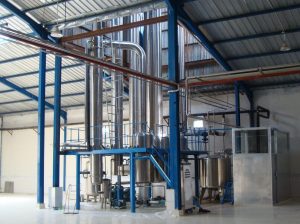
5. Modern manufacturing. The 13,333 m² facility uses automated production equipment — laser cutting, robotic welding, automatic polishing — that produces consistent quality across every unit. This is the same manufacturing approach used by European OEMs, applied at Chinese cost structure.
Ideal Zhongbo Customer Profile
- Mid-size dairy or beverage processor (1,000–10,000 L/h)
- New market entrant building a first production line
- Established brand adding capacity or a new product category
- Plant in a developing market where capital efficiency and speed to production are priorities
- Projects where the buyer does not need integrated aseptic packaging from the same vendor (i.e., you already have or plan to source fillers independently)
Manufacturer Comparison Table
| Dimension | Tetra Pak | GEA Group | Alfa Laval | SPX FLOW | Zhongbo |
|---|---|---|---|---|---|
| Founded | 1951 | 1881 | 1883 | 2015 (APV legacy) | 1993 |
| HQ | Switzerland | Germany | Sweden | USA | China |
| Heat Exchanger Types | Tubular, plate, direct steam injection (DSI) | Direct infusion, injection, indirect (plate/tubular) | DSI, tubular, plate | Infusion, injection, tubular, plate | Plate, tubular, coil (indirect HTST/UHT/ESL) |
| Aseptic Filling Integration | Proprietary, full ecosystem | Open integration | Open integration | Open integration | Open integration (filler-independent) |
| Target Segment | Large MNCs | Mid-to-large processors | Industrial food, dairy | Mid-to-large dairy | Mid-size plants, SMEs, developing markets |
| Price Level | Premium ($$$$$) | Premium ($$$$$) | Premium ($$$$$) | Premium ($$$$$) | Competitive ($$ – 40–60% lower) |
| Key Certifications | ISO, 3-A, EHEDG | ISO, 3-A, EHEDG | ISO, 3-A, EHEDG | ISO, 3-A | ISO 9001:2015, CE |
| Service Network | Global, 160+ countries | Global, 62+ countries | Global, 100+ countries | Regional hubs (Americas, EMEA, APAC) | Direct engineer support + remote diagnostics |
| Typical Delivery | 6–12 months | 6–12 months | 6–10 months | 6–10 months | 3–6 months |
| Best For | Integrated aseptic packaging lines, large MNCs | Custom UHT engineering, flexible configurations | Heat exchanger excellence, product quality focus | Energy-efficient, sustainable UHT | Cost-effective turnkey, fast delivery, mid-size projects |
How to Choose Based on Your Project Type
The “best” manufacturer is the one that matches your specific situation. Here is how different project profiles map to manufacturer tiers:
| Project Profile | Best Manufacturer Tier | Why |
|---|---|---|
| Large multinational dairy (10,000+ L/h, multiple SKUs, global standards) | Tier 1 (Tetra Pak, GEA) | Need integrated UHT + aseptic filling, global service coverage, validated sterility assurance for export markets |
| Regional dairy brand (3,000–8,000 L/h, local/regional distribution) | Established Chinese (Zhongbo) or Tier 1 mid-range | Tier 1 is overkill for regional scale; Zhongbo delivers equivalent sterility at 40–60% lower cost with faster commissioning |
| New beverage brand (1,000–5,000 L/h, plant-based or juice, first production line) | Established Chinese (Zhongbo) | Capital efficiency is critical; need a turnkey partner who can handle everything from reception to CIP |
| SME dairy in Africa / SE Asia / South America (500–3,000 L/h) | Established Chinese (Zhongbo) | Budget-constrained, need reliable equipment with commissioning support, faster delivery for seasonal production windows |
| Pharma / specialized nutrition (strict GMP, validated processes) | Tier 1 (GEA, Alfa Laval) or validated specialist | Regulatory validation requirements, audit trail, and documentation standards favor Tier 1 |
| Line expansion / adding ESL capacity to existing HTST plant | Chinese or Tier 1 depending on existing infrastructure | If filler and packaging are independent, Chinese manufacturers offer the best value for the thermal processing core |
6 Red Flags When Evaluating a UHT Manufacturer
These warning signs should make you pause — or walk away:
| # | Red Flag | Why It Matters |
|---|---|---|
| 1 | No factory — or refuses a factory visit | You are dealing with a trading company, not a manufacturer. They will mark up a real factory’s equipment by 20–30% and provide zero technical support. |
| 2 | Cannot provide verifiable references for your product type | Every legitimate manufacturer has customers. If they claim “confidentiality” for every reference, they have none. |
| 3 | No in-house thermal process engineer | A UHT system is not a commodity pump. Hold-tube length, heat exchanger area, and flow velocity must be calculated for your specific product. If they cannot show you the thermal calculation, they are guessing. |
| 4 | Quote is inexplicably lower than all competitors | UHT sterilizers have a material cost floor. A quote 50% below the market average usually means: thinner stainless steel (304 instead of 316L), manual welding (inconsistent quality), no automation (PLC replaced with basic relay controls), and no CIP integration. |
| 5 | Certifications are “in progress” — not issued | ISO 9001 “pending” means it does not exist. Ask for the certificate number and verify it on the issuing body’s website. CE “self-declared” without third-party testing is not CE compliance. |
| 6 | No after-sales SLA in the contract | If the contract does not specify response time (e.g., remote diagnosis within 4 hours, on-site within 72 hours), spare parts availability commitment, and warranty terms — you have no recourse when the equipment goes down. |
Manufacturer Selection Checklist
Use this checklist when evaluating any UHT sterilizer manufacturer. Print it or save it for your procurement team.
☐ UHT Sterilizer Manufacturer Evaluation Checklist
☐ 1. Factory visit completed — confirmed in-house manufacturing, not a trading company
☐ 2. ISO 9001:2015 certificate verified (ask for certificate number, cross-check online)
☐ 3. CE marking / 3-A / EHEDG certification confirmed for target market
☐ 4. Product range covers all heat exchanger types needed (plate, tubular, or both)
☐ 5. In-house thermal process engineer demonstrated heat transfer calculation for your product
☐ 6. 3 customer references contacted — at least 1 with a product similar to yours
☐ 7. After-sales SLA reviewed: remote response time, on-site response time, spare parts lead time
☐ 8. Warranty period confirmed (minimum 12 months)
☐ 9. Commissioning and operator training included in quotation (not as optional extras)
☐ 10. Total 5-year cost of ownership calculated — not just comparing purchase prices
FAQs
Who is the largest UHT sterilizer manufacturer in the world?
Tetra Pak (Switzerland) is the largest by market share, with integrated UHT processing and aseptic packaging systems operating in over 160 countries. GEA Group (Germany) and Alfa Laval (Sweden) follow closely in the UHT thermal processing segment. However, “largest” does not mean “best for every project” — for mid-size regional plants, established Chinese manufacturers like Zhongbo deliver equivalent sterilization performance at significantly lower capital cost and faster delivery. Explore Zhongbo’s UHT sterilizer range →
How much does a UHT sterilizer cost?
UHT sterilizer pricing depends on capacity, heat exchanger type, automation level, and brand. Small systems (500–2,000 L/h): $15,000–$50,000 for Chinese manufacturers, $60,000–$120,000 for European brands. Mid-range (2,000–5,000 L/h): $50,000–$150,000 (Chinese), $150,000–$350,000 (European). Industrial (5,000–10,000+ L/h): $120,000–$300,000 (Chinese), $350,000–$800,000+ (European). A complete turnkey line with CIP, tanks, and controls costs more. Always request a detailed quotation specifying materials (304 vs 316L), automation components (Siemens vs generic PLC), and included services (commissioning, training). View Zhongbo’s Tubular UHT specifications →
Are Chinese UHT sterilizer manufacturers reliable?
The top tier of established Chinese manufacturers — those with 20–30+ years of history, ISO 9001:2015 certification, CE-compliant designs, and 100+ completed turnkey projects — are reliable and competitive alternatives to European OEMs. These manufacturers use the same global-brand components (Siemens PLCs, Danfoss drives, E+H sensors) and have invested in automated fabrication (laser cutting, robotic welding). The reliability gap that existed 15 years ago has largely closed at the top tier. The key is due diligence: always verify certifications, visit the factory, and speak to existing customers. See Zhongbo’s ISO 9001 certified equipment →
What certifications should a UHT sterilizer manufacturer have?
At minimum: ISO 9001:2015 (quality management system) is the baseline requirement for any legitimate manufacturer. CE marking is essential for export to EU/EEA markets. For US-bound equipment, 3-A Sanitary Standards and FDA 21 CFR compliance may be required. EHEDG certification is valuable for aseptic dairy applications in Europe. Always ask for the actual certificate number and verify it independently — never accept “pending” or “self-declared” as equivalent to certified status. Zhongbo holds ISO 9001:2015 certification and CE-compliant equipment designs. Explore Zhongbo’s certified UHT equipment →
How do I get a quote from a UHT sterilizer manufacturer?
Prepare these details before requesting a quotation: (1) product type and formulation (viscosity, pH, particle content), (2) required capacity in L/h, (3) target shelf life and packaging format, (4) utility availability (steam pressure, electrical supply, chilled water temperature), (5) target market and required certifications, (6) project timeline. A quality manufacturer will ask you all of these questions before quoting — if they quote a price without understanding your product, that is a red flag. Contact Zhongbo for a customized quotation →
Conclusion
The UHT sterilizer market in 2026 offers more choice — and more quality at every price point — than ever before. The key is matching the manufacturer tier to your project profile, not defaulting to the biggest brand name.
Choose a Tier 1 manufacturer (Tetra Pak, GEA, Alfa Laval, SPX FLOW) if: you are a large multinational, need a fully integrated UHT + aseptic filling + packaging ecosystem, operate across multiple regulatory jurisdictions, and your capital budget supports premium pricing.
Choose an established Chinese manufacturer like Zhongbo if: you are a mid-size processor, a new market entrant, or an established brand adding capacity — and you need reliable sterilization performance, turnkey delivery, CE-compliant design, and ISO-certified quality at 40–60% lower capital cost than Tier 1 equivalents.
Whichever path you take, the seven evaluation criteria in this guide — and the ten-point checklist — will help you separate genuine manufacturers from resellers, and proven quality from marketing claims.
Related Resources
- HTST vs UHT: What Is the Difference? — Understand the fundamental technology before choosing equipment
Ready to Evaluate Manufacturers for Your Project?
Tell us your product, capacity, and target market — our engineering team will provide a customized quotation with detailed specifications within 48 hours.
✓ ISO 9001:2015 Certified | ✓ CE-Compliant Equipment | ✓ 30+ Years of Experience | ✓ 100+ Turnkey Projects
Disclaimer: This article provides an objective comparison of UHT sterilizer manufacturers for educational purposes. Manufacturer profiles are based on publicly available information as of July 2026. Zhongbo is the manufacturer of the equipment referenced in our product links. All trademarks belong to their respective owners. Always conduct independent due diligence before making procurement decisions.
© 2026 Zhejiang Zhongbo Mechanical Technology Co., Ltd. All rights reserved.