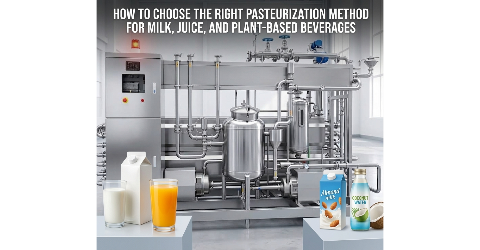
Introduction
Starting a yogurt production line takes more than buying a pasteurizer and a few fermentation tanks. The quality of the final yogurt depends on how the entire process is designed, from raw milk reception and formulation through heat treatment, homogenization, fermentation, cooling, filling, and cleaning.
The first decision usually isn’t which machine to buy. It’s what kind of yogurt you plan to produce, how much you need to make, and how the product will be packaged and distributed.
Set yogurt, stirred yogurt, drinking yogurt, and Greek-style yogurt all have different processing requirements. A small local dairy supplying fresh yogurt to nearby stores needs a very different setup from a factory supplying supermarkets across a region.
That’s why a yogurt production line should be planned as an integrated process, not assembled machine by machine.
This guide walks through the main steps of starting a yogurt production line and the equipment to consider at each stage.
Step 1: Decide What Type of Yogurt You Will Produce
Define the product before you choose equipment.
Common commercial yogurt products include:
- Set yogurt
- Stirred yogurt
- Drinking yogurt
- Greek-style or strained yogurt
- Flavored yogurt
- Fruit yogurt
- High-protein yogurt
The difference matters because the product determines the processing sequence.
Set yogurt, for example, is normally filled before fermentation, so the yogurt develops its structure inside the final package. Stirred yogurt is fermented in a tank and then mixed before filling.
Drinking yogurt needs a formulation and process that produce a relatively fluid final product. Greek-style yogurt needs an extra concentration or straining step to raise the solids content.
Lock down the product specification before the equipment layout is finalized.
Step 2: Calculate Your Required Production Capacity
Next question: capacity.
Don’t just ask for a “large yogurt production line.” Work out how much finished yogurt you actually expect to sell.
Consider:
- Target production per day
- Operating hours per day
- Number of production shifts
- Expected seasonal demand
- Package size
- Fermentation batch size
- Future expansion plans
Say your target is 10,000 liters of finished yogurt per day. A line designed exactly around 10,000 L/day leaves little room for downtime, cleaning, maintenance, or growth.
The opposite mistake is just as real. A system far larger than your current demand burns money on equipment and utilities you don’t need.
Capacity and production schedule have to be designed together.
Zhongbo’s dairy solutions are designed around different production requirements, and the company notes that production-line planning should consider daily final-product capacity, energy, cleaning, and investment costs before equipment is selected.
Step 3: Prepare the Raw Milk and Ingredients
With the product and capacity defined, the process starts with raw materials.
For a conventional milk-based yogurt, the main raw material is milk. Depending on the recipe, other ingredients may include:
- Milk powder
- Sugar
- Stabilizers
- Fruit preparations
- Flavoring ingredients
- Other permitted functional ingredients
Raw milk needs to be received, stored, and transferred under hygienic conditions.
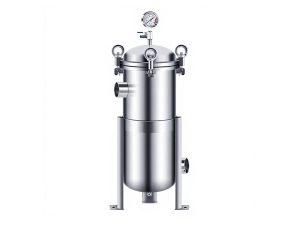
A typical system may include a milk reception tank, storage tank, sanitary pump, filtration system, and associated piping.
The raw milk storage system should also fit the production schedule. If milk arrives at different times from production, you need enough refrigerated storage capacity to avoid unnecessary production interruptions.
Sanitary transfer matters just as much. Zhongbo supplies stainless steel sanitary pumps for liquid food and dairy processing applications, allowing raw materials and intermediate products to move between different processing stages. (浙江中博)
Step 4: Standardize and Mix the Milk
Now formulation.
Milk composition varies from batch to batch, but yogurt needs a controlled formulation to deliver consistent texture, viscosity, acidity, and taste.
A mixing tank is commonly used to combine milk with ingredients such as milk powder, sugar, or stabilizers.
The mixing system needs enough agitation to do the job without whipping unnecessary air into the product.
For industrial production, the mixing tank may also include heating or cooling. Zhongbo’s mixing tanks are available in different configurations, including jacketed and coil-type heating and cooling options, with customized structures depending on the process.
Good mixing at this stage is non-negotiable. An uneven formulation can’t be fixed later through fermentation.

Step 5: Pasteurize the Yogurt Mix
Heat treatment is one of the most important stages in yogurt production.
Unlike ordinary fresh milk pasteurization, yogurt milk usually gets a relatively intensive heat treatment. The purpose goes beyond microbial safety: the heat modifies milk proteins in a way that supports the yogurt structure you want.
The exact temperature and holding time depend on the product and process design.
A properly designed pasteurization system should provide:
- Controlled heating
- Accurate holding time
- Efficient cooling
- Consistent temperature control
- Hygienic product handling
- Easy cleaning
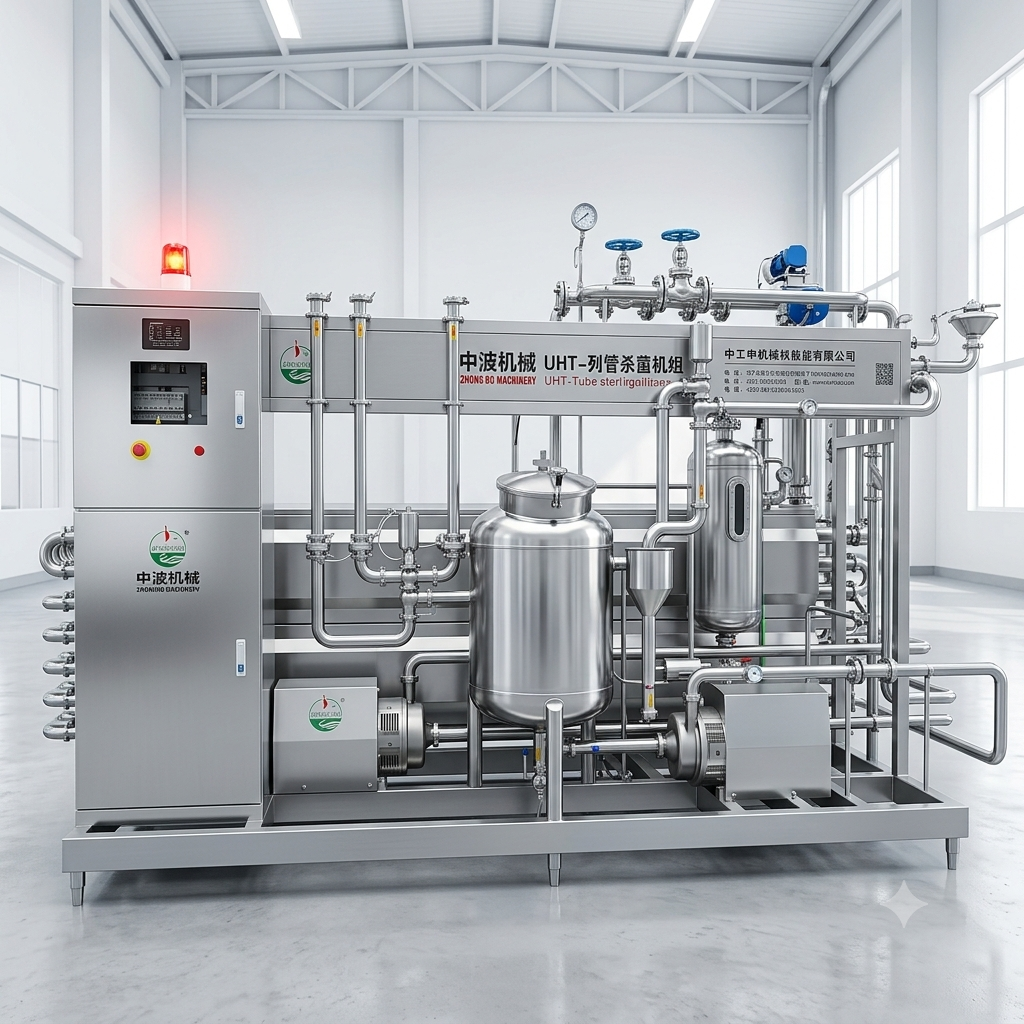
Zhongbo supplies plate and tubular pasteurizers for dairy applications. Its plate pasteurizer is listed with capacities from 300 to 10,000 L/h, with automatic or semi-automatic control and steam or electric heating options. The company’s application information specifically includes yogurt and yogurt drinks.
For larger or more specialized dairy processes, choose between plate and tubular heat exchange according to product properties, viscosity, solids content, required temperature profile, and the overall process design.
Step 6: Homogenize the Milk
Many yogurt processes also need homogenization.
Milk contains fat globules that separate during storage. Homogenization reduces their size and creates a more uniform dispersion.
For yogurt, this means a smoother, more stable product, and it supports the desired body and texture.
The homogenizer is normally integrated into the heat-treatment section of the line. Its exact operating pressure and position in the process should follow the formulation and final product.
Here’s another reason buying each machine independently gets you into trouble: the equipment has to work together as one process.
Step 7: Cool the Milk to Fermentation Temperature
After heat treatment, the yogurt mix needs to cool to the right temperature for culture addition.
This is a critical transition.
The product has just been through a high-temperature treatment. The yogurt cultures, meanwhile, need a controlled temperature range to ferment.
So the cooling stage has to be stable and repeatable. Large temperature fluctuations show up later as erratic fermentation times and inconsistent product.
At this point the process shifts from thermal treatment to biological processing.
Step 8: Add the Yogurt Culture
Yogurt fermentation relies on selected starter cultures, commonly involving Streptococcus thermophilus and Lactobacillus delbrueckii subsp. bulgaricus.
The cultures convert lactose into lactic acid, gradually lowering the pH of the milk.
That acidification changes the structure of milk proteins and creates the characteristic yogurt texture and flavor.
Add the culture under controlled hygienic conditions. Dosage and fermentation conditions depend on the culture supplier, formulation, product type, and desired acidity.
Treat this stage with extra care. Fermentation is a biological process, not a mechanical one, and it doesn’t forgive sloppy control.
Step 9: Ferment the Yogurt
Fermentation is where the liquid milk mixture becomes yogurt.
The inoculated milk is held under controlled temperature conditions until it reaches the desired acidity and texture.
How you ferment depends heavily on the product.
Set Yogurt
For set yogurt, the inoculated milk is usually filled into containers before fermentation. The product develops its gel structure inside the package.
Stirred Yogurt
For stirred yogurt, fermentation happens in a tank. Once the desired endpoint is reached, the yogurt is gently stirred and sent to cooling and filling.
Drinking Yogurt
Drinking yogurt needs a more fluid structure. The formulation, fermentation endpoint, stirring, cooling, and downstream processing are all adjusted accordingly.
The fermentation tank therefore needs to match the intended product. Selecting one on volume alone is a mistake.
Step 10: Cool and Add Fruit or Flavor Ingredients
Once fermentation hits the desired endpoint, cool the yogurt to slow further acid development.
For stirred and flavored yogurt, this is also where fruit preparations, flavors, or other ingredients may go in, depending on the formulation.
Mixing intensity needs careful control.
Too much mechanical treatment damages the yogurt structure. Too little leaves the fruit or flavor unevenly distributed.
Design the mixing system around the rheological properties of the finished yogurt, not just tank volume.
Step 11: Fill and Package the Yogurt
Packaging is the final major product-handling stage.
Depending on the product, yogurt may be packaged in:
- Plastic cups
- Bottles
- Pouches
- Larger food-service containers
The packaging format affects the filling equipment, production speed, storage requirements, and downstream logistics.
Set yogurt is filled before fermentation. Stirred and drinking yogurt are generally filled after fermentation and cooling.
The filling environment must be hygienically controlled. Contamination at this stage can undo everything done earlier in the process.
Plan the packaging line together with the processing capacity. A high-capacity yogurt processing system behind a slow filling machine buys you nothing — the filler just becomes the bottleneck.
Step 12: Build a Proper CIP System
The most frequently underestimated part of a dairy production line is CIP — Clean-In-Place.
Milk and yogurt contain proteins, fats, sugars, and other components that leave deposits inside tanks, pipes, heat exchangers, pumps, and valves.
Manual cleaning isn’t practical as the primary sanitation method for an industrial dairy line.
A CIP system circulates cleaning solutions through the equipment and piping without requiring the production system to be completely dismantled.
A typical cleaning program may include stages such as:
- Pre-rinsing
- Alkaline cleaning
- Intermediate rinsing
- Acid cleaning
- Final rinsing
- Sanitization, where required
The exact cleaning sequence depends on the product, equipment materials, process design, and local hygiene requirements.
Put CIP into the original plant design. Bolting it on afterward never works as well.
Step 13: Add Automation and Process Control
Modern yogurt production lines increasingly run on automated process control.
A PLC and HMI system can monitor and control parameters such as:
- Product temperature
- Tank level
- Flow rate
- Heating and cooling
- Fermentation conditions
- Valve sequencing
- CIP cycles
- Pump operation
Automation also reduces operator workload and improves batch-to-batch consistency.
Zhongbo states that its processing solutions can incorporate PLC systems, Siemens touchscreens, Schneider electrical components, and automated valves and measurement systems.
Match the automation level to production scale and budget. A small dairy doesn’t need the same automation architecture as a large industrial plant.
Step 14: Plan the Complete Production Line
By now it should be clear why a yogurt factory is best designed as a complete system.
A typical yogurt production process may include:
Raw Milk Reception → Storage → Filtration → Standardization → Mixing → Homogenization → Pasteurization → Cooling → Culture Addition → Fermentation → Cooling → Flavor/Fruit Mixing → Filling → Cold Storage
Supporting systems may include:
- Sanitary pumps
- Product tanks
- Mixing tanks
- Heat exchangers
- Pasteurizers
- Fermentation tanks
- CIP system
- Water treatment
- Steam or hot-water system
- Refrigeration
- Electrical and control system
Not every yogurt plant needs every piece of equipment. Base the final configuration on the product range, production capacity, packaging method, available utilities, and required automation level.
What Should You Prepare Before Contacting an Equipment Manufacturer?
Planning a yogurt production line? Get the following information together before requesting a quotation:
- Product Type
Tell the manufacturer whether you plan to produce set yogurt, stirred yogurt, drinking yogurt, Greek-style yogurt, fruit yogurt, or several products.
- Production Capacity
Provide your expected production in liters per hour or liters per day.
- Product Formula
The milk composition, total solids, sugar content, stabilizers, and other ingredients can affect equipment selection.
- Packaging Format
Specify whether you plan to use cups, bottles, pouches, or another packaging format.
- Production Schedule
Operating hours and shifts help determine tank and equipment capacity.
- Utilities
Available steam, electricity, chilled water, compressed air, and process water should be considered during design.
- Automation Requirements
Decide whether you need manual, semi-automatic, or fully automated operation.
- Future Expansion
If production is expected to grow, the plant layout and utility capacity should leave room for expansion.
Providing these details up front saves considerable time during the equipment-selection stage.
Q&A
Q1. What equipment is needed to start a yogurt production line?
A yogurt production line normally requires equipment for milk reception and storage, mixing, homogenization, pasteurization, cooling, fermentation, filling, and cleaning. Depending on the product, you may also need equipment for fruit mixing, concentration, water treatment, refrigeration, and packaging.
Q2. What is the basic process of yogurt production?
The basic process is raw milk reception and storage, formulation and mixing, homogenization, heat treatment, cooling, culture inoculation, fermentation, cooling, mixing or flavor addition, and packaging. The exact sequence varies between set, stirred, drinking, and other yogurt products.
Q3. Can one production line make different types of yogurt?
Yes, a properly designed line can be configured for multiple yogurt products. The equipment and process parameters do need to accommodate differences in formulation, fermentation, viscosity, cooling, and filling. Establish the production sequence before the equipment is specified.
Q4. What is the difference between set yogurt and stirred yogurt production?
Set yogurt is generally filled into its final container before fermentation, so the yogurt structure develops inside the package. Stirred yogurt is fermented in a tank and then stirred, cooled, and filled. This difference affects the fermentation tanks, transfer system, and filling sequence.
Q5. Why is pasteurization important in yogurt production?
Pasteurization helps control microorganisms and prepares the milk for fermentation. In yogurt processing, heat treatment also affects milk proteins, which contributes to the texture and stability of the finished yogurt.
Q6. Do I need a CIP system for a yogurt factory?
For an industrial dairy production line, a properly designed CIP system is an important part of hygienic production. It lets you clean tanks, pipelines, heat exchangers, pumps, and other product-contact equipment systematically, without extensive manual dismantling.
Q7. How do I choose the right capacity for a yogurt production line?
Start with expected daily sales, operating hours, product range, batch size, and future growth. Balance the processing capacity, fermentation tank volume, and packaging speed so no single stage becomes a major production bottleneck.
Q8. Can Zhongbo customize a yogurt production line?
Yes. Zhongbo provides customized dairy and beverage processing solutions and has experience with turnkey production lines. Its portfolio includes equipment such as mixing tanks, pasteurization systems, pumps, CIP systems, tanks, and other processing equipment that can be integrated according to project requirements.
Conclusion
Starting a yogurt production line takes more planning than picking individual machines. The product type, daily capacity, formulation, fermentation method, packaging format, utilities, cleaning requirements, and automation level all need to be considered together.
A well-designed line keeps a logical flow from raw milk reception through heat treatment and fermentation to filling, with hygienic control at every stage.
For a new yogurt plant, the best starting point is a process plan, not a machine list. Once the process and production targets are clear, the equipment can be selected and integrated around them.
Zhongbo has more than 30 years of experience in dairy and beverage equipment manufacturing and provides processing equipment and turnkey solutions for dairy applications including yogurt and yogurt drinks. Its portfolio covers pasteurization, mixing, sanitary pumping, CIP, tanks, and other process equipment used to build complete dairy production systems.
Planning a new yogurt production line? Contact Zhongbo with your product type, target capacity, and packaging requirements to discuss a suitable production solution.