

In the production process of liquid foods and beverages, the use of HTST and UHT treatment is only half of the effort to achieve long-term preservation effects. Even the most effective heat treatment methods, if combined with inappropriate packaging, cannot ensure that the products have a long shelf life. Whether it is the production of dairy products, juices, sauces or ready-to-drink beverages, matching the pasteurization method with the packaging type will directly affect the safety, shelf life and distribution flexibility of the products.
This guide provides a detailed introduction on how to match HTST and UHT with packaging for longer shelf life, and elaborates on the basic principles of the equipment to help you choose packaging materials that can both guarantee product quality and extend the product’s shelf life.
Introduction
Heat treatment and packaging are interrelated systems. The HTST pasteurization method can balance the freshness and safety of refrigerated foods, while the ultra-high temperature pasteurization method can provide stable commercial quality for products stored at room temperature. However, without appropriate packaging, both of these treatment methods will reduce efficiency.
Mastering the methods of extending shelf life through HTST and UHT treatment means going beyond the consideration of just temperature and time parameters.
What Is HTST Pasteurization and HTST Treatment
HTST pasteurization, also known as high-temperature short-time pasteurization, kills harmful bacteria through moderate heating within a short period of time, while maintaining the freshness and nutritional content of the food.
High Temp Short Time Pasteurization Basics
Standard parameters: heat at 72°C for 15 seconds, followed by rapid cooling. This method can reduce the number of microorganisms by 5 orders of magnitude, making it suitable for short-term refrigerated sales products. Compared to more intense treatment methods, it can better preserve the original flavor of the product.
HTST Pasteurization Equipment Overview
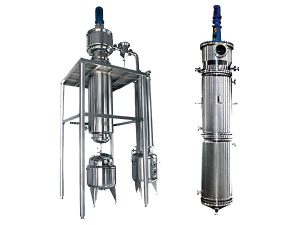
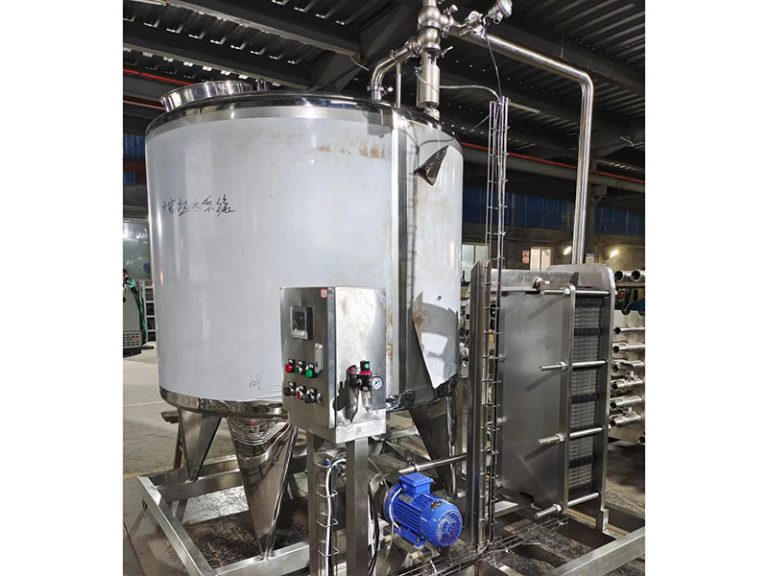
HTST pasteurization equipment typically uses plate heat exchangers to achieve continuous flow, precise temperature control, and efficient heat regeneration. These systems are compact, cost-effective, and can be easily integrated into standard filling lines.
What Is UHT Pasteurization and UHT Treatment
UHT treatment uses extremely high temperatures and lasts only a few seconds to achieve commercial sterilization standards, enabling storage for several months.
Ultra High Temperature Pasteurization Basics
Ultra-high temperature pasteurization typically heats the product to 135 to 150 degrees Celsius for 1 to 5 seconds, then rapidly cools it. This kills almost all bacteria and spores, enabling widespread distribution of the product when combined with sterile packaging.
UHT Pasteurization Equipment Overview
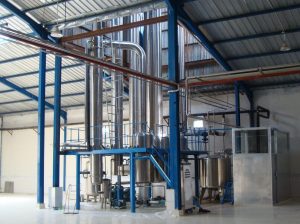
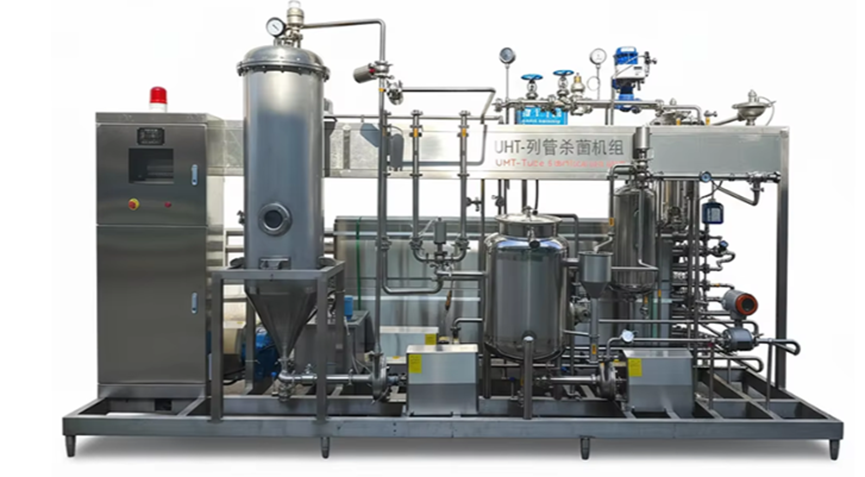
UHT pasteurization equipment uses tubular or dedicated plate systems, equipped with sterile storage tubes and sealed transfer pipelines. These devices can provide the sterile filling environment required for stable product output over an extended period.
How to Extend Shelf Life with HTST and UHT Treatment
How to extend shelf life with HTST pasteurization and UHT treatment depends on three core principles:
Immediately perform rapid cooling after heating
Minimal contact with air and contaminants
Packaging compatible with the heat treatment process
Products treated by high-temperature short-time pasteurization require packaging with good sealing and protection from light for refrigerated storage. Products treated by ultra-high temperature sterilization require completely sterile, multi-layer packaging to maintain sterility without refrigeration. When these measures are used together, the shelf life of the products can be reliably extended by 20% to 50% or more.
How to Match HTST & UHT with Packaging for Longer Shelf Life
Understanding how to match HTST & UHT with packaging for longer shelf life simplifies production planning.
| Treatment Type | Core Need | Packaging Priority |
| HTST | Refrigerated protection | Sanitary, airtight, light-blocking |
| UHT | Ambient stability | Aseptic, multi-layer, hermetic |
HTST pairs with standard cold-fill packaging. UHT demands sterile containers and sealed filling environments to preserve its long-life advantage.
How to Choose Packaging for HTST Pasteurized Products
How to choose packaging for HTST pasteurized products, the key lies in ensuring the product’s sealing and maintaining its freshness.
Covered cardboard boxes with an isolation layer
High-density polyethylene/polycaprolactone bottles with a secure cap
Sealed cups and containers for dairy products and desserts
Anti-oxidation films to slow down oxidation reactions
Priority should be given to leak-free seals, oxygen barrier materials, and materials that can withstand refrigeration conditions. Avoid using porous or non-sealing designs as they will shorten the product’s shelf life.
Best Packaging for UHT Treated Dairy and Beverages

For ultra-high temperature treated dairy products and beverages, the best packaging method must be able to maintain their sterile state at room temperature:
Sterile multi-layer cartons (paper + aluminum foil + plastic)
Sterile polyethylene terephthalate bottles with a leak-proof coating
Sterile spray bags
Boxed bag systems used in the hotel and catering industry
These materials can prevent the intrusion of light, air, and microorganisms, thus ensuring that the product can be stored for 6 to 12 months without refrigeration.
Optimize UHT Treatment and Packaging Combination
temperature treatment and packaging
To optimize the combination of ultra-high temperature treatment and packaging:
Use a synchronous sterile transfer method from the processor to the filling machine
Before filling, the packaging materials and products should be disinfected separately.
Use sealing measures to prevent recontamination
Test the oxygen and light blocking performance
Verify the shelf life under actual storage conditions
If properly optimized, the combination of ultra-high temperature sterilization technology and sterile packaging can reduce cold chain costs and expand market coverage.
FAQs
Does HTST require sterile packaging?
No, HTST uses conventional hygiene packaging and relies on refrigeration to maintain stability.
For ultra-high temperature sterilized milk with a long shelf life, what is the ideal packaging method?
Aseptic multi-layer cartons can achieve the best balance between protection performance and cost-effectiveness.
Can the shelf life be extended solely by packaging?
No, only by combining heat treatment with packaging can food be prevented from spoiling.
Which brand can provide a reliable heat treatment solution?
JANGBO offers tested and stable systems suitable for the processing of dairy products and beverages.
Conclusion
HTST&UHT Treatment and packaging form a single preservation system. HTST supports fresh, refrigerated products with efficient, cost-effective pasteurization, while UHT enables long shelf life and ambient distribution. Mastering how to match HTST & UHT with packaging for longer shelf life reduces waste, expands market reach, and protects flavor and safety.
By combining the HTST pasteurization method with safe cold chain packaging, as well as the UHT pasteurization method with sterile barrier materials, you can achieve stable and long-lasting performance. Brands like JIANGBO combine engineering quality and application expertise to provide optimized heat treatment and packaging solutions.
Don’t let mismatched processing and packaging methods limit the potential of your products. Please consult reliable suppliers to optimize your HTST/UHT and packaging combinations, so as to achieve the longest shelf life and higher efficiency.