Table of Contents
ToggleIntroduction
You want to maximize efficiency in large-scale concentration processes, especially when working with heat-sensitive products like milk, fruit juice, or pharmaceutical solutions. Falling Film Evaporators (FFE) are advanced industrial evaporators designed to improve evaporation efficiency while ensuring product quality. They are widely used in food, dairy, and chemical industries because of their high heat transfer efficiency, low energy consumption, and ability to handle large volumes continuously. Understanding the principles and advantages of falling film evaporators helps you select the right equipment for your large-scale concentration needs and optimize production outcomes.
Falling Film Evaporators
Design
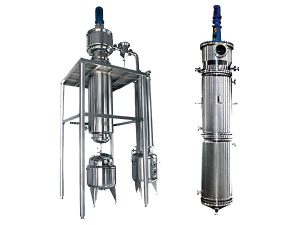
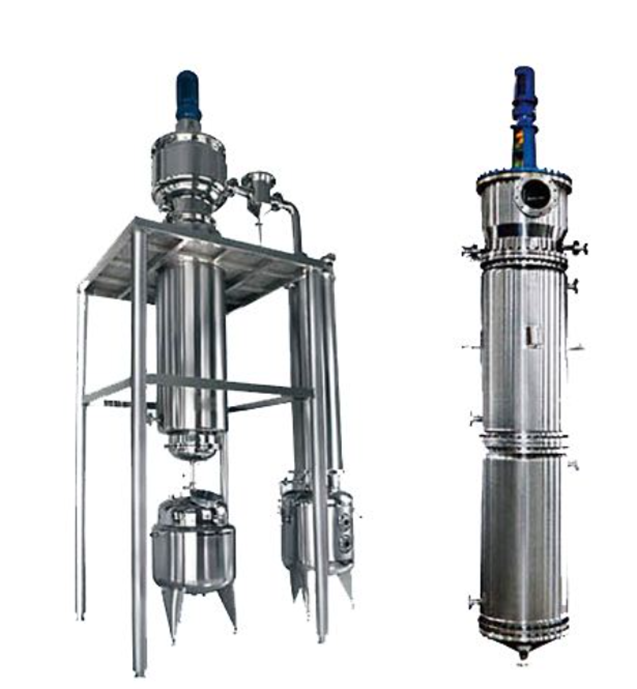
Falling Film Evaporators consist of vertical tubes where liquid flows as a thin film along the inner tube walls. This design maximizes contact with the heating surface, ensuring uniform heat distribution and minimizing the risk of local overheating. The rapid movement of the liquid reduces thermal stress, making it suitable for heat-sensitive liquids. Compared to traditional evaporators, the vertical tube design also reduces the residence time of the liquid in the heating section, which helps maintain product quality and consistency.
Heat Transfer Efficiency
Heat transfer efficiency in falling film evaporators is exceptionally high. The thin liquid film allows faster evaporation with minimal energy input. Multiple effect evaporator setups can further enhance thermal efficiency, reducing steam consumption and operational costs. Compared to other industrial evaporators, FFEs provide better evaporation performance with less fouling, lower energy usage, and more predictable process control, which is critical in large-scale concentration equipment.
Heat-Sensitive Liquids
Falling film evaporators excel at handling heat-sensitive liquids. The liquid’s thin-film flow ensures that it is exposed to high temperatures for a shorter period, preventing degradation of flavors, colors, and nutrients. This makes FFEs ideal for fruit juice, dairy products, and pharmaceutical liquids that require gentle but effective concentration. They also minimize product discoloration, viscosity changes, or nutrient loss that could occur with conventional evaporators.
Advantages of Falling Film Evaporators
Energy Saving
One of the most significant advantages of FFEs is energy efficiency. They require less steam than traditional evaporators because of rapid heat transfer through the thin liquid film. Lower steam consumption reduces operational costs while maintaining a high evaporation rate. Over time, the energy savings can be substantial, making FFEs a cost-effective choice for large-scale concentration operations.
High Throughput
Falling film evaporators are designed for continuous operation, which allows processing of large volumes of liquid without interruptions. This high throughput capability makes them ideal for industrial-scale concentration equipment. By maintaining steady liquid flow and uniform evaporation, FFEs support consistent production rates, making them suitable for high-demand applications in food, dairy, and chemical industries.
Product Quality Preservation
FFEs maintain product quality during concentration. The rapid evaporation and controlled temperature exposure prevent thermal degradation, preserving the original taste, color, and nutritional content. For example, in dairy processing, FFEs help retain essential proteins and vitamins in milk and whey. In fruit juice production, they prevent loss of flavor and natural color. Overall, the technology ensures that the end product meets both safety and quality standards.
Operational Efficiency
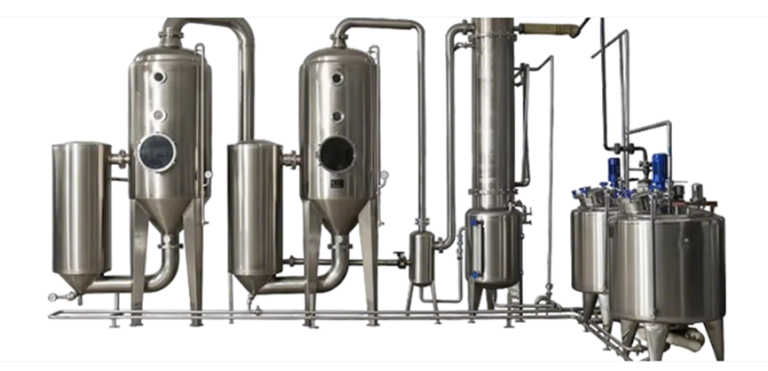
Falling film evaporators integrate seamlessly with multiple effect evaporator systems to optimize operational efficiency. Their design reduces fouling and cleaning requirements, minimizing downtime and maintenance costs. Operators can adjust flow rates, temperature, and pressure to achieve consistent concentration without overprocessing the product. This flexibility also allows FFEs to handle varying feedstock compositions, making them a reliable choice for industries with diverse liquid products.
Applications of Falling Film Evaporators
Food & Beverage
FFEs are widely used in food and beverage concentration, including fruit juices, sauces, and liquid extracts. They preserve flavor and color while increasing concentration efficiently. Continuous operation ensures stable production, and high heat transfer efficiency lowers energy costs, making them a sustainable option for food processors.
Dairy Industry
In the dairy industry, falling film evaporators concentrate milk, whey, and other liquid dairy products while preserving protein and vitamin content. The gentle heat exposure ensures that nutritional value is maintained, which is essential for high-quality dairy products like condensed milk or whey protein concentrate.
Chemical & Pharmaceutical
Falling film evaporators are suitable for handling heat-sensitive chemicals and pharmaceutical solutions. They ensure stable performance while preventing degradation of sensitive compounds. Industries that require precise concentration control, like pharmaceuticals, benefit from the consistent heat transfer and reduced fouling of FFEs.
Choosing the Right Falling Film Evaporator
Capacity and Performance
When selecting a falling film evaporator, consider the required liquid volume, desired evaporation rate, and process consistency. Proper sizing ensures maximum efficiency and optimal throughput. Large-scale concentration equipment should be selected based on daily production requirements and flexibility for varying feedstock conditions.
Material and Build Quality
Stainless steel construction is critical for durability and hygiene, especially in food, dairy, and pharmaceutical applications. High-quality materials prevent corrosion and contamination, ensuring long-term reliability and product safety. Check the build quality of tubes, jackets, and seals to ensure minimal maintenance and high performance.
FAQ
How do falling film evaporators improve efficiency compared to other evaporators?
They use a thin liquid film for faster heat transfer, reducing energy consumption while maintaining high evaporation rates.
Can falling film evaporators handle heat-sensitive liquids?
Yes, the design ensures minimal exposure to high temperatures, preserving flavors, nutrients, and colors.
Are falling film evaporators suitable for large-scale industrial production?
Absolutely. FFEs support continuous operation with high throughput, making them ideal for industrial-scale concentration.
How do falling film evaporators compare with thin film evaporators?
Falling film evaporators are better for large volumes and heat-sensitive products, while thin film evaporators are often used for very viscous liquids.
Conclusion
Falling Film Evaporators offer energy savings, high throughput, and excellent product quality preservation for large-scale concentration. For professional industrial evaporators and reliable solutions tailored to your production needs, you can trust Zhongbo to provide high-performance, durable, and efficient equipment.