
Introduction
For food manufacturers, the safety of dairy products is non-negotiable. Pasteurization is a key method for eliminating harmful pathogens while preserving the flavor, texture, and nutritional value of milk, cream, and other dairy products. High-temperature HTST pasteurization and UHT pasteurization are the two most widely used thermal processing techniques in dairy production, and their precise calibration is crucial to ensuring consistent compliance with regulatory requirements. This guide will detail the key steps for calibrating these systems to ensure the safety of dairy products.
HTST/UHT Systems & Dairy Safety Requirements
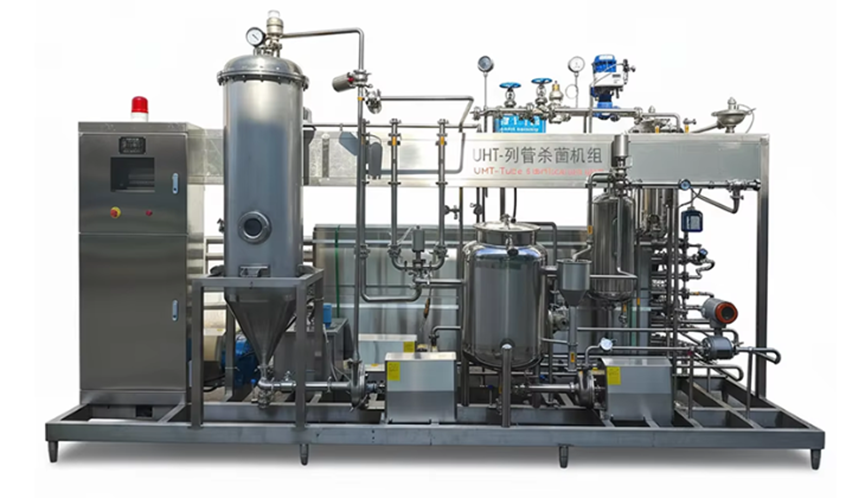
Pasteurization calibration is not a universal single task. The specific designs and target requirements of HTST treatment and UHT treatment necessitate targeted calibration priorities. All of these are closely related to strict dairy safety standards and critical control points (CCPs).
HTST vs. UHT: Calibration Priorities
| Process | Core Calibration Focus | Key Parameter Tolerance |
| high temp short time pasteurization | Consistent holding time + precise temperature uniformity | ±0.5°C temp deviation; <1% flow rate variation |
| uht pasteurization | Extreme temperature accuracy + thermal hold consistency | ±0.2°C temp deviation; zero flow interruptions |
Dairy-Specific Safety Standards
All the pasteurization calibration work for dairy products must comply with global regulatory standards. These include the Pasteurized Milk Ordinance (PMO) of the US Food and Drug Administration and the guidelines of the Codex Alimentarius Commission. These standards require that the calibration can verify the reduction of pathogens and ensure that the quality of dairy products will not be compromised due to excessive heat treatment. The calibration data must also be traceable, and the accuracy of all the measuring equipment used in this process must be recorded.
Calibration Critical Control Points
The control points used for calibration are consistent with the key validation points of the pasteurization system, among which the cold point is the most critical. Other non-negotiable control points include temperature sensors at the inlet and outlet of the heat exchanger, flow meters in the insulation pipe, and pressure gauges for steam/heating medium.
Pre-Calibration Preparation Steps
The success of calibration depends on whether the preparatory work is sufficient. This process can eliminate various interfering factors and ensure that the measurement results can reflect the actual operating condition of the system.
Locate Critical Cold Spots
Using a mathematical fluid dynamics model combined with physical temperature mapping technology, identify the low-temperature areas in the storage tubes. These are the areas where pasteurization is most prone to failure. Low-temperature areas usually occur in the center of the tube or at the geometrically curved sections, and their exact location determines the position where the calibration sensor must be placed.
Document Baseline Parameters
Record all current operating baseline data, including temperature, flow rate, residence time, and pressure difference of the heat exchanger. These data can serve as a reference for comparing and calibrating adjustments, helping to identify sudden deviations that indicate problems beyond the scope of simple calibration requirements.
Inspect System Integrity
Before conducting calibration, inspect all surfaces in contact with the medium, gaskets, and valves for any leakage or wear, and clean the heat exchanger. If the system is faulty, accurate calibration cannot be performed because leakage or dirt will lead to incorrect parameter readings, thus rendering the calibration work meaningless.
Step-by-Step HTST/UHT Calibration Process
Calibration follows a sequential, systematic process that validates every core component of HTST pasteurization equipment and UHT pasteurization equipment, with each step building on the accuracy of the last.
Calibrate Temperature Monitors
All thermocouples, thermoresistors, and temperature display devices are calibrated using reference standards with NIST traceability. For cold spot verification, the calibrated wireless data recorder is placed at the determined cold spots and secondary monitoring points. This ensures uniform temperature distribution within the heating tube and eliminates blind spots in temperature control.
Verify Holding Time & Flow Rate
The actual retention time is calculated by measuring the flow rate through the holding tube. The flow rate of the calibrated flowmeter is used to adjust the pump speed to ensure that the dairy products remain in the holding tube for a time that meets the regulatory standards. For UHT systems, it is necessary to confirm that there is no flow change during the heat retention process to avoid situations where the dairy products are not adequately treated.
Calibrate Heat Exchangers
The plate and shell heat exchangers are calibrated by verifying the heat transfer efficiency under set temperatures and flow rates. The pressure of steam or hot water is adjusted, and the parameters on the cooling side are calibrated to prevent thermal shock to the dairy products after pasteurization.
Conduct Microbial Validation Tests
If no microbial testing is conducted, the calibration process cannot be completed. Challenge tests using non-pathogenic alternative strains are performed to confirm that the calibrated system can achieve the required pathogen reduction effect.
Calibration Documentation & Compliance
The reliability of calibration depends on the completeness of its related documentation, which is particularly important in the dairy production industry as such industries undergo frequent and strict regulatory audits.
Calibration date, time, and technician’s name
The calibration equipment used
Pre-calibration and post-calibration parameter readings
Adjustments made and the basis for each adjustment
Microbial verification test results
Store these records in a secure and easily accessible digital system, with a retention period of at least three years, and ensure that these records are readily available for retrieval during regulatory audits. These documents also serve as a historical record for identifying calibration trends and scheduling preventive maintenance work.
Post-Calibration Monitoring & Maintenance

Calibration is a periodic task rather than a one-time solution. Post-calibration monitoring ensures that the system remains in a compliant state between regular calibrations. It is important to conduct real-time monitoring of the temperature, flow rate, and retention time at key control points, and set automatic alerts for any parameter deviations exceeding the calibration tolerance. In addition, regular maintenance should be scheduled every 3 to 6 months, and a comprehensive calibration should be conducted at least once a year.
Common Calibration Pitfalls to Avoid
Even experienced dairy producers may endanger safety due to calibration errors. Avoiding these mistakes can ensure the stability of the results.
Ignoring cold point calibration: Calibrating only the surface sensors but not the cold points will lead to potential insufficient processing and pathogen risks.
Using non-traceable standards: Calibration equipment without the traceability of the NIST will result in inaccurate readings and violate relevant regulations.
Ignoring microbial verification: Relying solely on the calibration of numerical parameters will ignore various changing factors in the actual production process. These factors will affect the effectiveness of pathogen reduction.
Ignoring monitoring after calibration: Assuming that the calibrated system can always remain accurate. This will lead to unexpected deviations and safety hazards.
Calibrating contaminated systems: Cleaning heat exchangers and pipes is an essential step. This is because dirt will disrupt the heat transfer effect and make all calibrated measurement results meaningless.
Conclusion
Calibrating the high-temperature short-time pasteurization system and the ultra-high-temperature pasteurization system is the foundation for ensuring the safety of dairy products. At the same time, this process requires the combination of technical accuracy and regulatory compliance. From locating the low-temperature zone and calibrating the temperature sensors, to verifying the reduction of microorganisms and recording each step, the entire process needs to pay attention to details at every stage. Ignoring any calibration step will cause critical loopholes in the safety of dairy products. However, a well-executed calibration can ensure a consistent and reliable pasteurization process. JIANGBO‘s expertise in HTST pasteurization and UHT pasteurization systems provides customized calibration guidance and equipment specially designed to facilitate calibration. If you wish to optimize your pasteurization calibration process, verify system performance, or upgrade to a precisely designed pasteurization equipment, please contact JIANGBO‘s team. They will provide you with expert-level, dairy-specific solutions tailored to your production needs.
FAQs
How often should the ultra-high temperature sterilization equipment be fully calibrated for dairy product production?
The ultra-high temperature sterilization system should undergo a full calibration at least once a year, and a temporary check of temperature and flow rate should be conducted every three months. It should be noted that calibration should be carried out immediately after any system maintenance, component replacement, or major production line adjustment.
What is the most crucial step in calibrating the HTST pasteurization equipment used for dairy product safety?
Verifying the holding time and flow rate is the most important step, as HTST pasteurization relies on the precise balance of heat exposure and product flow. Even a small deviation in flow rate can affect the effectiveness of pathogen elimination.
Why is determining cold spots crucial for the calibration of HTST and UHT in dairy product processing?
Cold spots are the areas with the slowest heating speed in the heating tube and the most prone to failure in pasteurization. Calibrating the sensor at this position ensures that the entire volume of dairy products receives the minimum heat treatment.
What tools ensure accurate temperature calibration for UHT treatment and HTST treatment in dairy systems?
Temperature reference standards with NIST traceability and wireless data recorders are crucial for precise calibration.