Table of Contents
ToggleIntroduction
You often need to balance energy consumption, production capacity, and long-term operating costs when selecting evaporation and concentration systems. Multi-effect systems are widely adopted in industrial processing, but they are not universally applicable. Knowing when to use them helps you avoid overinvestment while achieving stable and efficient concentration results.
What Are Multi-Effect Systems in Evaporation And Concentration
Definition of Multi-Effect Evaporation Systems
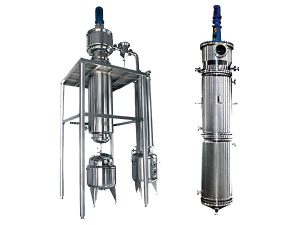
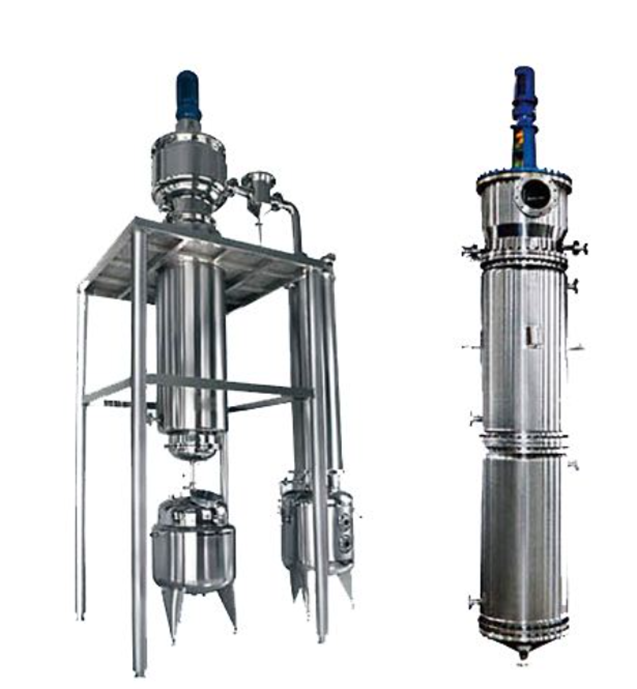
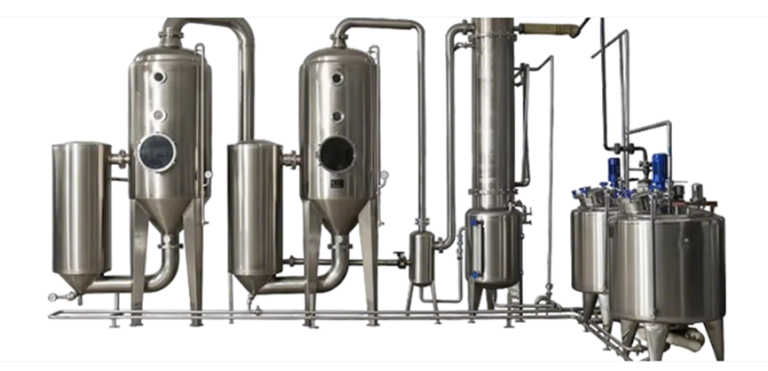
A multi-effect evaporation system consists of multiple evaporators arranged in series, where the vapor generated from one effect is reused as the heating source for the next. This structure allows you to maximize heat utilization across several stages instead of relying on fresh steam at each step.
Role in Evaporation And Concentration
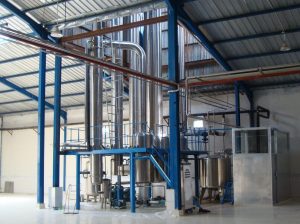
You typically apply multi-effect systems in evaporation and concentration processes that demand high thermal efficiency and consistent output. They are designed to support continuous operation and controlled concentration performance in industrial environments.
How Multi-Effect Systems Work
Vapor Reuse Across Multiple Effects
You recover energy by directing secondary vapor from the first evaporator to heat subsequent effects. This cascading use of thermal energy significantly reduces overall steam consumption compared to single-effect evaporation.
Pressure and Temperature Gradient Control
You operate each effect at progressively lower pressures and temperatures. This controlled gradient enables smooth evaporation while protecting product stability during concentration.
When Multi-Effect Systems Are the Right Choice
Large-Scale Evaporation And Concentration
You benefit most from multi-effect systems when handling large volumes of liquid with steady feed conditions. Continuous industrial production allows you to fully utilize the energy-saving advantages of multiple effects.
Energy-Sensitive Industrial Operations
You should consider multi-effect evaporation when energy costs represent a major portion of production expenses. Reusing vapor helps reduce fuel demand and improves overall process economics.
Advantages of Using Multi-Effect Systems
Reduced Energy Consumption
You achieve lower steam usage by distributing heat across multiple evaporation stages. This makes multi-effect systems an effective solution for energy-conscious evaporation and concentration processes.
Stable Concentration Performance
You gain consistent product concentration due to controlled operating conditions across all effects. This stability is especially important in food, dairy, and chemical processing.
Long-Term Operating Cost Savings
You may face higher initial investment, but reduced energy and utility costs allow you to recover expenses over long-term operation.
Limitations to Consider
Higher Initial Investment
You need to account for higher capital costs, including additional heat exchangers, piping, and control systems.
System Complexity
You must manage more operating parameters, making proper system design and maintenance planning essential for reliable performance.
Typical Industrial Applications
Food and Beverage Processing
You use multi-effect systems to concentrate juices, syrups, and liquid ingredients while maintaining process efficiency.
Dairy and Chemical Processing
You rely on stable evaporation and concentration for products such as milk concentrates, whey, and chemical solutions.
Wastewater and Byproduct Treatment
You apply multi-effect evaporation to reduce liquid volume and improve waste handling efficiency in industrial plants.
How to Decide If a Multi-Effect System Fits Your Process
Production Scale and Operating Hours
You should evaluate whether your process runs continuously and at sufficient volume to justify the system design.
Energy Availability and Cost Structure
You need to analyze local energy prices and steam availability to estimate potential savings.
Process Stability Requirements
You gain the best results when feed composition and production rates remain relatively stable over time.
Conclusion
You should choose multi-effect systems in evaporation and concentration when your operation demands high throughput, stable output, and long-term energy savings. By matching system complexity to production needs, you can improve efficiency and control operating costs. Zhongbo provides reliable evaporation and concentration solutions designed to support industrial-scale processing and sustainable performance.
FAQs
What is the main advantage of multi-effect systems in evaporation and concentration?
You reduce energy consumption by reusing vapor across multiple evaporation stages.
When should you avoid multi-effect evaporation systems?
You may avoid them when processing volumes are small or production conditions change frequently.
Are multi-effect systems suitable for heat-sensitive products?
You can use them when temperature control is properly designed for each effect.
Do multi-effect systems increase maintenance difficulty?
You need more structured maintenance, but modern systems are designed for operational reliability.
Why choose zhongbo for evaporation and concentration systems?
You benefit from practical system design, stable equipment quality, and industry-focused support.