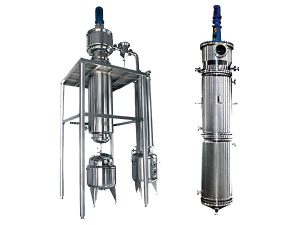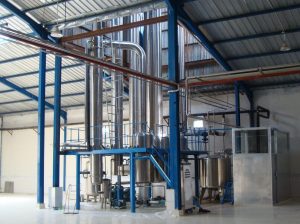
When you manage a dairy, beverage, or plant-based production line, product safety and shelf-life are always on your mind. UHT processing helps you extend your product’s stability while maintaining flavor and nutrition. In this guide, you’ll understand how UHT processing works and what to consider when choosing a UHT pasteurizer.
What Is UHT Processing?
UHT (Ultra-High Temperature) Processing is a sterilization method used to heat liquid foods to 135–150°C for a few seconds to destroy all pathogenic and spoilage microorganisms. After heating, the product is rapidly cooled and filled into aseptic packaging, enabling a long shelf life without refrigeration.
You commonly see UHT applications in:
-
Milk and flavored milk
-
Plant-based beverages
-
Juices
-
Cream and dairy alternatives
-
Liquid eggs
-
Soups and nutritional drinks
For industrial producers like you, UHT processing offers improved safety, longer distribution windows, and lower cold-chain costs.
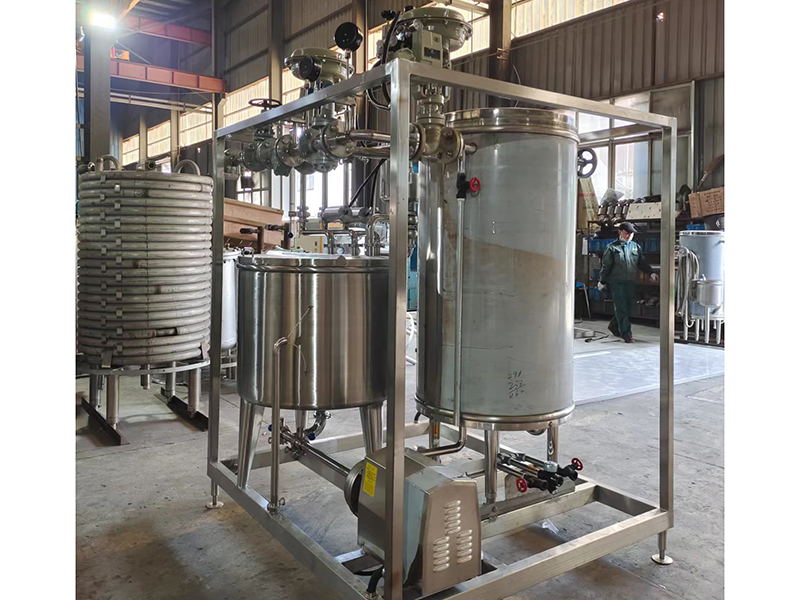
How Does UHT Processing Work? (Step-by-Step)
1. Preheating
Raw liquid is filtered and preheated to reduce thermal shock and improve heat transfer efficiency.
2. Ultra-High Temperature Heating
The product is rapidly heated to 135–150°C using either:
-
Indirect heating (plate, tubular, coil heat exchangers)
-
Direct heating (steam injection or steam infusion)
3. Holding Stage
The product stays at the target temperature for 2–6 seconds, long enough to eliminate microorganisms while protecting flavor.
4. Rapid Cooling
Immediate cooling prevents overprocessing, maintaining product color, aroma, and nutrients.
5. Aseptic Filling
The sterile product enters aseptic tanks and is packed into sterile containers to ensure long shelf life.
Why UHT Processing Matters for Industrial Producers
Extended Shelf Life
Products stay stable for 6–12 months without preservatives or refrigeration.
Consistent Safety
UHT ensures complete microorganism inactivation, supporting strict compliance for export markets.
Lower Logistics Costs
You can sell in regions without cold chain infrastructure, reducing operational expenses.
Higher Production Efficiency
Modern UHT pasteurizers allow continuous operation with minimal downtime.
Real Case Example: Dairy Factory Upgrading to UHT
A mid-scale dairy plant in Southeast Asia upgraded from batch pasteurization to a continuous UHT system to boost output. After installation:
-
Production capacity increased from 3,000 L/h → 10,000 L/h
-
Product shelf life extended to 9 months
-
Complaint rate from spoilage dropped by 65%
-
Export capability expanded to three new markets
This demonstrates how UHT can quickly pay off when you’re scaling production.
UHT vs Traditional Pasteurization (Comparison Table)
| Feature | UHT Processing | Traditional Pasteurization (HTST) |
|---|---|---|
| Temperature | 135–150°C | 72–75°C |
| Holding Time | 2–6 seconds | 15–20 seconds |
| Shelf Life | 6–12 months (no refrigeration) | 7–30 days (refrigerated) |
| Product Flavor | Slightly cooked notes possible | Fresher flavor |
| Target Users | Large-scale producers, export markets | Local/regional distribution |
Choosing the Right UHT Pasteurizer for Your Production Line
When selecting a UHT pasteurizer, consider:
1. Heating Method
-
Tubular / coil-based UHT pasteurizers
Best for viscous liquids, dairy, protein drinks. -
Plate UHT systems
Suitable for juices, tea, thin liquids.
2. Capacity
Choose based on your daily volume:
1,000–20,000 L/h options are common for mid-sized factories.
3. Product Sensitivity
If you’re producing high-protein or plant-based formulas, a coil or tubular design reduces fouling and ensures better heat exchange stability.
4. Maintenance & Energy Efficiency
Consider models designed for easy CIP cleaning, low steam consumption, and stable long-term operation.
Why Many Producers Choose Zhongbo Machinery UHT Pasteurizer
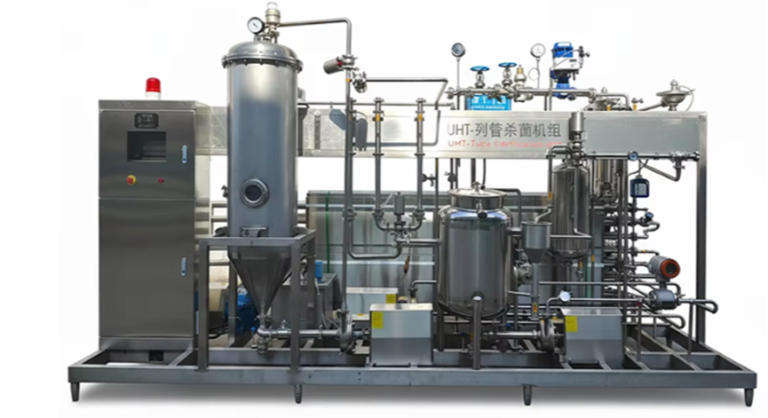
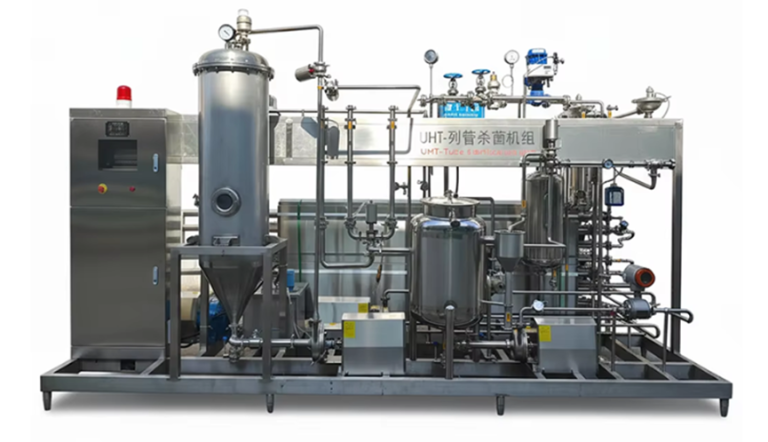
Zhongbo Machinery has supplied heat-treatment equipment to dairy, beverage, and plant-based factories in over 30 countries. Our coil-type UHT pasteurizer offers:
-
Stable heating for dairy, plant proteins, and viscous products
-
Compact design with reduced fouling
-
Customizable capacity
-
Energy-efficient operation
-
Full stainless-steel hygienic construction
Product link:
https://www.zjzhongbo.com/product/coil-pasteruizer/
Conclusion
When you want long shelf life, strong microbial safety, and cost-efficient processing, UHT technology is one of the most reliable solutions. By choosing a high-quality UHT pasteurizer, you can scale production, expand into new markets, and protect product quality. Zhongbo Machinery is ready to support your next upgrade.
FAQs
1. What temperature is used in UHT processing?
UHT typically heats liquids to 135–150°C for a few seconds.
2. Is UHT better than HTST?
For long shelf life and export markets—yes. UHT provides sterilization and room-temperature storage.
3. What products can be processed using UHT?
Milk, plant-based beverages, juices, cream, soups, protein drinks, and more.
4. Does UHT affect product flavor?
Minimal changes occur, but modern systems reduce cooked notes significantly.
5. How do I choose a UHT pasteurizer?
Evaluate heating method, product type, viscosity, capacity, and energy efficiency. Zhongbo Machinery can customize solutions for your production needs.