Wiped Film Evaporator vs. Molecular Distillation: 7 Key Differences

When you operate in the chemical, pharmaceutical, or essential oil industries, choosing the right distillation equipment is crucial. You need solutions that optimize efficiency, protect product quality, and reduce energy costs. Understanding the difference between a wiped film evaporator and molecular distillation helps you make the best investment for your production line. What is a […]
What Is a Wiped Film Evaporator and How Does It Work?
If you work with heat-sensitive or viscous liquids in your industry, efficiency and product integrity are your priorities. Understanding how a wiped film evaporator (WFE) works can help you maximize output, preserve quality, and make informed purchasing decisions for your production line. What Is a Wiped Film Evaporator? A wiped film evaporator, also called a […]
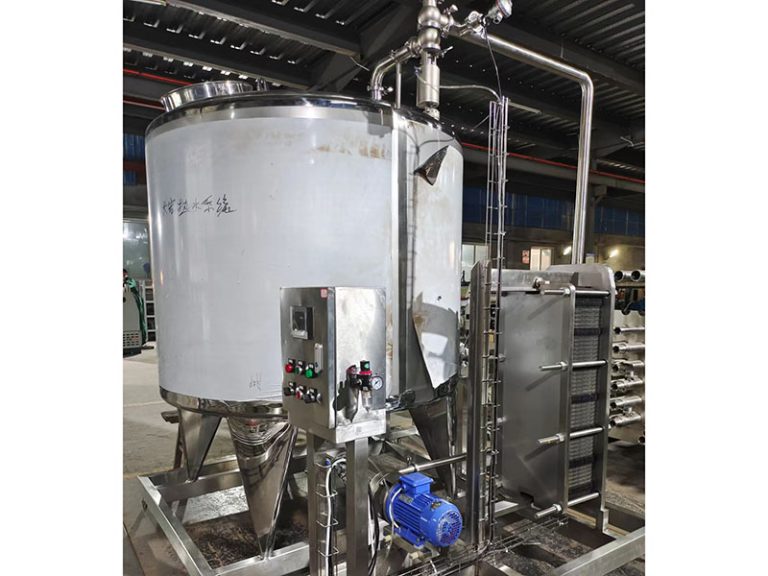
What Is UHT Processing and How Does It Work?

When you manage a dairy, beverage, or plant-based production line, product safety and shelf-life are always on your mind. UHT processing helps you extend your product’s stability while maintaining flavor and nutrition. In this guide, you’ll understand how UHT processing works and what to consider when choosing a UHT pasteurizer. What Is UHT Processing? UHT […]
How Can UHT Eliminate Microorganisms More Efficiently Than HTST?

When you operate a dairy, juice, or liquid-food processing business, microbial control directly shapes your product quality, safety, and shelf life. Understanding why UHT destroys microorganisms more efficiently than HTST helps you choose the right equipment to improve production stability, reduce spoilage, and expand your distribution market. Why UHT Is Far More Efficient for Microbial […]
What Is the Difference Between UHT and HTST?

When you run a dairy or beverage production line, choosing between UHT and HTST directly impacts your product shelf life, taste, packaging, and distribution cost. This guide focuses entirely on comparing these two processing methods so you can decide which pasteurization technology best supports your factory’s production goals. Processing Difference UHT (Ultra High Temperature) Heats […]
Understanding UHT and HTST Pasteurization: A Complete Guide

When you manage a dairy, beverage, or food-processing line, choosing the right pasteurization technology can significantly improve product quality, shelf life, and production efficiency. In this guide, you will clearly understand how UHT and HTST pasteurization work, what equipment you need, and how to select the right system for your facility. What Is UHT Pasteurization? […]
7 Ways Vacuum Degassers Improve Beverage Flavor and Shelf Life

In today’s competitive beverage industry, delivering products with consistent flavor, aroma, and long shelf life is critical. One of the most effective solutions for achieving these goals is the vacuum degasser. By removing dissolved gases such as oxygen and air from liquids, vacuum degassers help beverage manufacturers maintain high-quality products, protect equipment, and optimize production efficiency. This article explores 7 ways vacuum degassers improve beverage flavor and shelf life, providing practical insights for beverage producers looking to enhance product quality and ensure stable operations.
5 Critical Design Features to Look for When Buying a Commercial Percolation Tank

In today’s herbal extraction, pharmaceutical, food, and chemical industries, the commercial percolation tank has become an essential piece of equipment for continuous and efficient extraction. Unlike traditional maceration, percolation allows solvents to pass steadily through powdered raw materials, achieving a better concentration gradient and higher extraction yield. However, not all percolation tanks are created equal. For businesses seeking consistent quality, lower solvent consumption, and better process safety, understanding key design elements is crucial.
Multifunctional Extraction Tank vs. Traditional Extraction Tank: 7 Key Differences for Business Procurement

For specialized industries such as Traditional Chinese Medicine (TCM), natural food and beverage, and fine chemical processing, the choice of extraction equipment is not merely a purchase—it is a critical investment that defines operational efficiency, product quality, and long-term profitability. At the core of this decision lies the contrast between the standard Traditional Extraction Tank (TET) and the modern, versatile Multifunctional Extraction Tank (MET).
Working Principle of Multifunctional Extraction Tank

In the pharmaceutical, herbal, food, and chemical industries, extraction equipment plays a vital role in transforming raw materials into valuable compounds. Among these, the Multifunctional Extraction Tank stands out as a highly efficient system that integrates soaking, heating, refluxing, circulation, essential oil separation, and solvent recovery into one compact design. Understanding its working principle not only helps optimize extraction efficiency but also ensures better quality control, energy savings, and process stability. This article provides a comprehensive explanation of how the Multifunctional Extraction Tank operates and why it is widely used across modern manufacturing lines.