Table of Contents
ToggleIntroduction
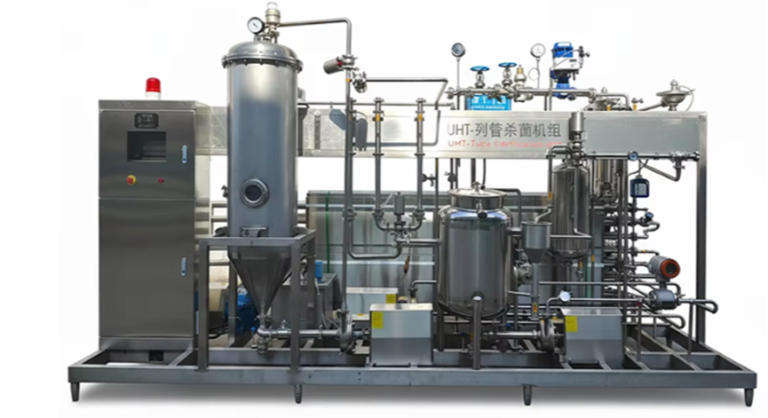
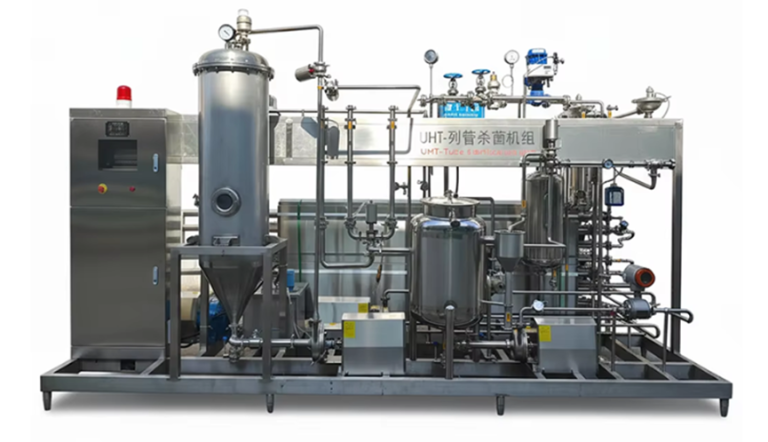
You rely on HTST & UHT treatment to deliver safe, shelf-stable dairy and liquid foods without compromising efficiency. Understanding how temperature and time interact helps you choose the right processing system, control product quality, and meet food safety standards while supporting scalable, cost-effective production.
Understanding Temperature and Time in Heat Treatment
Why Temperature Matters in HTST & UHT Treatment
Temperature is the primary factor that inactivates microorganisms in liquid foods. When you apply higher temperatures, harmful bacteria are destroyed more quickly. However, higher heat also increases the risk of flavor changes and nutrient loss, which is why temperature must be precisely controlled.
Why Time Is Equally Critical
Time determines how long the product is exposed to heat. Shorter holding times reduce thermal stress on milk and beverages, while still ensuring safety. In HTST & UHT treatment, time works alongside temperature to achieve microbial safety with minimal impact on product quality.
How Temperature and Time Interact in HTST Treatment
HTST Temperature-Time Balance
In HTST treatment, you typically process liquids at high temperatures for a short duration. This balance allows you to eliminate pathogens efficiently while maintaining fresh taste and nutritional value, making HTST ideal for refrigerated dairy products.
Impact on Product Quality and Throughput
When temperature and time are correctly matched, you achieve consistent safety results without slowing down production. This balance supports high throughput and stable operation in modern dairy processing lines.
How Temperature and Time Interact in UHT Treatment
UHT High-Temperature Short-Time Principles
UHT treatment uses much higher temperatures combined with extremely short holding times. This approach enables near-sterilization, allowing products to be stored at ambient temperatures for extended periods.
Shelf Life Without Preservatives
By optimizing temperature and time together, UHT treatment extends shelf life without chemical preservatives. You gain flexibility in storage, distribution, and export while meeting global food safety requirements.
Comparing HTST and UHT Temperature-Time Strategies
Differences in Processing Objectives
HTST focuses on safety with refrigeration, while UHT prioritizes long shelf life at room temperature. The temperature-time relationship defines which process best fits your product and market needs.
Choosing the Right Balance for Your Application
Your decision depends on factors such as desired shelf life, target markets, and production scale. Understanding how temperature and time work together helps you select equipment that aligns with your operational goals.
Why Precise Control Matters in Modern Processing
Process Stability and Compliance
Accurate control of temperature and time ensures consistent results batch after batch. This stability helps you comply with food safety regulations and reduces the risk of product recalls.
Efficiency and Cost Control
Optimized heat treatment minimizes energy waste and reduces reprocessing. Over time, this improves operating efficiency and lowers overall production costs.
FAQs
How do temperature and time affect food safety in HTST & UHT treatment?
They work together to destroy microorganisms while controlling product quality and safety.
Why does UHT use higher temperatures than HTST?
Higher temperatures allow UHT to achieve longer shelf life with very short holding times.
Can incorrect temperature-time settings damage product quality?
Yes, improper balance can lead to flavor changes, nutrient loss, or insufficient sterilization.
Conclusion
You invest in HTST & UHT treatment to balance safety, quality, and efficiency. By understanding how temperature and time work together, you make better equipment and process decisions that support long-term production success. With Zhongbo’s HTST & UHT solutions, you gain reliable control, proven performance, and scalable systems designed for modern food processing needs.