Table of Contents
ToggleIntroduction
In modern food processing, extending shelf life without relying on chemical preservatives has become a key requirement for both manufacturers and consumers. HTST and UHT treatment are widely adopted heat treatment processes that achieve food sterilization through controlled thermal processing. These methods play a critical role in improving food safety, maintaining product quality, and meeting regulatory standards, especially in liquid food applications such as milk and dairy products.
HTST and UHT Treatment Overview
HTST Treatment Definition
HTST treatment, or High-Temperature Short-Time treatment, is a heat treatment process that rapidly heats liquid food to a high temperature for a short duration to eliminate harmful microorganisms while preserving nutritional and sensory qualities.
UHT Treatment Definition
UHT treatment, or Ultra-High Temperature treatment, uses extremely high temperatures for very short periods to achieve near-commercial sterility, enabling long shelf life without preservatives under aseptic packaging conditions.
Role of HTST and UHT in Shelf Life Extension
Both HTST and UHT treatment extend shelf life by reducing microbial load through thermal food processing, minimizing spoilage risks while avoiding the use of chemical additives.
HTST Treatment Process in Food Processing
HTST Heat Treatment Parameters
HTST treatment typically operates at controlled temperatures and short holding times, ensuring effective microbial reduction while limiting thermal damage to proteins, vitamins, and flavor compounds.
HTST Treatment for Shelf Life Without Preservatives
By efficiently inactivating pathogenic bacteria, HTST treatment allows food manufacturers to achieve shelf life extension without preservatives, particularly for refrigerated liquid products.
HTST Applications in Liquid Foods
HTST treatment is commonly used in milk heat treatment, beverages, and other liquid foods where freshness, taste, and nutritional integrity are essential.
UHT Treatment Process for Long Shelf Life
UHT Heat Treatment Parameters
UHT treatment applies significantly higher temperatures than HTST for very short exposure times, resulting in a higher level of food sterilization.
UHT Treatment for Shelf Stable Products
This process enables shelf-stable products that can be stored at ambient temperatures for extended periods, making UHT treatment ideal for long-distance distribution and export markets.
UHT Applications in Industrial Food Processing
UHT treatment is widely used in milk processing, plant-based beverages, cream, and liquid nutritional products requiring long shelf life without preservatives.
HTST vs UHT Processing Comparison
HTST vs UHT Temperature and Time
HTST and UHT processing differ mainly in temperature intensity and exposure time, which directly affects microbial reduction levels and storage requirements.
HTST vs UHT Shelf Life Performance
While HTST treatment supports medium shelf life under refrigeration, UHT treatment offers significantly longer shelf life at room temperature.
HTST vs UHT Product Quality Impact
HTST treatment generally retains more fresh characteristics, whereas UHT treatment prioritizes maximum shelf life with minimal compromise on quality when properly controlled.
Heat Treatment and Food Sterilization
Thermal Food Processing Principles
Thermal food processing relies on precise heat control to inactivate microorganisms while maintaining product safety and consistency.
Food Sterilization Without Preservatives
HTST and UHT treatment enable food sterilization without preservatives by using heat as the primary preservation mechanism.
Safety Standards for HTST and UHT Treatment
Both processes follow strict international safety and hygiene standards to ensure reliable, repeatable results in industrial food processing.
FAQ
What is the main difference between HTST and UHT treatment?
HTST uses lower temperatures for short times, while UHT applies much higher temperatures for ultra-short durations.
Can HTST and UHT treatment replace chemical preservatives?
Yes, both methods extend shelf life through heat treatment without the need for preservatives.
Which products are best suited for UHT treatment?
Shelf-stable liquid foods such as milk, cream, and nutritional beverages are ideal for UHT processing.
Conclusion
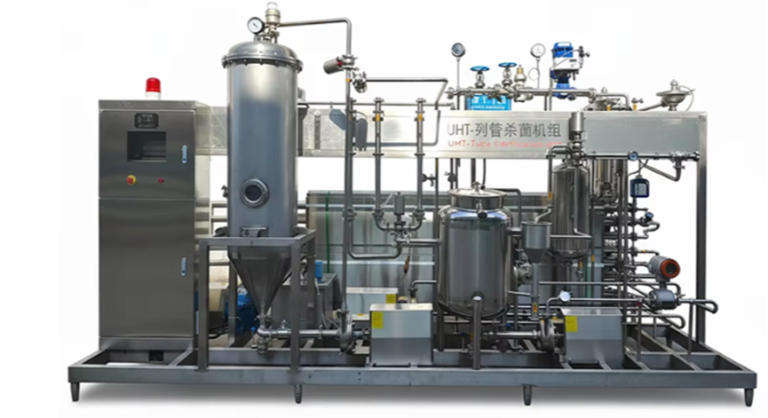
HTST and UHT treatment are essential technologies for extending shelf life without preservatives in modern food processing. By combining food safety, efficiency, and product stability, these heat treatment processes support sustainable production and global distribution. With advanced thermal processing solutions from zhongbo, food manufacturers can achieve reliable shelf life extension while maintaining product quality and regulatory compliance.