Quick Answer: UHT Line Cost by Capacity (2026)
If you need a number right now: here are the three most common capacity tiers with realistic 2026 price ranges for Chinese-manufactured, FOB equipment. All figures in USD.
| Tier | Daily Capacity | Equipment Cost (FOB) | Landed Estimate (×1.35) | Best For |
|---|---|---|---|---|
| Entry | 2,000–5,000 L/day | $180,000–$400,000 | $243,000–$540,000 | Regional dairy, startup processor, co-op |
| Mid-Scale | 10,000–30,000 L/day | $500,000–$1,200,000 | $675,000–$1,620,000 | National distributor, supermarket supply |
| Industrial | 50,000–200,000+ L/day | $1,500,000–$5,000,000+ | $2,025,000–$6,750,000+ | Export-oriented, multinational contracts |
Note: Equipment cost = FOB China, core processing + filling equipment only. Landed estimate adds shipping, import duties, installation, commissioning, civil works, and operator training. Actual figures vary by product type, automation level, and destination country. Contact Zhongbo for a project-specific quotation →
Cost Breakdown by Capacity Tier
Each tier involves different equipment configurations, automation levels, and cost drivers. Here is what you get at each level — and what drives the price.
Entry Level: 2,000–5,000 L/day ($180K–$400K)
The entry tier is designed for regional dairies, cooperative processors, and first-time brand owners entering the pasteurized or ESL milk market. At this level, you are typically purchasing:
| Equipment | Typical Spec | Cost Range |
|---|---|---|
| UHT/Pasteurizer unit | 500–1,000 L/h, plate or coil type | $40,000–$120,000 |
| Homogenizer | 500–1,000 L/h, 200–250 bar | $15,000–$35,000 |
| Filling machine | Semi-auto pouch/bottle, 1,000–2,000 PPH | $15,000–$50,000 |
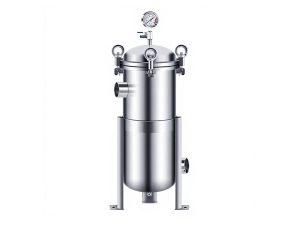
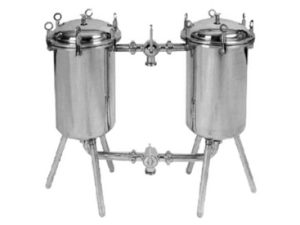
| Reception & filtration | Basic milk reception, duplex filter | $15,000–$30,000 |
| Storage tanks | 2–3 × 2,000–5,000 L, insulated | $20,000–$45,000 |
| CIP system | Basic 2-tank mobile CIP | $20,000–$40,000 |
| Control + piping | PLC, basic HMI, SS piping kit | $25,000–$50,000 |
What you are NOT getting at this price: aseptic filling (shelf-stable product), full automation (SCADA), cream separator, in-line standardization, buffer aseptic tanks, or high-speed filling. These are add-ons that push the price toward the mid-scale range.
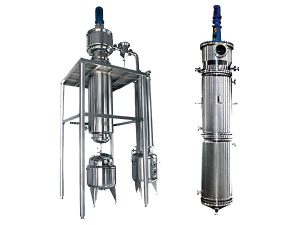
Zhongbo’s entry-level recommendation: Our plate pasteurizer (for fluid milk, juice, low-viscosity products up to 140°C) or coil pasteurizer (for smaller batches, 130°C max, ideal for ESL milk or yogurt pre-treatment).
Mid-Scale: 10,000–30,000 L/day ($500K–$1.2M)
This is the sweet spot for national brands, supermarket private-label suppliers, and established regional processors expanding into UHT. At 20,000 L/day of UHT milk, you can supply approximately 6.7 million liters per year — enough to serve a national supermarket contract in most developing markets.
| Equipment | Typical Spec | Cost Range | % of Total |
|---|---|---|---|
| UHT sterilizer (heat exchanger, holding tubes) | 2,000–3,000 L/h tubular/plate | $180,000–$280,000 | 25–30% |
| Homogenizer | 2,000–3,000 L/h, 200–250 bar | $35,000–$65,000 | 6–7% |
| Fermentation tanks (yogurt capability) | 4 × 5,000 L, jacketed, agitator | $60,000–$100,000 | 8–10% |
| Aseptic filling machine | Brick/pouch, 3,000–6,000 PPH | $120,000–$220,000 | 15–20% |
| Reception, filtration, separation | Centrifugal separator, balance tank | $40,000–$70,000 | 6–7% |
| Buffer silos & storage tanks | 10,000–30,000 L total capacity | $30,000–$55,000 | 5–6% |
| CIP system & utility skids | 3–4 tank automatic CIP, steam/water | $45,000–$80,000 | 7–8% |
| Control system (PLC/SCADA) | Siemens/Rockwell, HMI, data logging | $20,000–$40,000 | 3–4% |
| Piping, valves, instrumentation | 316L SS, aseptic valves, sensors | $35,000–$65,000 | 5–6% |
| Packaging consumables (startup) | First-order carton/pouch stock | $15,000–$30,000 | 2–3% |
| TOTAL (Core Equipment, FOB) | $580,000–$1,005,000 | 100% |
Key cost drivers at this tier: (1) Homogenizer brand — European brands (GEA, Alfa Laval) add 30–40% vs Chinese alternatives. (2) Filling machine speed — high-speed fillers (12,000+ PPH) cost 50–100% more than medium-speed (6,000–8,000 PPH). (3) Automation level — full SCADA with recipe management adds $30,000–$60,000 but significantly reduces operator skill requirements and batch rejection rates.
Zhongbo’s mid-scale recommendation: Our tubular UHT sterilizer paired with aseptic filling is the standard configuration for dairy UHT milk, flavored milk, and drinking yogurt at 10,000–30,000 L/day.
Industrial: 50,000–200,000+ L/day ($1.5M–$5M+)
This tier is for export-oriented plants, multinational dairy groups, and large-scale co-packing operations. The cost range is broad because you are now buying multiple parallel processing lines, high-speed aseptic fillers, full automation, and often direct steam injection (DSI) or infusion systems for premium products.
| What you add at industrial scale | Cost Add |
|---|---|
| Multiple parallel UHT lines (2–4 × 5,000–10,000 L/h) | $300,000–$800,000 per line |
| High-speed aseptic fillers (12,000–24,000 PPH) | $300,000–$600,000 each |
| Aseptic buffer tanks (10,000–30,000 L) | $80,000–$200,000 each |
| Full MES/SCADA integration | $80,000–$200,000 |
| In-line quality analyzers (fat, protein, density) | $50,000–$150,000 |
| Advanced CIP with recovery systems | $80,000–$150,000 |
| Cold storage, raw milk receival silos (50,000–200,000 L) | $100,000–$400,000 |
Component-by-Component Cost Breakdown
Understanding which components drive cost helps you make smarter trade-offs. Here is a reference breakdown for a mid-scale line (20,000 L/day UHT milk, FOB China, 2026).
| # | Component | Typical Cost | % of Total | Where you can save |
|---|---|---|---|---|
| 1 | UHT sterilizer (heat exchanger + holding tubes) | $180,000–$280,000 | 25–30% | Choose Chinese over European brand |
| 2 | Aseptic filling machine | $120,000–$220,000 | 15–20% | Match speed to real demand (not max) |
| 3 | Homogenizer | $35,000–$65,000 | 6–7% | Chinese brand can save 30–40% |
| 4 | Fermentation tanks (if yogurt capable) | $60,000–$100,000 | 8–10% | Only if you actually make yogurt |
| 5 | Reception, filtration, separation | $40,000–$70,000 | 6–7% | Skip separator if buying standardized milk |
| 6 | Buffer silos & storage tanks | $30,000–$55,000 | 5–6% | Minimal saving possible here |
| 7 | CIP system & utility skids | $45,000–$80,000 | 7–8% | Do not cheap out on CIP |
| 8 | Control system (PLC/SCADA) | $20,000–$40,000 | 3–4% | Siemens S7-1200 vs S7-1500 |
| 9 | Piping, valves, instrumentation | $35,000–$65,000 | 5–6% | 304 vs 316L stainless (application-dependent) |
| 10 | Packaging consumables (startup stock) | $15,000–$30,000 | 2–3% | Negotiate bulk supply early |
The two biggest line items: The UHT sterilizer (25–30%) and the aseptic filling machine (15–20%) together account for nearly half your equipment budget. This is where you should spend the most time on supplier evaluation. A poorly designed sterilizer will foul faster, use more steam, and require more CIP cycles — eating into your margin every single day. A mismatched filler will bottleneck your entire line or leave you with excess capacity you are paying for but not using.
Plate vs Tubular vs Coil: Cost Comparison
The type of heat exchanger you choose is the single largest cost decision within the UHT sterilizer itself. Here is how the three types compare on price.
| Type | 1,000 L/h Unit | 3,000 L/h Unit | 5,000 L/h Unit | Best For | Max Temp |
|---|---|---|---|---|---|
| Plate | $30,000–$60,000 | $70,000–$120,000 | $110,000–$180,000 | Fluid milk, clear juice, tea, low-viscosity | 140°C |
| Tubular | $40,000–$80,000 | $90,000–$150,000 | $140,000–$220,000 | Cream, yogurt drink, oat milk, sauces, pulpy juice | 140°C |
| Coil | $20,000–$40,000 | $40,000–$70,000 | $60,000–$100,000 | Small batches, ESL, thick sauces, pilot plants | 130°C |
Cost vs performance trade-offs:
- Plate is cheapest upfront — 10–20% less than tubular for the same capacity. But it fouls faster with high-viscosity or high-protein products. If your product requires daily CIP instead of every 2–3 days, the plate’s operational cost advantage evaporates within 6–12 months.
- Tubular costs more — but handles everything: milk, cream, plant-based, sauces, pulpy juices. The wider flow channel means less fouling, longer runs between CIP, and lower long-term operating cost for viscous products. Most dairy UHT lines use tubular.
- Coil is the cheapest — but limited to 130°C. Good for ESL milk (extended shelf life, not ambient), yogurt milk pre-treatment, and small-capacity plants. Cannot achieve commercial sterility (UHT) for ambient distribution.
Zhongbo’s product comparison: Plate Pasteurizer | Tubular Pasteurizer | Coil Pasteurizer

Chinese vs European Equipment Pricing
Chinese suppliers typically quote 40–60% less than European suppliers for equivalent capacity specifications. A fully automated European UHT line (Tetra Pak, GEA, Alfa Laval) for 10,000–20,000 L/h runs €800,000–€1.8 million. A comparable Chinese-manufactured line costs €350,000–€800,000 FOB. But the price gap is not “free money” — you are trading different things.
| Factor | Chinese Manufacturers | European (Tetra Pak, GEA, Alfa Laval) |
|---|---|---|
| Capital cost | 40–60% lower | Benchmark (higher) |
| Delivery time | 4–6 months (contract to FAT) | 8–12 months |
| Customization | High — more flexible on design changes | Lower — standardized platforms |
| Certifications | CE, ISO 9001, growing ISO 22000 coverage | Full suite: CE, FDA, EHEDG, 3-A, ISO 22000 |
| Documentation | Varies — request P&ID and FAT protocol upfront | Comprehensive: P&ID, FAT, SAT, IQ/OQ |
| Spare parts network | Growing in Asia, Africa; thinner in LATAM/Europe | Global — critical for Africa, SE Asia, LATAM |
| Remote diagnostics | Less common; some offer VPN support | Standard — VPN-connected diagnostics |
| Best for | Budget-constrained, mid-scale, developing markets | Multinationals, regulated markets, premium brands |
Practical advice when evaluating Chinese UHT suppliers: Request the process flow diagram (P&ID) and CIP validation documentation before signing. A supplier who cannot provide a detailed CIP protocol with measured rinse-water quality parameters is selling equipment, not engineering a process. Process design quality varies enormously among Chinese UHT manufacturers — audit it specifically. Zhongbo provides full P&ID, FAT protocols, and CIP validation documentation as standard with every project.
7 Hidden Costs Most Buyers Miss
The ex-works equipment price is only 55–70% of your total landed cost. Here is what else you need to budget — and what surprises buyers most.
| # | Hidden Cost | Typical Range | % of Equipment Cost |
|---|---|---|---|
| 1 | Shipping & logistics (FOB → CIF) | $15,000–$40,000 | 5–8% |
| 2 | Import duties & taxes | 5–20% of CIF value | 5–15% |
| 3 | Installation & commissioning | $40,000–$100,000 | 10–15% |
| 4 | Civil works & facility prep | $30,000–$150,000+ | 10–20% |
| 5 | Aseptic packaging materials (annual) | $0.025–$0.08/L | 10-year cost > filler cost |
| 6 | Spare parts (annual) | 5–10% of CAPEX/year | Ongoing OpEx |
| 7 | QC lab + operator training | $15,000–$40,000 | 2–5% |
The Packaging Cost Trap
Hidden cost #5 — aseptic packaging materials — is the one that shocks buyers most, and it deserves its own section. Here is the math:
Example: 30,000 L/day plant, 300 operating days/year
Annual volume: 9,000,000 liters
Packaging material at $0.04/L: $360,000/year
Over 10 years: $3,600,000 in packaging material
vs. $300,000–$600,000 for the aseptic filling machine itself
The packaging material over 10 years costs 6–12× more than the filling machine. This is the single most underestimated cost in UHT line economics. Include it in your unit economics from day one, and negotiate your packaging material supply agreement before finalizing equipment selection.
How to Reduce Your UHT Line Investment
Smart buyers can reduce their total investment by 20–35% without compromising core quality. Here are six proven strategies.
- Buy the turnkey package from one supplier. Piecing together a UHT line from multiple suppliers means you own every interface problem. A single supplier who engineers the complete system integration is worth a 10–15% premium on equipment price — because you save 20–30% on the installation and commissioning side. You are not paying three different engineering teams to make their parts talk to each other.
- Specify the minimum aseptic filler speed you actually need. High-speed fillers (12,000+ PPH) cost 50–100% more than medium-speed units (6,000–8,000 PPH). If your realistic market demand is 20,000 L/day, a medium-speed filler running two shifts is sufficient — and saves $100,000–$200,000 on the filler alone.
- Buy Chinese equipment instead of European. The 40–60% capital cost saving is real. For a mid-scale line, that is $200,000–$500,000 kept in your pocket. Audit the supplier’s process engineering capability — not all Chinese manufacturers are equal — but the best ones deliver comparable quality at a dramatically lower price point.
- Skip the cream separator if you buy standardized milk. If your raw milk supplier can deliver milk at your target fat content (e.g., 3.5% for whole milk, 1.5% for low-fat), you do not need an in-line centrifugal separator. That saves $30,000–$60,000 on equipment plus reduced CIP chemical and utility cost.
- Choose a line with capacity expansion interfaces. Some suppliers build lines with additional slots for homogenizers or filler heads that let you scale from 10,000 to 20,000 L/day without replacing the entire processing core. Others build single-capacity lines that cannot be expanded without full replacement. Expansion-ready design costs 5–10% more upfront but saves 50–70% on your first capacity upgrade.
- Negotiate packaging material supply early. Aseptic packaging material costs $300,000–$500,000 per year for a mid-scale plant. Securing volume pricing before equipment selection — when suppliers know you are a serious buyer with a real project — gives you leverage. A $0.005/L price difference on packaging saves $45,000/year on a 30,000 L/day plant.
5-Year Total Cost of Ownership
CAPEX is the opening chapter, not the whole book. Over 5 years, the equipment purchase price is typically only 15–25% of your total cost. Here is a modeled TCO for a mid-scale Chinese-manufactured UHT milk line at 20,000 L/day.
| Cost Category | Annual Cost | 5-Year Total | % of TCO |
|---|---|---|---|
| Equipment (amortized, 10-yr straight line) | $80,000 | $400,000 | 6% |
| Raw milk (70% of OpEx) | $1,800,000 | $9,000,000 | 55% |
| Packaging materials | $240,000 | $1,200,000 | 18% |
| Utilities (steam, electricity, cooling water, CIP chemicals) | $120,000 | $600,000 | 9% |
| Labor (operators, QC, maintenance) | $100,000 | $500,000 | 8% |
| Spare parts & maintenance | $48,000 | $240,000 | 4% |
The takeaway: Raw milk and packaging materials dominate your cost structure — together they account for 73% of 5-year TCO. The equipment purchase you are stressing over right now? Only 6%. This does not mean you should buy the cheapest equipment. It means you should buy equipment that minimizes waste (product loss during start-up/shut-down), reduces utility consumption (heat recovery efficiency), and extends run time between CIP cycles — because those operational savings compound over 5 years and far outweigh a $50,000 difference in purchase price.
Cost Variation by Product Type
Not all UHT lines cost the same. The product you are processing changes the equipment configuration — and the price.
| Product Type | Key Equipment Add-ons | Cost Adder vs Base UHT Milk Line |
|---|---|---|
| UHT Milk (whole, skim, flavored) | Homogenizer, tubular UHT, aseptic filler | Baseline |
| Drinking Yogurt / Fermented Milk | + Fermentation tanks (4–6 × 5,000 L), pH control, culture dosing | + $120,000–$200,000 |
| Cream (10–40% fat) | Tubular (mandatory — plate fouls), higher-capacity homogenizer | + $20,000–$40,000 |
| Plant-Based Milk (oat, soy, almond) | Enzyme tank, decanter centrifuge, tubular UHT (mandatory) | + $80,000–$150,000 |
| Juice (clear, NFC) | Deaerator, plate UHT (if clear), tubular (if pulpy) | + $30,000–$60,000 (deaerator) |
| Sauces, Soups, Prepared Foods | Scraped-surface heat exchanger (for particulate), tubular, hot fill line | + $100,000–$300,000 |
For deeper guidance on matching equipment to specific products, see Zhongbo’s guides on UHT processing lines for dairy and UHT processing lines for beverages.
FAQs
How much does a small UHT processing line cost?
An entry-level UHT processing line (2,000–5,000 L/day) costs $180,000–$400,000 FOB China. This includes a plate or coil pasteurizer, homogenizer, basic filling machine, reception system, storage tanks, CIP, and PLC control. For pasteurized/ESL milk, a plate pasteurizer from Zhongbo provides a cost-effective entry point. Request a detailed quote →
How much does a large industrial UHT line cost?
Industrial-scale UHT lines (50,000–200,000+ L/day) range from $1,500,000 to $5,000,000+ FOB. At this tier, you are buying multiple parallel processing lines, high-speed aseptic fillers, full SCADA/MES integration, and in-line quality analyzers. Zhongbo’s tubular UHT sterilizer scales from 1,000 to 20,000 L/h for industrial dairy and beverage plants. Discuss your project requirements →
What is the cheapest UHT processing option?
The most affordable entry point is a standalone coil-type UHT sterilizer at $20,000–$40,000 for 500–1,000 L/h, paired with a semi-automatic pouch filler. This configuration works for small dairies, pilot plants, and ESL products — but cannot achieve commercial sterility for ambient distribution (coil max is 130°C vs 135–150°C needed for UHT). See Zhongbo’s coil pasteurizer for small-scale applications. Get pricing for your capacity →
How much cheaper is Chinese UHT equipment than European?
Chinese-manufactured UHT lines are typically 40–60% cheaper on capital cost with 4–6 month delivery (vs 8–12 months for European OEMs). European suppliers (Tetra Pak, GEA, Alfa Laval) offer deeper process engineering documentation, tighter aseptic validation, and global spare parts networks. For mid-scale plants in developing markets, a well-audited Chinese manufacturer like Zhongbo — ISO 9001:2015 certified, CE compliant, 30+ years of experience — delivers comparable quality at a fraction of the capital cost. Compare your options with Zhongbo →
What hidden costs should I budget for a UHT line?
Seven hidden costs that add 30–50% to your equipment price: (1) shipping & logistics ($15K–$40K), (2) import duties & taxes (5–20% of CIF), (3) installation & commissioning ($40K–$100K), (4) civil works ($30K–$150K+), (5) aseptic packaging materials ($300K–$500K/year for mid-scale), (6) annual spare parts (5–10% of CAPEX), (7) QC lab setup + operator training ($15K–$40K). The total landed cost = equipment price × 1.30–1.50. Zhongbo provides all-inclusive project quotations so there are no surprises. Request a full project budget →
The Bottom Line
A UHT processing line is a substantial investment, but the range is wide — from $200,000 for a small dairy startup to $5,000,000+ for a multinational export plant. The right number for your project depends on four things:
- Your daily capacity. Capacity drives almost everything. Double your throughput and you roughly 1.5–1.7× the cost (not 2×, because the control system, CIP, and civil works scale sub-linearly).
- Your product type. Fluid milk is the baseline. Add yogurt capability (+$120K–$200K), cream (+$20K–$40K), or plant-based milk (+$80K–$150K).
- Your supplier region. Chinese manufacturers save 40–60% on CAPEX. European OEMs provide deeper documentation and global support. Choose based on your regulatory environment and in-house engineering capability.
- Your packaging format. Aseptic brick cartons are the most expensive filler. Pouches and bottles are cheaper. Gable-top (HTST/ESL) is cheapest but limits you to cold-chain distribution.
Most importantly: the equipment price is only 15–25% of your 5-year total cost. Do not optimize for the cheapest CAPEX — optimize for the lowest cost per liter packed. A UHT line that runs 18 hours between CIP instead of 8 hours, with 92% heat recovery instead of 85%, and 0.5% product loss instead of 2% — that line pays for its price premium within 12–18 months.
Related Resources
- HTST vs UHT: What Is the Difference? — Understand the technology before you budget
Get a Project-Specific UHT Line Quotation
Every plant is different. Tell us your product, capacity, and packaging format — and our engineering team will prepare a detailed budget within 48 hours. No obligation, no hidden costs.