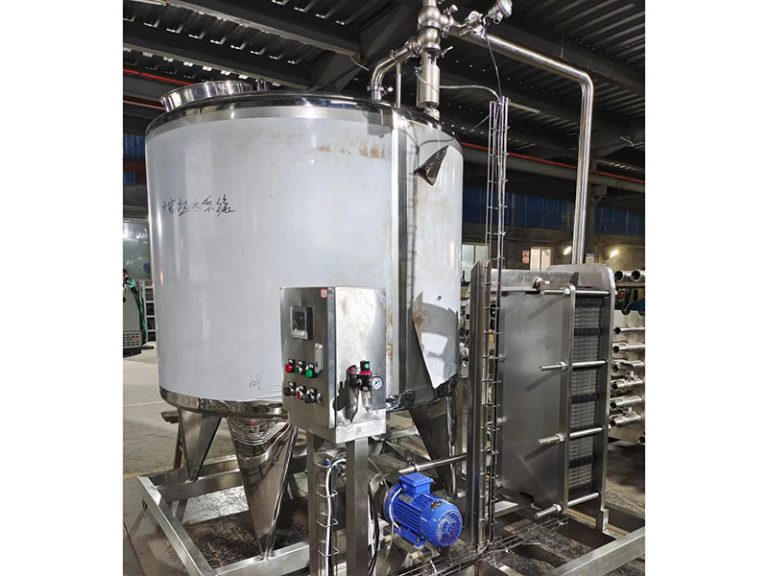
When you run a dairy or beverage production line, choosing between UHT and HTST directly impacts your product shelf life, taste, packaging, and distribution cost. This guide focuses entirely on comparing these two processing methods so you can decide which pasteurization technology best supports your factory’s production goals.
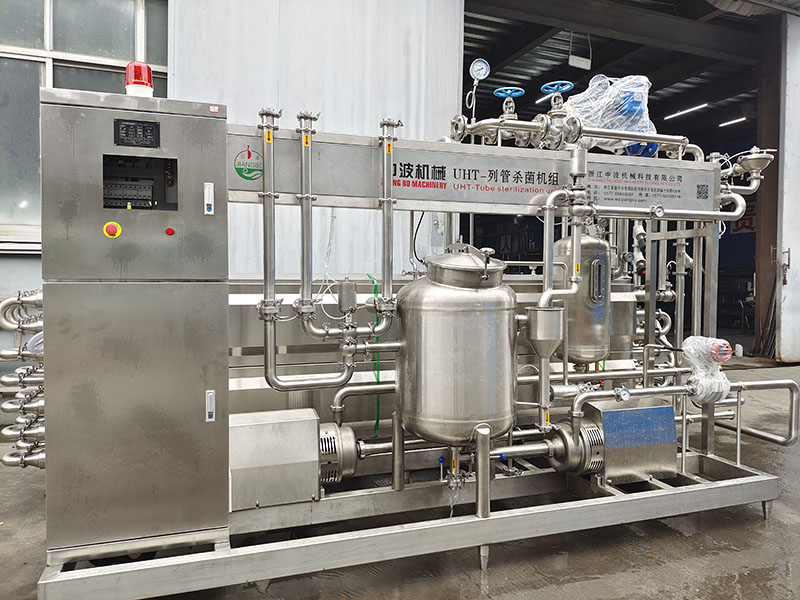
Processing Difference
UHT (Ultra High Temperature)
-
Heats product to 135–150°C
-
Holding time 2–5 seconds
-
Creates commercial sterility
-
Requires aseptic environment and sterile cooling
-
Suitable for long-life products
HTST (High Temperature Short Time)
-
Heats product to 72–75°C
-
Holding time 15–20 seconds
-
Eliminates pathogens but not all microorganisms
-
Standard cooling and non-aseptic filling
-
Suitable for fresh, chilled products
Key difference:
UHT sterilizes; HTST pasteurizes.
This single distinction affects everything else in the production chain.
Shelf Life & Storage Comparison
UHT Shelf Life
-
6–12 months
-
No refrigeration needed
-
Stable for export and long-distance distribution
HTST Shelf Life
-
7–30 days
-
Must be refrigerated
-
Suitable for local or regional distribution
Practical Insight for Manufacturers
Choose UHT if you want ambient distribution.
Choose HTST if you rely on cold chain and prioritize fresh taste.
Taste & Nutritional Comparison
Taste
-
HTST preserves the most natural, fresh flavor
-
UHT may have slight cooked notes, but modern systems retain 90–95% flavor
Nutritional Value
-
Both maintain proteins, fats, and most vitamins
-
HTST may preserve slightly more heat-sensitive compounds, but the difference is small for commercial beverages
Packaging Requirements
UHT Packaging
-
Must use aseptic filling
-
Requires sterile cartons, PET bottles, or pouches
-
Prevents recontamination
HTST Packaging
-
Can use non-aseptic, cold filling lines
-
Regular bottles or cups
-
Refrigeration eliminates the need for sterility
Equipment Comparison: UHT Pasteurizer vs HTST Pasteurizer
UHT Pasteurizer / UHT Pasteurization Machine
-
High-temperature tubular or plate system
-
Integrated with aseptic tank and aseptic filler
-
Higher control precision
-
Designed for long-life products
-
Higher equipment investment
HTST Pasteurizer / HTST Pasteurization Equipment
-
Plate heat exchanger (PHE) design
-
Short holding tube
-
Standard filler compatible
-
Lower overall cost
-
Ideal for fresh beverages
Cost & ROI Comparison
Initial Cost
-
UHT systems: Higher
-
HTST systems: Lower
Operational Cost
-
UHT: Slightly higher energy but no cold-chain cost
-
HTST: Lower energy but cold-chain logistics required
Which has better ROI?
-
UHT provides higher long-term ROI for brands distributing nationwide or exporting
-
HTST is cost-effective for local fresh beverage production
Application Comparison
UHT Best For
-
Shelf-stable milk & cream
-
Plant-based drinks
-
Tea drinks
-
Flavored milk
-
Nutritional/functional beverages
-
Soups, sauces
HTST Best For
-
Fresh milk
-
Cold-pressed juice
-
Iced tea
-
Fresh dairy beverages
-
Products sold within short distances
Summary Table: UHT vs HTST
| Category | UHT | HTST |
|---|---|---|
| Temperature | 135–150°C | 72–75°C |
| Time | 2–5 sec | 15–20 sec |
| Microbial Level | Nearly sterile | Pasteurized |
| Shelf Life | 6–12 months | 7–30 days |
| Storage | Ambient | Refrigerated |
| Taste | Slightly cooked | Very fresh |
| Packaging | Aseptic | Non-aseptic |
| Equipment Cost | Higher | Lower |
| Distribution | Global / long distance | Local / cold chain |
| Best For | Long-life beverages | Fresh beverages |
Conclusion
UHT and HTST serve different production goals. UHT is ideal for long-life, ambient products with large distribution areas, while HTST is best for fresh beverages requiring a cold chain. Zhongbo Machinery provides reliable UHT and HTST pasteurizers to support your processing needs. Explore our solutions to upgrade your factory today.
UHT & HTST Equipment:
https://www.zjzhongbo.com/product_category/htstuht-treatment/
FAQs
1. Which option is safer, UHT or HTST?
Both are safe. UHT achieves sterility; HTST achieves required pasteurization.
2. Can I switch from HTST to UHT without upgrading packaging?
No. UHT requires aseptic packaging.
3. Does UHT always change flavor?
Only slightly, and modern UHT systems greatly reduce flavor loss.
4. Which is cheaper to operate?
UHT saves cold-chain costs; HTST saves energy. Total cost depends on distribution scale.
5. Does Zhongbo Machinery offer customization?
Yes. We design custom UHT and HTST pasteurization lines based on your product and capacity.